
Fiberglass Pipe vs Metal Pipe: Cost, Corrosion and Maintenance Compared
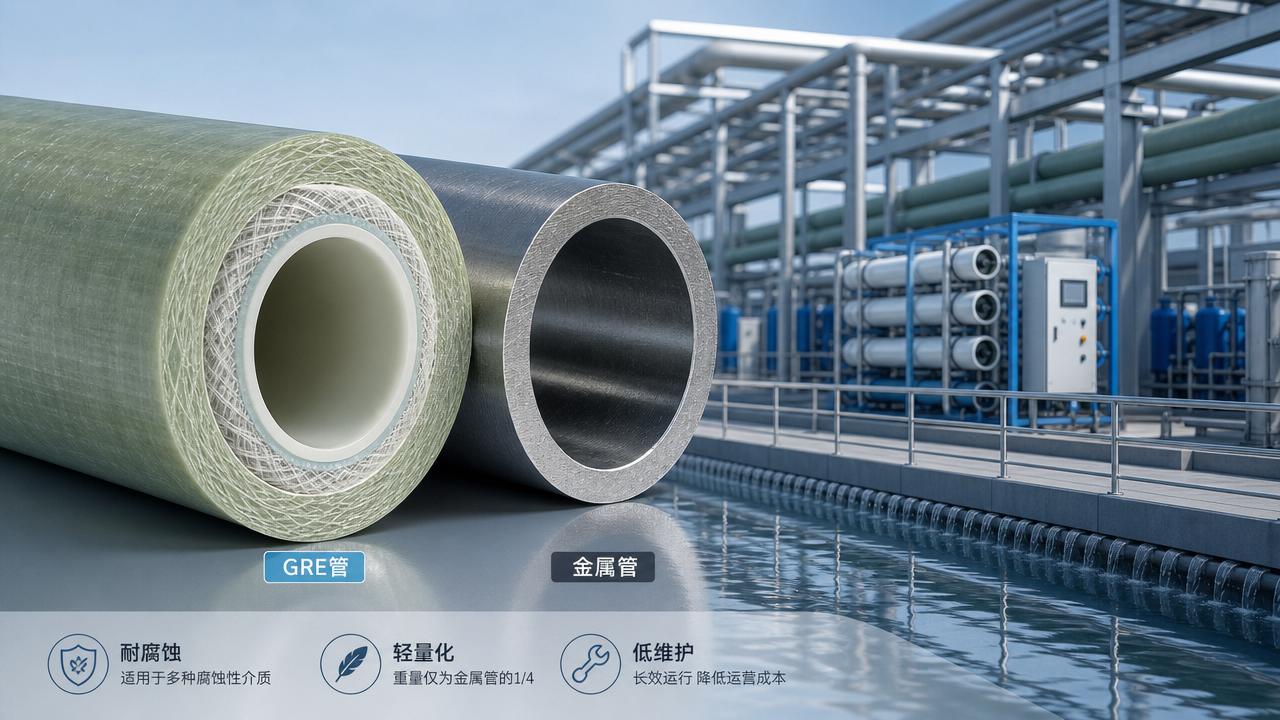
Fiberglass Pipe vs Metal Pipe: Cost, Corrosion and Maintenance Compared
When evaluating piping systems for industrial projects, decision-makers must look beyond the initial purchase price and consider lifecycle cost, corrosion risk, downtime, and maintenance demands.
Fiberglass Pipe has become a strong alternative to metal pipe in oil and gas, chemical processing, ship ballast, LNG, hot spring, and salt-making applications.
Its value comes from corrosion resistance, lightweight installation, stable hydraulics, and long service life in aggressive operating environments.
This comparison explains where Fiberglass Pipe saves money, where metal pipe still fits, and how to judge the right material for demanding projects.
What is Fiberglass Pipe, and how is it different from metal pipe?
Fiberglass Pipe is a composite piping product made with glass fiber reinforcement and a resin matrix, often epoxy for GRE pipe systems.
The glass fiber provides strength, while the resin system protects against chemical attack, seawater, brine, and many corrosive fluids.
Metal pipe, including carbon steel, stainless steel, and alloy pipe, relies on metallic strength and may need coatings or cathodic protection.
The main difference is material behavior. Fiberglass Pipe resists corrosion by design, while metal pipe often needs added protection.
In glass and ceramic materials industries, composite behavior matters because surface stability and resistance to chemical degradation affect system reliability.
- Fiberglass Pipe is non-metallic and electrically non-conductive.
- Metal pipe offers high mechanical toughness and familiar installation methods.
- Fiberglass Pipe is lighter, often reducing lifting and support requirements.
- Metal pipe may require coating inspection, repainting, or corrosion allowance.
For GRE systems, the design should match pressure rating, temperature, joint type, chemical exposure, and installation conditions.
Which option has the lower total cost: Fiberglass Pipe or metal pipe?
Initial material price is only one part of the comparison. Total cost includes transport, installation, protection, inspection, repair, and downtime.
Fiberglass Pipe may have a competitive installed cost because it is lightweight and easier to handle on many sites.
Lower weight can reduce crane time, labor intensity, transport expense, and foundation loads, especially in marine or remote projects.
Metal pipe can appear economical at purchase, particularly carbon steel. However, coatings, corrosion allowance, welding, and inspection can raise project cost.
In corrosive service, Fiberglass Pipe often delivers a stronger lifecycle cost because it reduces hidden maintenance and replacement expenses.
A fair comparison should calculate cost over ten, twenty, or thirty years, not only during purchasing.
How does Fiberglass Pipe perform against corrosion?
Corrosion is one of the strongest reasons to choose Fiberglass Pipe in seawater, brine, wastewater, and chemical services.
Metal pipe can corrode externally from soil, seawater, humidity, or chemicals. It can also corrode internally from transported fluids.
Fiberglass Pipe avoids electrochemical corrosion because it is non-metallic. It does not rust, pit, or suffer galvanic corrosion.
That advantage is especially important in ship ballast piping, salt-making facilities, offshore platforms, and chemical plants.
In a Wastewater Treatment Plant, corrosion resistance can reduce failures caused by acidic gas, chlorides, and aggressive effluent conditions.
However, Fiberglass Pipe must be selected with the correct resin system and wall structure for the operating fluid.
Chemical compatibility should be checked carefully. Temperature, concentration, pressure, and exposure duration all influence final material selection.
When is metal pipe still a reasonable corrosion choice?
Metal pipe remains suitable where corrosion is mild, temperature is very high, or mechanical impact risk is severe.
Stainless steel and alloy systems can perform well, but cost may rise sharply in chloride-rich or chemically aggressive environments.
If coating damage is likely, maintenance planning becomes critical. Small coating defects can create localized corrosion problems.
How do maintenance demands compare in real operation?
Maintenance is where Fiberglass Pipe often shows long-term value. Reduced corrosion means fewer leak repairs and fewer protective coating tasks.
Metal pipe systems may require corrosion monitoring, wall thickness testing, coating renewal, weld inspection, and periodic replacement planning.
Fiberglass Pipe still needs inspection, but the focus is different. Checks include joint integrity, supports, external damage, and pressure performance.
Good installation practices are essential. Composite pipe should not be forced into alignment or exposed to unsuitable loads.
- Inspect supports and clamps for correct spacing.
- Avoid sharp contact points and uncontrolled impact.
- Follow curing and bonding requirements for joints.
- Confirm pressure testing according to project standards.
- Protect above-ground runs from unnecessary mechanical damage.
When installed correctly, Fiberglass Pipe can reduce shutdown frequency and improve operating predictability in corrosive service.
Which applications benefit most from Fiberglass Pipe?
Fiberglass Pipe is especially valuable where corrosion, weight, and downtime create high business risk.
Common applications include oil and gas gathering, injection lines, ship ballast systems, LNG auxiliary piping, chemical transfer, and hot spring pipelines.
Salt-making operations also benefit because brine is highly corrosive to many metal piping systems.
For wastewater and drainage networks, Fiberglass Pipe supports stable service where moisture, chemicals, and biological activity attack metallic materials.
Shandong Ocean Pipe Technology Co., Ltd. produces GRE pipe for industrial and marine applications with large-scale winding and testing capacity.
Established in 2012 in Shandong, China, Ocean Pipe operates multiple winding lines and hydraulic testing equipment for GRE production.
Its products serve oil and gas, shipbuilding, LNG, chemical plants, hot springs, and salt-making projects in domestic and overseas markets.
Where should caution be applied?
Fiberglass Pipe should be reviewed carefully for extreme temperatures, high external loads, unusual chemicals, and heavy mechanical impact zones.
Underground installation also requires bedding, backfill, compaction, and load evaluation according to engineering specifications.
The best result comes from matching material design with service conditions instead of treating all composite pipes as identical.
How should Fiberglass Pipe and metal pipe be selected?
Selection should begin with operating conditions, not with a fixed material preference. Pressure, temperature, fluid chemistry, and route layout define the choice.
Fiberglass Pipe is often preferred when corrosion control, low maintenance, and lightweight handling are major priorities.
Metal pipe may be preferred for very high temperature, high fire exposure, severe mechanical abuse, or specific code requirements.
A practical evaluation should compare service life, downtime cost, repair accessibility, and inspection requirements.
Do not judge only by pipe price. Compare fittings, joints, supports, installation time, testing, and maintenance resources.
What common mistakes should be avoided?
One mistake is assuming metal pipe is always stronger in every practical sense. Strength must match the actual loading condition.
Another mistake is assuming Fiberglass Pipe needs no engineering review. Composite materials still require correct design and installation.
Poor handling can damage pipe surfaces. Incorrect supports can create stress concentration. Wrong resin selection can reduce chemical resistance.
Metal pipe mistakes are also common. Underestimating corrosion allowance, coating failure, and inspection workload can increase lifecycle cost.
- Verify chemical compatibility before ordering Fiberglass Pipe.
- Confirm pressure and temperature ratings under real service conditions.
- Use trained installation methods for bonded or mechanical joints.
- Include fittings and connections in lifecycle cost comparison.
- Review maintenance access before finalizing routing.
These checks help prevent material disputes, delays, and unnecessary replacement during operation.
FAQ: Quick answers about Fiberglass Pipe vs metal pipe
Conclusion: choosing the more reliable piping investment
Fiberglass Pipe and metal pipe both have valid roles, but their strengths are different.
Metal pipe offers familiar toughness and broad code acceptance. Fiberglass Pipe offers corrosion resistance, low weight, and reduced maintenance in harsh environments.
For oil and gas, ship ballast, LNG, chemical, salt-making, hot spring, and wastewater applications, lifecycle value often favors Fiberglass Pipe.
The next step is to define service conditions, compare lifecycle cost, and request material recommendations based on real pressure, temperature, and chemical exposure.
For corrosion-resistant GRE solutions, review qualified Fiberglass Pipe specifications, fitting options, testing capacity, and project experience before final selection.
Please give us a message
产品介绍产品介绍产品介绍产品介绍产品介绍产品介绍产品介绍产品介绍产品介绍产品介绍产品介绍产品介绍产品介绍产品介绍产品介绍产品介绍产品介绍产品介绍产品介绍产品介绍产品介绍产品介绍产品介绍产品介绍产品介绍产品介绍产品介绍产品介绍产品介绍产品介绍
Please give us a message
产品介绍产品介绍产品介绍产品介绍产品介绍产品介绍产品介绍产品介绍产品介绍产品介绍产品介绍产品介绍产品介绍产品介绍产品介绍产品介绍产品介绍产品介绍产品介绍产品介绍产品介绍产品介绍产品介绍产品介绍产品介绍产品介绍产品介绍产品介绍产品介绍产品介绍
Please give us a message
产品介绍产品介绍产品介绍产品介绍产品介绍产品介绍产品介绍产品介绍产品介绍产品介绍产品介绍产品介绍产品介绍产品介绍产品介绍产品介绍产品介绍产品介绍产品介绍产品介绍产品介绍产品介绍产品介绍产品介绍产品介绍产品介绍产品介绍产品介绍产品介绍产品介绍
Please give us a message
产品介绍产品介绍产品介绍产品介绍产品介绍产品介绍产品介绍产品介绍产品介绍产品介绍产品介绍产品介绍产品介绍产品介绍产品介绍产品介绍产品介绍产品介绍产品介绍产品介绍产品介绍产品介绍产品介绍产品介绍产品介绍产品介绍产品介绍产品介绍产品介绍产品介绍