
Fiberglass Pipe Selection Guide for Water, Chemical and Marine Systems
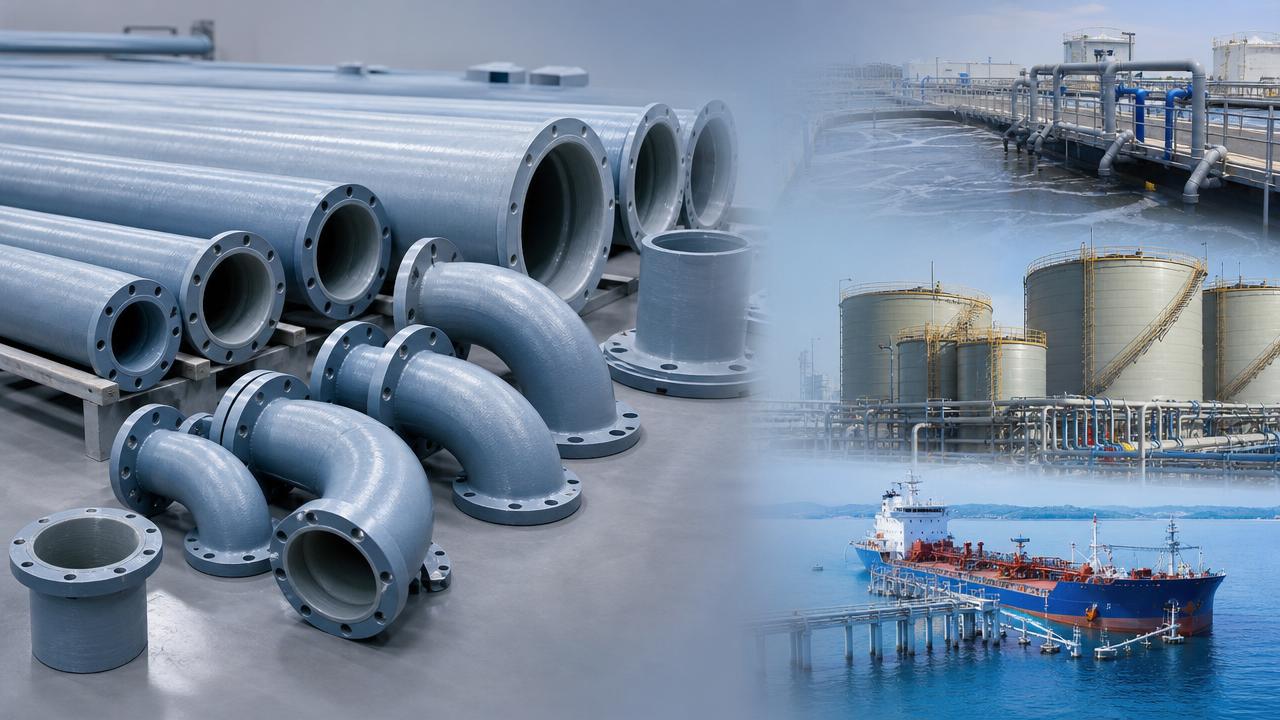
Selecting the right Fiberglass Pipe is critical for water transmission, chemical processing, and marine systems where corrosion resistance, pressure performance, and long-term reliability directly affect safety and lifecycle cost.
A reliable selection should go beyond diameter and price. It should examine material structure, resin chemistry, design standards, testing capacity, and operating environment.
This guide explains how to evaluate GRE solutions for demanding projects, including water networks, chemical plants, marine piping, and related industrial infrastructure.
Why Fiberglass Pipe Selection Depends on the Operating Scenario
Fiberglass Pipe is not selected in isolation. Each system has different pressure cycles, fluid chemistry, installation limits, temperature exposure, and inspection requirements.
A water transmission line may value hydraulic efficiency and low maintenance. A chemical line may require resin compatibility and joint integrity.
Marine ballast systems need corrosion resistance, low weight, and stable performance under vibration, humidity, and saltwater exposure.
Because these scenarios vary, Fiberglass Pipe selection must connect material design with actual service conditions.
Shandong Ocean Pipe Technology Co., Ltd. focuses on Fiberglass Reinforced Epoxy pipe for oil and gas, ship ballast piping, LNG, chemical plants, hot spring piping, and salt-making systems.
The company operates 16 winding production lines and extensive pipe fitting winding systems, supporting consistent GRE pipe production and testing capacity.
Water Transmission: Focus on Hydraulic Stability and Long Service Life
For raw water, reclaimed water, cooling water, or municipal transfer lines, Fiberglass Pipe must provide stable flow and corrosion resistance.
Internal smoothness is a key advantage. Lower friction can reduce pumping energy and help maintain predictable hydraulic performance.
Pipe stiffness should match burial depth, soil conditions, traffic load, and installation method. Underestimating stiffness can cause deformation.
Pressure class should be selected by operating pressure, surge pressure, testing pressure, and safety margin.
For wastewater or reclaimed water projects, chemical exposure can vary. Sulfides, acidity, and cleaning agents should be reviewed before final specification.
In facilities such as a Wastewater Treatment Plant, Fiberglass Pipe can support corrosion control while reducing frequent replacement risks.
Chemical Processing: Match Resin System to Fluid Compatibility
Chemical service is one of the most sensitive Fiberglass Pipe selection scenarios. Resin choice has a direct impact on durability.
Epoxy-based GRE pipe is commonly valued for strength, dimensional stability, and resistance to many corrosive media.
However, every chemical line should be checked against concentration, temperature, flow velocity, and possible process variation.
A pipe suitable for diluted chemicals may not suit concentrated acids, solvents, oxidizers, or mixed waste streams.
Joint design is also critical. Flanged, adhesive-bonded, or mechanical connections must match pressure, access, and maintenance conditions.
For chemical plants, the selection should include documentation for design pressure, hydrostatic testing, material traceability, and quality control.
Marine Systems: Prioritize Weight, Salt Resistance, and Installation Control
Marine piping faces seawater, confined spaces, vibration, humidity, and strict inspection requirements. Fiberglass Pipe can reduce corrosion and installation load.
In ship ballast piping, lightweight GRE pipe can simplify handling and reduce structural burden compared with many metallic alternatives.
Saltwater resistance is essential, but so is impact control during installation. Improper cutting, alignment, or support spacing may create hidden defects.
Marine projects should confirm classification requirements, fire performance expectations, pressure rating, and vibration-related design details.
Ocean Pipe products have been used by shipyard-related customers, including Shanghai Waigaoqiao Shipyard, Ningbo Xinle Shipyard, and Wuhan Qingshan Shipyard.
This type of project experience is valuable when Fiberglass Pipe must meet both engineering and installation realities.
Oil, Gas, LNG, and Salt Systems: Review Pressure and Environment Together
Industrial energy systems often combine high reliability requirements with harsh environments. Fiberglass Pipe should be assessed through pressure, temperature, and medium compatibility.
In oil and gas fields, corrosion resistance can reduce maintenance where metal piping suffers from aggressive fluids or soil conditions.
LNG-related utility lines may require strict documentation, controlled fabrication quality, and stable mechanical performance across changing operating conditions.
Salt-making systems are another corrosion-intensive scenario. Brine exposure can be severe, making material selection especially important.
For hot spring piping, temperature, mineral content, and scaling tendency should be considered before choosing pipe structure and fittings.
A strong Fiberglass Pipe solution balances design pressure, resin performance, fitting quality, and field installation support.
Key Scenario Differences for Fiberglass Pipe Specification
This comparison helps avoid a common mistake: using one Fiberglass Pipe specification for every operating environment.
Even when nominal pressure looks similar, chemical exposure, installation stress, and inspection requirements can create different selection results.
Material Structure and Manufacturing Quality Matter
A Fiberglass Pipe is typically designed with reinforced glass fibers and a resin matrix. The winding angle affects strength and pressure behavior.
Controlled winding is important because inconsistent fiber placement can affect burst strength, stiffness, and dimensional accuracy.
Ocean Pipe operates 174 sets of pipe fitting winding machines and winding micro control systems for production consistency.
The factory is also equipped with five static water pressure testing machines, supporting annual GRE pipe production and testing capacity of 25,000 tons.
Testing capacity matters because pressure resistance should be verified, not assumed from catalog data alone.
For critical projects, request hydrostatic test records, material certificates, dimensional inspection data, and applicable design references.
Practical Checklist Before Choosing a Fiberglass Pipe
- Confirm operating pressure, surge pressure, test pressure, and safety margin.
- Identify every fluid, including cleaning chemicals and abnormal discharge conditions.
- Check temperature range during normal operation, shutdown, and seasonal changes.
- Evaluate burial depth, support spacing, vibration, and mechanical loads.
- Review resin compatibility and long-term corrosion resistance data.
- Match fittings, bends, tees, reducers, and flanges with the same system logic.
- Verify production testing, quality records, and installation guidance.
This checklist supports a more disciplined Fiberglass Pipe decision and reduces the risk of under-specification.
It also helps compare suppliers beyond quoted price, especially when lifecycle reliability is central to project value.
Common Misjudgments in Fiberglass Pipe Applications
One frequent misjudgment is selecting only by nominal pressure. Pressure rating does not replace chemical, thermal, or mechanical review.
Another error is ignoring fittings. A strong pipeline still depends on compatible elbows, reducers, tees, and connection details.
Some projects overlook installation training. Fiberglass Pipe performance can be compromised by poor cutting, bonding, handling, or support spacing.
Transport and storage also matter. Excessive impact, ultraviolet exposure, or improper stacking may damage pipe before installation.
A further risk is assuming all GRE pipe is identical. Resin formulation, fiber design, curing control, and testing discipline can vary significantly.
For international projects, export experience and technical communication can also influence delivery, compliance, and installation coordination.
How to Build a Scenario-Based Specification
A strong specification begins with the real scenario, not a generic pipe description. Start with service conditions and failure consequences.
Then define the required Fiberglass Pipe pressure class, stiffness, resin system, fitting type, connection method, and inspection documents.
For buried water lines, include trench design, bedding, backfill, and deflection limits.
For chemical systems, include complete media data, concentration, temperature, cleaning cycles, and emergency operating conditions.
For marine systems, include support spacing, vibration exposure, classification expectations, and onboard installation constraints.
This approach makes Fiberglass Pipe selection more transparent and reduces later design changes.
Action Guide for Reliable Project Evaluation
Before final approval, prepare a service condition sheet covering pressure, temperature, media, flow rate, environment, installation method, and required standards.
Share drawings, fitting lists, and connection preferences so the complete Fiberglass Pipe system can be reviewed as one engineered solution.
Ask for production capability, pressure testing information, quality documentation, and references from similar water, chemical, or marine projects.
Shandong Ocean Pipe Technology Co., Ltd. supplies GRE pipe solutions supported by large-scale winding production, testing equipment, and industrial application experience.
With customers across China and overseas markets such as Australia, Iraq, Kazakhstan, and Turkey, Ocean Pipe supports practical project adaptation.
For safer selection, evaluate Fiberglass Pipe through the complete scenario: fluid, pressure, structure, installation, testing, and long-term maintenance expectations.
A clear technical review today can reduce corrosion problems, unplanned shutdowns, and avoidable lifecycle costs tomorrow.
Please give us a message
产品介绍产品介绍产品介绍产品介绍产品介绍产品介绍产品介绍产品介绍产品介绍产品介绍产品介绍产品介绍产品介绍产品介绍产品介绍产品介绍产品介绍产品介绍产品介绍产品介绍产品介绍产品介绍产品介绍产品介绍产品介绍产品介绍产品介绍产品介绍产品介绍产品介绍
Please give us a message
产品介绍产品介绍产品介绍产品介绍产品介绍产品介绍产品介绍产品介绍产品介绍产品介绍产品介绍产品介绍产品介绍产品介绍产品介绍产品介绍产品介绍产品介绍产品介绍产品介绍产品介绍产品介绍产品介绍产品介绍产品介绍产品介绍产品介绍产品介绍产品介绍产品介绍
Please give us a message
产品介绍产品介绍产品介绍产品介绍产品介绍产品介绍产品介绍产品介绍产品介绍产品介绍产品介绍产品介绍产品介绍产品介绍产品介绍产品介绍产品介绍产品介绍产品介绍产品介绍产品介绍产品介绍产品介绍产品介绍产品介绍产品介绍产品介绍产品介绍产品介绍产品介绍
Please give us a message
产品介绍产品介绍产品介绍产品介绍产品介绍产品介绍产品介绍产品介绍产品介绍产品介绍产品介绍产品介绍产品介绍产品介绍产品介绍产品介绍产品介绍产品介绍产品介绍产品介绍产品介绍产品介绍产品介绍产品介绍产品介绍产品介绍产品介绍产品介绍产品介绍产品介绍