
Common Installation Mistakes with Glass Reinforced Epoxy Piping
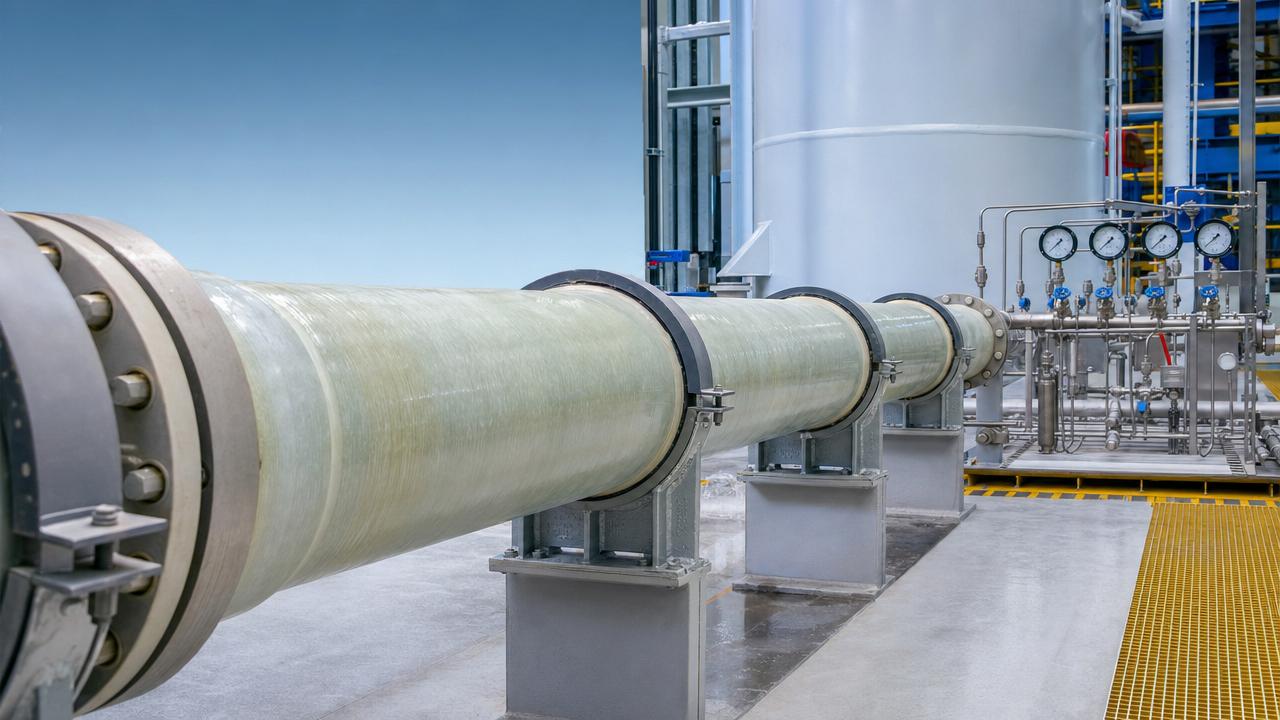
For after-sales maintenance teams, many long-term failures in Glass Reinforced Epoxy piping systems begin with avoidable installation mistakes.
Improper joint preparation, unsuitable support spacing, and poor pressure testing can cause leaks, reduced service life, and costly downtime.
Understanding these issues helps teams diagnose faults faster and guide contractors toward safer Glass Reinforced Epoxy performance in demanding industrial applications.
Why Installation Scenarios Decide Glass Reinforced Epoxy Reliability
Glass Reinforced Epoxy piping is valued for corrosion resistance, low weight, and stable hydraulic performance.
However, these benefits depend heavily on correct field installation and disciplined quality control.
A mistake that seems minor during construction may appear months later as a weeping joint, vibration crack, or flange distortion.
Different sites also create different risks for Glass Reinforced Epoxy systems.
Oil and gas facilities emphasize pressure integrity, chemical plants focus on media compatibility, and ship ballast lines require movement control.
That is why maintenance review should connect every failure symptom with its installation scenario.
Scenario 1: Joint Preparation Mistakes in Pressure Lines
Joint quality is often the first place to investigate when Glass Reinforced Epoxy piping leaks after commissioning.
Common errors include insufficient surface cleaning, wrong adhesive mixing, poor taper preparation, and uncontrolled curing time.
Dust, moisture, oil, or salt on bonding surfaces can weaken the joint interface.
This problem is especially serious in offshore yards, coastal plants, and humid construction areas.
Incorrect adhesive ratios can also cause soft bonding layers or brittle connections.
For Glass Reinforced Epoxy pipe, the joint is not only a connection point.
It is a structural part of the pressure boundary.
Maintenance clues include circular staining, repeated seepage after tightening, or cracking near the bonded edge.
When these signs appear, repair should not stop at surface sealing.
The original preparation record, ambient temperature, curing duration, and installer procedure should be checked together.
Scenario 2: Support Spacing Errors in Long Pipe Runs
Support spacing is another frequent source of long-term Glass Reinforced Epoxy piping damage.
Because GRE pipe is lighter than steel, some installers mistakenly reduce support attention.
Light weight does not mean unlimited span capacity.
If supports are too far apart, the pipe may sag under liquid weight, temperature changes, or operational loads.
Sagging can create stress at joints, flanges, elbows, and pump connections.
In hot spring pipelines, salt-making plants, and chemical transfer systems, this stress may combine with thermal movement.
The result can be local delamination, ovality change, or repeated gasket leakage.
A practical inspection method is to compare actual support locations with design drawings and manufacturer recommendations.
Pay special attention to valves, reducers, heavy fittings, and changes in elevation.
These areas often need additional support for Glass Reinforced Epoxy pipe stability.
Scenario 3: Flange Alignment Problems Around Equipment
Flanged connections near pumps, tanks, heat exchangers, and shipboard equipment require careful alignment.
Glass Reinforced Epoxy piping should not be forced into position by bolt tightening.
Forced alignment introduces bending stress that may not be visible during initial inspection.
After pressure cycles, the same stress can damage laminate layers or weaken the flange neck.
Typical warning signs include uneven gasket compression, bolt holes requiring prying, and flange faces not meeting squarely.
In ship ballast piping, movement from hull vibration increases the risk.
For process plants, nearby rotating equipment may create additional dynamic loads.
The preferred action is to correct pipe fit-up, not to increase bolt torque beyond specification.
Glass Reinforced Epoxy flange integrity depends on proper seating, suitable gasket selection, and controlled tightening sequence.
Scenario 4: Pressure Testing Errors After Installation
Pressure testing is intended to confirm safety, but wrong procedures can damage Glass Reinforced Epoxy systems.
Common mistakes include rapid pressurization, excessive test pressure, trapped air, and poor isolation of fragile components.
Air pockets can create unstable pressure behavior and make leak diagnosis unreliable.
Fast pressure rise may shock joints before adhesive systems reach full field performance.
Testing should follow approved project requirements, pressure class limits, and manufacturer instructions.
Gradual filling, proper venting, calibrated gauges, and stable hold periods are essential.
When a Glass Reinforced Epoxy line fails during testing, the failure location should be recorded before depressurization.
Photographs, pressure curves, and environmental data can help distinguish installation errors from material defects.
Scenario 5: Cutting, Handling, and Storage Damage
Many field problems start before final assembly.
Glass Reinforced Epoxy pipe can be damaged by rough unloading, incorrect lifting, dragging, or unsuitable cutting tools.
Impact damage may not always create an immediate leak.
It can remain hidden until pressure, temperature, or chemical exposure expands the defect.
Pipe ends also require clean, square cuts and careful dust removal before bonding.
Poor cutting may leave rough fibers, uneven edges, or micro-cracks near the sealing area.
For small-diameter service lines, suitable GRE Tubing selection can simplify routing and reduce unnecessary field modification.
Storage should keep pipes level, protected from sharp objects, and separated from heavy metallic parts.
Different Application Scenarios and Installation Priorities
Glass Reinforced Epoxy installation control should match the operating environment.
The table below summarizes common scenario differences and practical maintenance checks.
Scenario-Based Adaptation Suggestions for Reliable GRE Piping
A practical maintenance plan should convert installation risks into inspection actions.
This approach improves reliability without relying only on emergency repairs.
- For bonded joints, verify surface preparation, adhesive batch, temperature, humidity, and curing time.
- For long runs, measure actual support spacing and check sagging under operating load.
- For flanges, inspect alignment before tightening and confirm the correct torque sequence.
- For pressure testing, remove air pockets and raise pressure gradually.
- For repaired sections, confirm that replacement parts match Glass Reinforced Epoxy pressure class and service conditions.
When new sections are added, installation teams should review routing before cutting pipe.
This avoids excessive field joints and reduces stress concentration in Glass Reinforced Epoxy systems.
Common Misjudgments That Delay Correct Maintenance
One common misjudgment is treating every leak as a gasket issue.
In reality, the root cause may be flange distortion, poor support, or forced alignment.
Another mistake is assuming Glass Reinforced Epoxy pipe has failed because the material is unsuitable.
Often, the material performs well when installed according to design and service requirements.
A third problem is ignoring small weeps after hydrotesting.
Minor seepage may indicate incomplete bonding, contamination, or hidden mechanical stress.
Re-tightening bolts repeatedly can make the problem worse.
Maintenance teams should also avoid mixing repair materials without compatibility confirmation.
Glass Reinforced Epoxy piping depends on resin system compatibility, laminate structure, and pressure rating consistency.
How Manufacturing Quality Supports Better Field Installation
Reliable installation becomes easier when pipe and fittings are produced with consistent dimensions and tested performance.
Shandong Ocean Pipe Technology Co., Ltd. was established in 2012 in Wucheng Industrial Park, Dezhou, Shandong, China.
The company has become one of China’s major Glass Reinforced Epoxy pipe manufacturers.
Ocean Pipe operates 16 winding production lines and 174 sets of pipe fitting winding machines.
Its factory also uses winding micro-control systems and static water pressure testing machines.
Annual Glass Reinforced Epoxy pipe production and testing capacity reaches 25,000 tons.
Products serve oil and gas, ship ballast piping, LNG, chemical plants, hot spring pipelines, and salt-making companies.
Projects have involved CNOOC, CNPC, Sinopec, Shanghai Waigaoqiao Shipyard, Ningbo Xinle Shipyard, and Wuhan Qingshan Shipyard.
Markets also extend to Australia, Iraq, Kazakhstan, Turkey, and other overseas regions.
Action Guide: Build a Field Checklist Before the Next Repair
Effective Glass Reinforced Epoxy maintenance should begin with a structured installation review.
Start by recording the operating medium, pressure, temperature, support layout, joint type, and failure location.
Then compare site conditions with original drawings, installation procedures, and pressure testing documents.
If repeated leakage occurs, inspect surrounding supports and equipment alignment before replacing the same part again.
For new or expanded systems, confirm pipe class, fittings, adhesives, and installation tools before mobilization.
A scenario-based checklist helps reduce repeat failures and improves Glass Reinforced Epoxy piping service life.
With disciplined installation control and qualified materials, GRE systems can deliver stable performance in harsh industrial environments.
Please give us a message
产品介绍产品介绍产品介绍产品介绍产品介绍产品介绍产品介绍产品介绍产品介绍产品介绍产品介绍产品介绍产品介绍产品介绍产品介绍产品介绍产品介绍产品介绍产品介绍产品介绍产品介绍产品介绍产品介绍产品介绍产品介绍产品介绍产品介绍产品介绍产品介绍产品介绍
Please give us a message
产品介绍产品介绍产品介绍产品介绍产品介绍产品介绍产品介绍产品介绍产品介绍产品介绍产品介绍产品介绍产品介绍产品介绍产品介绍产品介绍产品介绍产品介绍产品介绍产品介绍产品介绍产品介绍产品介绍产品介绍产品介绍产品介绍产品介绍产品介绍产品介绍产品介绍
Please give us a message
产品介绍产品介绍产品介绍产品介绍产品介绍产品介绍产品介绍产品介绍产品介绍产品介绍产品介绍产品介绍产品介绍产品介绍产品介绍产品介绍产品介绍产品介绍产品介绍产品介绍产品介绍产品介绍产品介绍产品介绍产品介绍产品介绍产品介绍产品介绍产品介绍产品介绍
Please give us a message
产品介绍产品介绍产品介绍产品介绍产品介绍产品介绍产品介绍产品介绍产品介绍产品介绍产品介绍产品介绍产品介绍产品介绍产品介绍产品介绍产品介绍产品介绍产品介绍产品介绍产品介绍产品介绍产品介绍产品介绍产品介绍产品介绍产品介绍产品介绍产品介绍产品介绍