
Glass Reinforced Epoxy Specifications: Pressure Rating, Resin and Standards
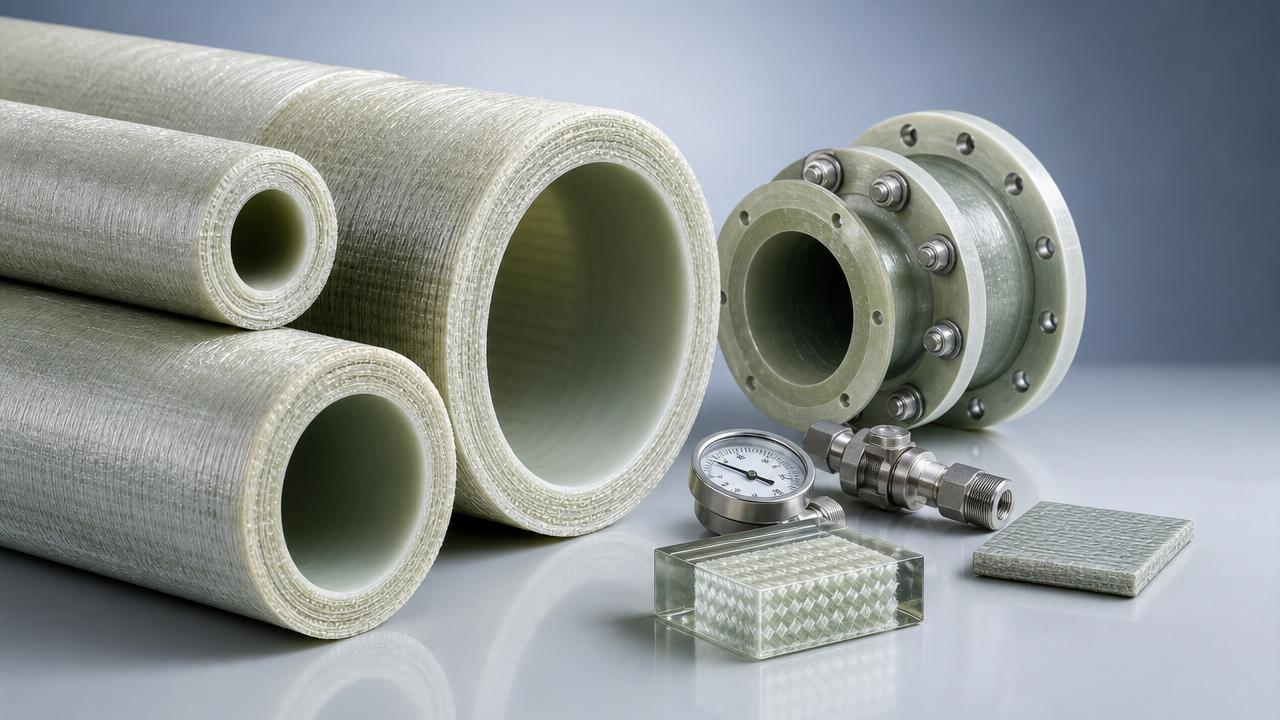
For procurement teams evaluating Glass Reinforced Epoxy piping, the right specification is critical to long-term safety, cost control, and project compliance.
Pressure rating, resin system, dimensional tolerance, and applicable international standards determine whether GRE pipes can perform reliably in demanding applications.
This guide explains how to review Glass Reinforced Epoxy specifications for oil and gas, marine, chemical, LNG, hot spring, and salt-making projects.
What does Glass Reinforced Epoxy mean in piping specifications?
Glass Reinforced Epoxy is a composite piping material made from glass fiber reinforcement and an epoxy resin matrix.
The glass fiber carries mechanical loads, while the epoxy resin provides chemical resistance, bonding strength, and environmental protection.
Compared with many metallic systems, Glass Reinforced Epoxy offers lower weight, corrosion resistance, and smooth internal flow surfaces.
These properties make Glass Reinforced Epoxy pipe suitable for seawater, produced water, ballast systems, cooling water, brine, and selected chemical services.
A strong specification should define pressure class, temperature limits, stiffness, joint type, resin grade, and test acceptance criteria.
It should also state the design code, inspection records, traceability requirements, and installation limitations for the project environment.
Why is the wording of the specification important?
Generic wording can create gaps between design expectations and delivered products.
For example, “GRE pipe” alone does not confirm resin type, pressure class, chemical compatibility, or long-term regression basis.
Clear Glass Reinforced Epoxy specifications reduce rework, document disputes, and unexpected replacement costs during operation.
How should pressure rating be evaluated for Glass Reinforced Epoxy pipe?
Pressure rating is one of the most important parameters in any Glass Reinforced Epoxy piping specification.
It indicates the allowable internal pressure under defined design temperature, service conditions, and safety factors.
However, pressure rating should never be reviewed as a single number.
Operating pressure, surge pressure, vacuum, cyclic loading, and external loads all affect the final pipe selection.
In seawater or ballast systems, hydraulic transients can be more severe than steady operating pressure.
In oil and gas service, pressure cycling may influence fatigue performance and joint reliability.
- Confirm design pressure and maximum allowable surge pressure.
- Check rated pressure at the actual operating temperature.
- Review pressure class for pipes, fittings, flanges, and joints.
- Ask for hydrostatic test records and acceptance criteria.
- Verify that the selected Glass Reinforced Epoxy system matches installation loads.
A qualified supplier normally provides pressure testing, type testing, and batch inspection documentation.
Shandong Ocean Pipe Technology Co., Ltd. operates static water pressure testing machines for GRE pipe production and verification.
Such testing capacity supports repeatable quality control for Glass Reinforced Epoxy products used in demanding industrial systems.
Which resin system should be specified for different applications?
The resin system determines much of the chemical, thermal, and aging behavior of Glass Reinforced Epoxy pipe.
Epoxy resin is commonly selected where high mechanical performance and strong bonding with glass fiber are required.
For corrosive fluids, the inner liner design is especially important.
The liner must resist permeation, swelling, softening, and chemical attack under actual temperature and concentration.
In LNG facilities, low-temperature interfaces, condensation zones, and fire safety requirements may influence system selection.
In chemical plants, compatibility should be checked against every conveyed medium, cleaning fluid, and accidental exposure case.
For marine scrubber applications, seawater, acidic discharge, vibration, and limited installation space should be considered together.
A useful reference topic is The application of GRE piping in marine scrubber systems, where corrosion resistance and weight reduction are practical concerns.
What should appear in a resin compatibility review?
The review should include fluid composition, concentration, pressure, temperature, flow velocity, solids content, and exposure duration.
It should also include intermittent cleaning, shutdown conditions, ultraviolet exposure, and possible thermal shock.
When operating data is incomplete, conservative assumptions are safer than selecting Glass Reinforced Epoxy only by general industry habit.
What international standards apply to Glass Reinforced Epoxy piping?
Standards help align design, testing, manufacturing, installation, and documentation expectations.
Common references may include ISO, ASTM, API, AWWA, ASME, and project-specific specifications.
The right standard depends on service, region, pressure class, project owner requirements, and classification authority.
For offshore or oil and gas work, qualification may require stricter long-term performance evidence.
For shipbuilding, marine class approval, fire behavior, flame spread, and smoke requirements may also apply.
For industrial water or brine service, hydraulic performance and corrosion resistance may be the main criteria.
A Glass Reinforced Epoxy system should not be accepted solely because a catalog mentions one standard.
The supplied product, test method, and project documentation must all align with the specified standard.
How do dimensions, stiffness, and joints affect long-term reliability?
Dimensional accuracy affects flow capacity, joint fit-up, installation speed, and leakage control.
Important dimensions include internal diameter, wall thickness, ovality, length tolerance, flange drilling, and fitting geometry.
Pipe stiffness is also important where burial, supports, vacuum, or external pressure may occur.
A low-weight Glass Reinforced Epoxy pipe can reduce support loads, but support spacing still requires engineering review.
Joint selection should reflect installation conditions, maintenance access, vibration, alignment tolerance, and required disassembly.
Adhesive bonded joints can provide excellent integrity when installers follow surface preparation and curing requirements.
Flanged joints support maintenance access, but bolt torque, gasket type, and flange alignment must be controlled.
Common dimensional risks to check
- Incorrect wall thickness for the requested pressure class.
- Fitting angles that create field alignment stress.
- Flange faces that do not meet project tolerance.
- Unclear marking for spool identification and traceability.
- Insufficient protection during transportation and storage.
Ocean Pipe has winding production lines and pipe fitting winding machines supported by micro-control systems.
This manufacturing base helps maintain consistency across Glass Reinforced Epoxy pipes, fittings, and customized spools.
What supplier capabilities should be verified before ordering?
Supplier capability influences quality, delivery stability, technical support, and documentation accuracy.
A capable Glass Reinforced Epoxy supplier should control raw materials, winding parameters, curing, inspection, testing, and packaging.
Traceable production records are essential when the project involves oil and gas, LNG, shipyards, or chemical facilities.
Shandong Ocean Pipe Technology Co., Ltd. was established in 2012 in Wucheng Industrial Park, Dezhou, Shandong, China.
The company has become one of the major GRE pipe producers in China, with annual production and testing capacity reaching 25,000 tons.
Its Glass Reinforced Epoxy products are used in oil and gas, ship ballast piping, LNG, chemical plants, hot spring systems, and salt making.
Project references include customers such as CNOOC, CNPC, Sinopec, and several shipyards in China.
The company has also supplied overseas markets including Australia, Iraq, Kazakhstan, Turkey, and other countries.
Documents worth requesting
- Material data sheets for resin, glass fiber, and liner construction.
- Pressure rating data and applicable design standard.
- Hydrostatic test reports and inspection records.
- Dimensional inspection reports for pipes and fittings.
- Installation instructions for joining, handling, storage, and support spacing.
- Certificates, approvals, or project reference documents when required.
What mistakes should be avoided when selecting Glass Reinforced Epoxy?
One common mistake is comparing quotations only by nominal diameter and pressure class.
This ignores resin quality, standard compliance, fitting complexity, joint type, and testing requirements.
Another mistake is overlooking installation quality.
Even a well-made Glass Reinforced Epoxy pipe can fail if cutting, bonding, curing, or support spacing is poor.
A third risk is underestimating transient pressure, vibration, or thermal movement in marine and industrial systems.
These factors should be reviewed before finalizing pipe class, fittings, and anchor design.
How can a complete Glass Reinforced Epoxy specification support better sourcing?
A complete specification converts project risk into measurable technical requirements.
It helps compare suppliers fairly and prevents hidden differences from appearing during installation.
The specification should define service conditions, pressure rating, resin system, dimensions, standards, tests, marking, and delivery documentation.
It should also identify whether prefabricated spools, site bonding support, or special packing are needed.
When Glass Reinforced Epoxy is selected correctly, it can reduce corrosion maintenance and simplify handling in complex piping layouts.
Its value is strongest when material design, manufacturing quality, and field installation are managed as one system.
Practical next step
Prepare a datasheet with fluid details, pressure, temperature, pipe size, standard requirements, and installation environment.
Then request a technical proposal, compliance statement, and test documentation from a qualified Glass Reinforced Epoxy producer.
For projects requiring corrosion-resistant composite piping, Ocean Pipe can support specification review, GRE pipe selection, production, and testing documentation.
A disciplined review at the sourcing stage helps protect safety, budget, schedule, and long-term system performance.
Please give us a message
产品介绍产品介绍产品介绍产品介绍产品介绍产品介绍产品介绍产品介绍产品介绍产品介绍产品介绍产品介绍产品介绍产品介绍产品介绍产品介绍产品介绍产品介绍产品介绍产品介绍产品介绍产品介绍产品介绍产品介绍产品介绍产品介绍产品介绍产品介绍产品介绍产品介绍
Please give us a message
产品介绍产品介绍产品介绍产品介绍产品介绍产品介绍产品介绍产品介绍产品介绍产品介绍产品介绍产品介绍产品介绍产品介绍产品介绍产品介绍产品介绍产品介绍产品介绍产品介绍产品介绍产品介绍产品介绍产品介绍产品介绍产品介绍产品介绍产品介绍产品介绍产品介绍
Please give us a message
产品介绍产品介绍产品介绍产品介绍产品介绍产品介绍产品介绍产品介绍产品介绍产品介绍产品介绍产品介绍产品介绍产品介绍产品介绍产品介绍产品介绍产品介绍产品介绍产品介绍产品介绍产品介绍产品介绍产品介绍产品介绍产品介绍产品介绍产品介绍产品介绍产品介绍
Please give us a message
产品介绍产品介绍产品介绍产品介绍产品介绍产品介绍产品介绍产品介绍产品介绍产品介绍产品介绍产品介绍产品介绍产品介绍产品介绍产品介绍产品介绍产品介绍产品介绍产品介绍产品介绍产品介绍产品介绍产品介绍产品介绍产品介绍产品介绍产品介绍产品介绍产品介绍