
How Glass Reinforced Epoxy Performs in Seawater and Chemical Lines
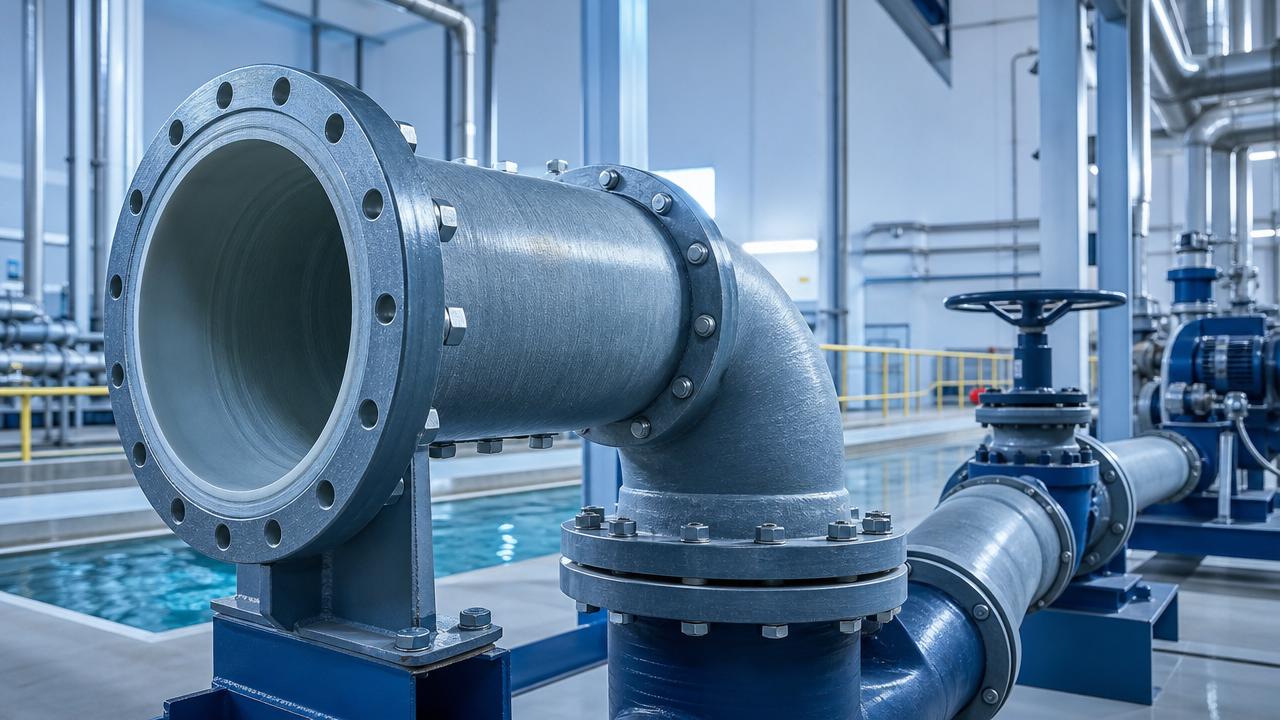
In seawater systems and chemical lines, operators need piping that can resist corrosion, pressure fluctuations, and daily handling challenges without frequent shutdowns.
Glass Reinforced Epoxy offers a practical solution by combining lightweight installation, strong chemical resistance, and reliable long-term performance in demanding environments.
For ship ballast systems, oil and gas facilities, LNG projects, and chemical plants, understanding GRE behavior helps improve safety and extend service life.
Why Glass Reinforced Epoxy Needs a Checklist Approach
Seawater and chemical service are not simple corrosion cases. Temperature, pressure, media concentration, flow velocity, and installation quality all affect pipe life.
Glass Reinforced Epoxy pipe performs well when the resin system, glass reinforcement, wall structure, and joint method match the actual operating conditions.
A checklist prevents wrong material selection. It also supports documentation, inspection planning, and maintenance decisions during project operation.
For seawater intake, ballast water, brine, acids, alkalis, and oily wastewater, the same pipe name may require different design details.
Core Checklist for Seawater and Chemical Lines
Use the following checklist before approving Glass Reinforced Epoxy for marine, industrial, or chemical transfer piping.
- Confirm the full fluid composition, including chloride level, pH, solvents, suspended solids, additives, and cleaning chemicals used during shutdown.
- Check the maximum and minimum operating temperature, because resin selection controls chemical resistance and thermal stability under continuous service.
- Verify design pressure, surge pressure, vacuum conditions, and water hammer risk before selecting the pressure rating and stiffness class.
- Match the joint system to site access, vibration level, installation speed, pressure testing method, and future maintenance requirements.
- Review support spacing, anchor design, thermal movement, and pipe flexibility to avoid unintended stress at bends and flanges.
- Specify conductive or non-conductive requirements where static electricity, hazardous zones, or grounding rules apply to chemical lines.
- Inspect internal liner quality, curing condition, laminate thickness, and surface finish before pipe installation and pressure testing.
- Plan hydrostatic testing with approved pressure limits, holding time, calibrated gauges, and controlled filling or venting procedures.
This process makes Glass Reinforced Epoxy selection measurable. It turns a material choice into a complete engineering decision.
How Glass Reinforced Epoxy Resists Seawater Corrosion
Seawater contains chloride, dissolved oxygen, microorganisms, sand, and salts. These elements attack many metallic pipes through pitting and crevice corrosion.
Glass Reinforced Epoxy is not based on metal corrosion protection. Its epoxy matrix and glass fiber structure provide inherent corrosion resistance.
In ballast, cooling water, and seawater intake systems, GRE pipe can reduce coating repair, corrosion allowance, and frequent replacement work.
The smooth inner surface also helps reduce scaling and friction loss. This can support stable hydraulic performance over long operation periods.
However, seawater lines still need correct velocity control. Excess sand or abrasive particles can gradually affect internal surfaces.
Seawater Performance Checks
- Confirm whether seawater is filtered, raw, stagnant, heated, or mixed with treatment chemicals during normal operation.
- Limit flow velocity in abrasive service and review elbows, reducers, and pump discharge zones for erosion risk.
- Protect aboveground Glass Reinforced Epoxy from long-term ultraviolet exposure by using suitable coating or insulation.
How Glass Reinforced Epoxy Handles Chemical Lines
Chemical lines require closer evaluation than seawater lines. Concentration, temperature, and exposure time strongly influence material compatibility.
Glass Reinforced Epoxy can perform well with many salts, brines, weak acids, alkalis, wastewater, and selected industrial chemicals.
The key is not to assume universal resistance. Every chemical service should be reviewed against resin data and project specifications.
Cleaning chemicals also matter. Short-term flushing agents may be more aggressive than the normal process fluid.
For municipal and industrial transfer projects requiring corrosion-resistant pipeline layouts, GRE Pipe for Municipal Project can be considered where design conditions match product capability.
Chemical Compatibility Checks
- List all chemicals by concentration, temperature, pressure, batch frequency, and possible mixing during abnormal operations.
- Request compatibility confirmation for the liner, resin system, adhesive, gasket, and joint seal together.
- Check whether thermal cycling, steam cleaning, or aggressive solvent flushing can damage the laminate or bonding area.
- Review emergency drainage, secondary containment, and isolation valves for safe response if leakage occurs.
Application Notes for Different Operating Scenarios
Ship Ballast and Marine Piping
Ship ballast systems need lightweight pipe that saves installation labor and supports corrosion control in confined spaces.
Glass Reinforced Epoxy helps reduce dead weight compared with many metallic alternatives. This advantage is important during ship construction and retrofit work.
Marine installations should focus on supports, vibration control, fire performance requirements, and correct flange alignment.
Oil and Gas Water Systems
Oil and gas facilities often use seawater injection, produced water, cooling water, and drainage systems under demanding conditions.
Glass Reinforced Epoxy can reduce corrosion maintenance where chloride-rich fluids and corrosive water streams are present.
Design teams should check hydrocarbons, sour components, oxygen content, and pressure transients before approving GRE pipe.
LNG and Low-Temperature Facilities
LNG plants include utility water, firefighting water, cooling loops, and chemical dosing lines around complex process units.
Glass Reinforced Epoxy may serve selected non-cryogenic utility systems where temperature, code requirements, and fire zones permit composite pipe.
Low-temperature exposure, insulation details, and accidental spill scenarios must be reviewed carefully in LNG environments.
Chemical Plants and Salt Production
Chemical plants and salt-making facilities often face brine, acidic wastewater, alkaline cleaning fluid, and humid corrosive air.
Glass Reinforced Epoxy offers strong value where corrosion resistance and lower maintenance are more important than high-temperature metallic strength.
Brine lines need attention to crystallization, flushing practice, support design, and sediment accumulation at low-flow sections.
Common Overlooked Risks in GRE Pipe Projects
Ignoring surge pressure: Pumps, fast valves, and sudden shutdowns can create pressure spikes higher than normal design pressure.
Glass Reinforced Epoxy should be rated after transient analysis, not only by steady operating pressure.
Using wrong gaskets: A chemically resistant pipe can still fail if gaskets or seals are not compatible with the fluid.
Always approve the complete sealing system together with the GRE pipe and fittings.
Overtightening flanges: Excessive bolt torque may damage flanges, create uneven stress, or reduce sealing reliability.
Follow the recommended torque sequence, gasket type, and alignment tolerance during assembly.
Poor field handling: Dragging, dropping, or striking pipes can cause hidden damage before the system enters service.
Store Glass Reinforced Epoxy on suitable supports and protect pipe ends, machined surfaces, and joint areas.
Missing installation training: Composite piping requires different skills from steel pipe welding and fitting work.
Installers should understand cutting, bonding, tapering, curing, testing, and repair methods before site work begins.
Practical Execution Guide for Reliable Performance
A reliable Glass Reinforced Epoxy system depends on coordinated design, manufacturing, delivery, installation, and commissioning.
- Prepare a fluid data sheet before inquiry, including all normal, startup, shutdown, and cleaning media.
- Select pipe pressure class, stiffness, liner, and joint type according to hydraulic and chemical requirements.
- Ask for dimensional checks, hydrostatic test records, visual inspection results, and material traceability documents.
- Review the installation method statement before pipes arrive, especially for bonding, lifting, alignment, and curing.
- Perform site inspection before pressure testing, including supports, guides, anchors, vents, drains, and flange connections.
- Record commissioning results and create a maintenance log for future pressure changes, repairs, and chemical modifications.
Ocean Pipe manufactures Fiberglass Reinforced Epoxy pipe with multiple winding production lines and extensive fitting production capability.
Its GRE products are used in oil and gas, ship ballast piping, LNG, chemical plants, hot spring pipelines, and salt-making systems.
Project experience with CNOOC, CNPC, Sinopec, and shipyards supports practical understanding of demanding field applications.
Decision Points Before Selecting Glass Reinforced Epoxy
Choose Glass Reinforced Epoxy when corrosion resistance, weight reduction, hydraulic efficiency, and lower maintenance support the project goal.
Avoid using GRE pipe without confirmation in unknown solvent exposure, extreme temperature, severe abrasion, or unverified fire zones.
Compare total installed cost, not only pipe unit price. Supports, coating, lifting, downtime, and corrosion maintenance change the final result.
For seawater and chemical lines, the strongest choice is usually the system with verified compatibility and clear installation control.
Summary and Next Action
Glass Reinforced Epoxy performs well in many seawater and chemical lines because it resists corrosion without relying on external coating protection.
Its lightweight structure, smooth bore, and chemical resistance make it suitable for marine, oil and gas, LNG utility, and industrial piping systems.
The next step is simple: define the fluid, temperature, pressure, installation environment, joint method, and testing plan before final selection.
With a disciplined checklist, Glass Reinforced Epoxy can deliver stable service, reduced maintenance, and safer operation in corrosive pipeline networks.
Please give us a message
产品介绍产品介绍产品介绍产品介绍产品介绍产品介绍产品介绍产品介绍产品介绍产品介绍产品介绍产品介绍产品介绍产品介绍产品介绍产品介绍产品介绍产品介绍产品介绍产品介绍产品介绍产品介绍产品介绍产品介绍产品介绍产品介绍产品介绍产品介绍产品介绍产品介绍
Please give us a message
产品介绍产品介绍产品介绍产品介绍产品介绍产品介绍产品介绍产品介绍产品介绍产品介绍产品介绍产品介绍产品介绍产品介绍产品介绍产品介绍产品介绍产品介绍产品介绍产品介绍产品介绍产品介绍产品介绍产品介绍产品介绍产品介绍产品介绍产品介绍产品介绍产品介绍
Please give us a message
产品介绍产品介绍产品介绍产品介绍产品介绍产品介绍产品介绍产品介绍产品介绍产品介绍产品介绍产品介绍产品介绍产品介绍产品介绍产品介绍产品介绍产品介绍产品介绍产品介绍产品介绍产品介绍产品介绍产品介绍产品介绍产品介绍产品介绍产品介绍产品介绍产品介绍
Please give us a message
产品介绍产品介绍产品介绍产品介绍产品介绍产品介绍产品介绍产品介绍产品介绍产品介绍产品介绍产品介绍产品介绍产品介绍产品介绍产品介绍产品介绍产品介绍产品介绍产品介绍产品介绍产品介绍产品介绍产品介绍产品介绍产品介绍产品介绍产品介绍产品介绍产品介绍