
Fiberglass Pipe Joint Types: Flanged, Adhesive and Mechanical Connections
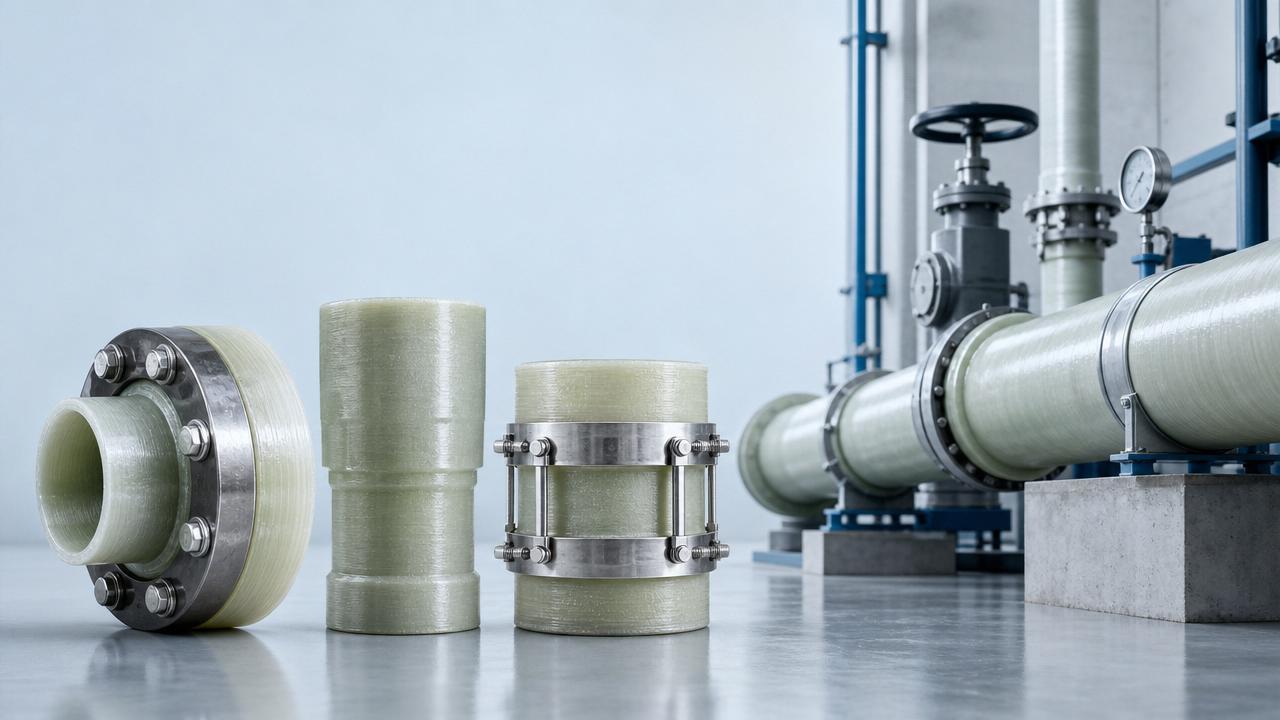
Selecting the right Fiberglass Pipe joint type is critical to project safety, installation efficiency, and long-term operating cost.
In oil and gas, ship ballast, LNG, chemical, and industrial systems, joint selection directly affects leakage control, maintenance access, and construction progress.
This guide compares flanged, adhesive, and mechanical connections, with practical checks for demanding Fiberglass Pipe applications.
Why Fiberglass Pipe Joint Selection Needs a Checklist
Fiberglass Pipe is valued for corrosion resistance, low weight, and stable hydraulic performance in aggressive media.
However, the pipe body and the joint do not face identical stresses during operation.
A poorly selected Fiberglass Pipe connection can create leakage, misalignment, stress concentration, or difficult replacement work.
Checklist-based evaluation helps compare installation conditions, pressure class, chemical exposure, temperature, vibration, and maintenance strategy.
It also reduces subjective decisions when multiple contractors, workshops, or installation teams are involved.
Core Checklist for Fiberglass Pipe Joint Types
- Confirm design pressure, surge pressure, vacuum conditions, and test pressure before choosing any Fiberglass Pipe joint configuration.
- Check the conveyed fluid, including pH value, chloride content, hydrocarbons, solvents, temperature, and possible cleaning chemicals.
- Review pipe route constraints, especially buried sections, supports, anchors, expansion loops, and equipment nozzle positions.
- Match the connection method with installation skill level, curing time, field access, humidity, and inspection requirements.
- Define future maintenance needs, including valve replacement, pump removal, spool change, and emergency isolation work.
- Verify compatibility between Fiberglass Pipe, fittings, gaskets, bolts, adhesives, sleeves, and metallic mating flanges.
- Require hydrostatic testing and visual inspection procedures that match the selected joint and applicable project standards.
Flanged Fiberglass Pipe Connections
Flanged connections are widely used where Fiberglass Pipe must connect to pumps, valves, tanks, strainers, or metallic pipelines.
They provide easy disassembly, clear inspection access, and convenient replacement during planned shutdowns.
A flanged Fiberglass Pipe joint usually includes a molded or bonded flange, gasket, bolts, washers, and a controlled tightening sequence.
Flanged Joint Checklist
- Use flanged joints when equipment requires routine removal, instrument access, or direct connection to standard steel flanges.
- Select gasket materials according to chemical media, temperature, compression behavior, and flange surface condition.
- Control bolt torque in stages to avoid uneven loading, local crushing, or flange rotation.
- Align the Fiberglass Pipe spool carefully before tightening, because flanges should not pull misaligned piping into position.
- Add supports near heavy valves to prevent bending loads from transferring into the composite flange.
Flanged joints perform well in ship ballast systems, chemical transfer lines, and process areas with frequent maintenance.
The main limitation is cost and space. Flanges need more clearance than bonded or mechanical couplings.
Adhesive Bonded Fiberglass Pipe Connections
Adhesive bonded joints create a strong chemical and mechanical connection between Fiberglass Pipe and matching fittings.
They are common in GRE and FRP piping systems where permanent joints and smooth flow paths are preferred.
When installed correctly, bonded joints offer excellent corrosion resistance and compact layout flexibility.
Adhesive Joint Checklist
- Prepare bonding surfaces by sanding, cleaning, drying, and protecting them from oil, dust, and condensation.
- Confirm adhesive shelf life, mixing ratio, pot life, cure temperature, and minimum curing time before installation starts.
- Maintain insertion depth and joint gap according to the Fiberglass Pipe system manual and approved procedure.
- Avoid moving the joint during curing, because early disturbance can weaken the bond line and reduce pressure reliability.
- Mark each completed joint with installer, time, batch number, and curing status for traceable field quality control.
Adhesive joints are suitable for long runs where disassembly is not expected after commissioning.
They are also useful in buried Fiberglass Pipe networks, because compact joints reduce external profile and support clean trench installation.
For a Wastewater Treatment Plant, bonded GRE piping can help resist corrosive effluent and reduce leakage points.
Mechanical Fiberglass Pipe Connections
Mechanical connections use couplings, seals, locking elements, or restrained components to join Fiberglass Pipe without adhesive curing.
They are valuable when fast installation, limited hot work, or future removal is important.
Mechanical joints can also absorb limited movement, depending on their design and manufacturer limits.
Mechanical Joint Checklist
- Use mechanical joints where schedule pressure, confined access, or repair speed makes adhesive curing difficult.
- Check coupling pressure rating, seal material, pipe outside diameter tolerance, and axial restraint requirements.
- Inspect pipe ends for roundness, scratches, delamination, and correct chamfer before installing seals or sleeves.
- Tighten bolts or locking parts evenly, following the sequence and torque values specified by the coupling supplier.
- Plan external supports carefully, because mechanical joints should not carry uncontrolled bending or suspended loads.
Mechanical Fiberglass Pipe joints are often selected for temporary bypasses, retrofit connections, or repair sections.
They are not automatically superior to bonded joints. Performance depends on seal quality, restraint design, and installation discipline.
Application Notes for Common Operating Scenarios
Oil and Gas Service
Fiberglass Pipe in oil and gas systems may face hydrocarbons, produced water, salt, and pressure cycling.
Flanged joints are practical near equipment, while bonded joints often suit stable transfer lines.
Ship Ballast Piping
Ship ballast systems need corrosion resistance, weight reduction, and reliable installation in restricted spaces.
Flanged Fiberglass Pipe joints simplify valve replacement, while bonded spools reduce the number of bolted leakage points.
LNG and Chemical Plants
Chemical compatibility must be checked against resin system, liner design, adhesive type, and gasket material.
For Fiberglass Pipe in chemical plants, joint selection should be confirmed before finalizing pipe supports and inspection plans.
Hot Spring and Salt-Making Lines
Hot mineral water and brine create severe corrosion challenges for many metallic systems.
Fiberglass Pipe can reduce corrosion risk, but joint materials must handle temperature, salt concentration, and cleaning procedures.
Common Risks Often Missed During Joint Selection
Ignoring thermal movement. Fiberglass Pipe expands differently from steel, so anchors, guides, and loops require careful layout review.
Using flange bolts as alignment tools. Pulling misaligned pipes together can damage flanges, overload gaskets, and create hidden stress.
Rushing adhesive cure. A joint that looks complete may not be ready for pressure testing or handling loads.
Overlooking seal compatibility. Mechanical couplings depend on elastomer performance, which can fail under unsuitable chemicals or temperatures.
Skipping documentation. Fiberglass Pipe joint records support troubleshooting, warranty review, and long-term maintenance planning.
Practical Execution Advice for Fiberglass Pipe Projects
- Create a joint schedule that lists every Fiberglass Pipe connection type, size, pressure rating, and inspection method.
- Separate permanent bonded sections from removable flanged or mechanical sections during early layout planning.
- Train installers with sample joints before field work, especially when bonding procedures are new to the crew.
- Store adhesives, gaskets, and coupling seals according to supplier instructions, away from heat, sunlight, and contamination.
- Use calibrated torque tools and approved pressure testing procedures before releasing the system for operation.
Reliable Fiberglass Pipe systems depend on both product quality and disciplined installation control.
Shandong Ocean Pipe Technology Co., Ltd. produces GRE pipe and fittings for oil and gas, ship ballast, LNG, chemical, hot spring, and salt-making applications.
With multiple winding production lines, fitting machines, and hydrostatic testing capacity, consistent manufacturing supports safer joint performance.
Summary and Next-Step Guidance
Flanged joints are best where Fiberglass Pipe must remain serviceable, inspectable, or connected to equipment.
Adhesive bonded joints suit permanent lines, compact layouts, and corrosion-resistant networks with controlled installation conditions.
Mechanical joints support rapid installation, repair work, and retrofit situations when seal and restraint requirements are properly verified.
Before confirming a Fiberglass Pipe joint type, review pressure, fluid, temperature, access, maintenance, and installer capability together.
The safest decision is rarely based on one factor. It comes from matching joint behavior with real operating conditions.
Use this checklist during design review, procurement comparison, and site installation planning to reduce leakage risk and improve lifecycle reliability.
Please give us a message
产品介绍产品介绍产品介绍产品介绍产品介绍产品介绍产品介绍产品介绍产品介绍产品介绍产品介绍产品介绍产品介绍产品介绍产品介绍产品介绍产品介绍产品介绍产品介绍产品介绍产品介绍产品介绍产品介绍产品介绍产品介绍产品介绍产品介绍产品介绍产品介绍产品介绍
Please give us a message
产品介绍产品介绍产品介绍产品介绍产品介绍产品介绍产品介绍产品介绍产品介绍产品介绍产品介绍产品介绍产品介绍产品介绍产品介绍产品介绍产品介绍产品介绍产品介绍产品介绍产品介绍产品介绍产品介绍产品介绍产品介绍产品介绍产品介绍产品介绍产品介绍产品介绍
Please give us a message
产品介绍产品介绍产品介绍产品介绍产品介绍产品介绍产品介绍产品介绍产品介绍产品介绍产品介绍产品介绍产品介绍产品介绍产品介绍产品介绍产品介绍产品介绍产品介绍产品介绍产品介绍产品介绍产品介绍产品介绍产品介绍产品介绍产品介绍产品介绍产品介绍产品介绍
Please give us a message
产品介绍产品介绍产品介绍产品介绍产品介绍产品介绍产品介绍产品介绍产品介绍产品介绍产品介绍产品介绍产品介绍产品介绍产品介绍产品介绍产品介绍产品介绍产品介绍产品介绍产品介绍产品介绍产品介绍产品介绍产品介绍产品介绍产品介绍产品介绍产品介绍产品介绍