
How to Inspect Fiberglass Pipe Before Installation and Commissioning
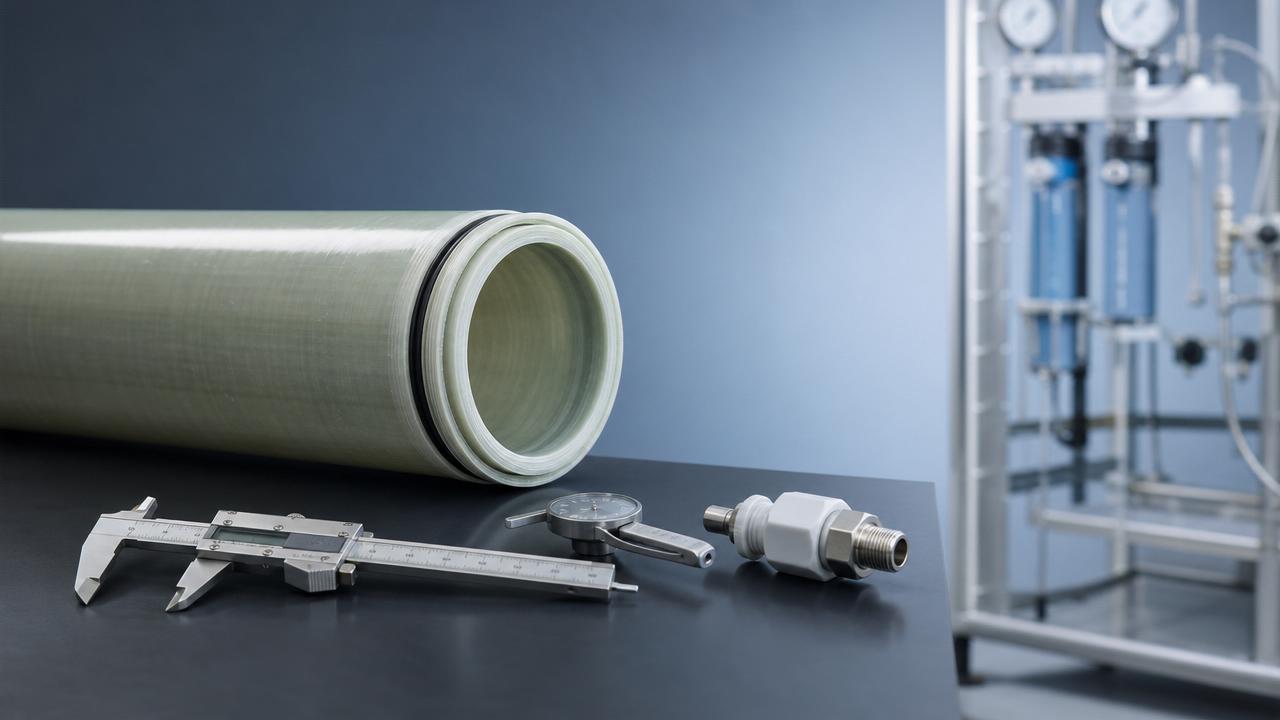
Why pre-installation inspection matters
Before installation and commissioning, every Fiberglass Pipe deserves a careful and disciplined inspection.
The goal is not only to find visible damage.
It is to confirm structural integrity, pressure reliability, joint quality, and readiness for service.
In oil and gas, marine ballast, LNG, chemical plants, hot spring systems, and salt production, failure can be expensive.
A small crack, poor end preparation, or dimensional deviation may become a leakage point under pressure.
That is why Fiberglass Pipe inspection should begin before field work starts.
It helps separate manufacturing quality, transport condition, storage control, and installation risks.
For GRE piping, this step is especially important because performance depends on both the composite wall and the joint system.
Understanding what is being inspected
Fiberglass Pipe is generally made from glass fiber reinforcement and resin matrix materials.
In GRE pipe, epoxy resin provides chemical resistance, bonding strength, and thermal stability.
Glass fiber gives the pipe its mechanical strength and pressure-bearing capacity.
Inspection therefore looks at more than the outside surface.
It considers laminate condition, pipe ends, fittings, liner quality, markings, dimensions, and test records.
A good inspection also considers the service environment.
Marine systems may face vibration, saltwater exposure, and restricted installation space.
Chemical plants may require stronger attention to resin compatibility and joint sealing.
Offshore and shipyard projects often need traceability, pressure records, and strict documentation control.
Start with documentation and traceability
A physical check should be supported by complete documentation.
Without traceability, even an acceptable-looking Fiberglass Pipe may create uncertainty during commissioning.
Review certificates, product specifications, pressure ratings, material grade, batch number, and inspection reports.
Confirm that pipe size, wall structure, joint type, and design pressure match project drawings.
Hydrostatic test records are also important.
They show whether the pipe has passed controlled pressure testing before delivery.
Shandong Ocean Pipe Technology Co., Ltd. operates dedicated static water pressure testing equipment.
This supports verification for GRE pipe batches used in demanding industrial and marine applications.
Documentation should never be treated as paperwork only.
It is the first barrier against wrong material, wrong rating, or wrong installation sequence.
Key records to confirm
- Product specification and applicable project standard.
- Pressure class, temperature range, and service medium.
- Batch number, production date, and pipe marking consistency.
- Factory inspection report and hydrostatic pressure test record.
- Fitting details, joint type, gasket information, and adhesive requirements.
Visual inspection should be slow and systematic
Visual inspection is simple, but it should not be rushed.
Many Fiberglass Pipe defects are found before any instrument is used.
Check the full pipe length under adequate light.
Look for cracks, impact marks, delamination, exposed fibers, blisters, burn marks, and abnormal discoloration.
Surface scratches may be acceptable if shallow.
However, any damage reaching reinforcement layers requires technical evaluation before installation.
Pipe ends need special attention because joints often fail there first.
Inspect spigots, sockets, grooves, bevels, and sealing surfaces carefully.
A Fiberglass Pipe with poor end condition can compromise an otherwise sound system.
Fittings should receive the same level of attention as straight pipe sections.
Elbows, tees, reducers, flanges, and couplings carry concentrated stress in service.
Dimensional checks protect installation accuracy
Composite pipe installation depends heavily on alignment and tolerance control.
Even minor dimensional issues can cause stress during assembly.
Measure outside diameter, inside diameter, pipe length, wall thickness, and end geometry where required.
For jointed Fiberglass Pipe, confirm insertion depth and sealing surface dimensions.
Check roundness, straightness, and flange face condition.
Out-of-round pipe may be difficult to join correctly.
It can also create uneven gasket compression or adhesive gaps.
Measurements should be compared with drawings, purchase specifications, and applicable tolerances.
If deviations appear, hold the section until the technical decision is documented.
Joint areas deserve extra attention
Most commissioning issues occur at joints, not in the middle of pipe sections.
That makes joint inspection central to Fiberglass Pipe quality control.
Different joint systems require different checks.
Adhesive-bonded joints need clean surfaces, correct roughening, proper fit-up, and controlled curing conditions.
Mechanical or gasketed joints require seal condition, groove integrity, and correct engagement depth.
Flanged connections require flat faces, correct bolt holes, and compatible sealing materials.
Do not ignore packaging dust, moisture, oil, or field contamination.
These can weaken adhesion or affect sealing performance.
For marine and offshore projects, products such as GRE Pipe for Marine & Offshore are commonly evaluated with joint reliability in mind.
Saltwater exposure, vibration, and compact routing make joint quality especially critical.
Transport and storage damage can change the risk level
A Fiberglass Pipe may leave the factory in qualified condition.
Damage can still happen during lifting, trucking, port handling, or yard storage.
Check whether pipe supports are suitable and evenly spaced.
Look for crushing marks from narrow slings or excessive stacking pressure.
Verify that pipe ends remain protected before installation.
Sun exposure, rainwater, dust, and accidental impact should be controlled where possible.
Storage condition is not only a logistics matter.
It can directly affect bonding quality and commissioning reliability.
Practical storage checks
- Confirm supports do not deform the pipe wall.
- Keep sealing surfaces clean and protected.
- Avoid dragging pipe directly on rough ground.
- Separate rejected or suspect sections clearly.
- Record any impact event before field use.
Pressure readiness and commissioning preparation
Before commissioning, inspection should connect pipe condition with test planning.
A qualified Fiberglass Pipe still needs proper installation before pressure testing.
Check that supports, anchors, guides, expansion allowances, and restraints match design requirements.
Improper support can overload the composite structure during filling or pressure rise.
Before hydrostatic testing, verify venting points and drainage routes.
Air pockets can affect test behavior and safety.
Pressure should rise gradually according to the approved procedure.
Sudden pressurization may hide installation defects until stress becomes severe.
Leaks, sweating, movement, abnormal sound, or support displacement should be investigated immediately.
Commissioning is not the time to improvise.
It is the moment to confirm that earlier inspection decisions were correct.
How supplier capability influences inspection confidence
Pre-installation inspection is stronger when manufacturing control is transparent.
Production capacity alone does not guarantee quality.
Still, stable process equipment, repeatable winding control, and pressure testing capacity matter.
Ocean Pipe was established in 2012 in Wucheng Industrial Park, Dezhou, Shandong Province.
The company focuses on Fiberglass Reinforced Epoxy pipe production and related fittings.
Its factory includes 16 winding production lines and 174 pipe fitting winding machines.
Micro control systems help maintain winding consistency across production batches.
Five static water pressure testing machines support product verification before delivery.
This background helps projects evaluate traceability, testing capacity, and supply reliability.
Applications across CNOOC, CNPC, Sinopec, shipyards, and overseas markets show broad field exposure.
Such experience is useful when Fiberglass Pipe must meet demanding installation conditions.
Common findings that should not be overlooked
Not every finding means rejection.
The important point is to classify the risk correctly.
Minor surface scuffs may only need cleaning and recordkeeping.
Cracks, deep gouges, exposed reinforcement, or delamination require technical review.
Unclear markings should be resolved before cutting or installation.
Wrong pipe location can create major pressure or chemical compatibility issues.
Poorly matched fittings can also cause delays during final assembly.
A Fiberglass Pipe inspection checklist should therefore include acceptance status, action owner, and closure evidence.
Building a reliable inspection routine
A reliable routine makes inspection faster and more consistent.
It should begin at receiving and continue through storage, installation, and commissioning.
Use one checklist for documents and another for physical condition.
Add photographs, measurement records, and disposition notes when findings appear.
The inspection process should also reflect project risk.
A low-pressure drainage line and an offshore firewater line should not be treated identically.
Higher-risk systems require stricter review of joints, supports, test procedures, and material compatibility.
When uncertainty remains, the safer path is to pause and clarify.
A delayed decision is usually cheaper than a failed commissioning test.
A practical next step before installation release
Before releasing a Fiberglass Pipe system for installation, confirm three things together.
The product must match the design.
The physical condition must support safe assembly.
The installation plan must protect pressure performance during commissioning.
This combined view is more useful than checking isolated items.
It helps prevent avoidable leaks, rework, schedule loss, and safety exposure.
For future projects, inspection standards should be refined by service medium, pressure class, joint type, and site conditions.
Comparing supplier records, field findings, and commissioning results can also improve selection decisions.
A well-inspected Fiberglass Pipe is not simply ready to install.
It is better prepared to perform safely throughout its intended service life.
Please give us a message
产品介绍产品介绍产品介绍产品介绍产品介绍产品介绍产品介绍产品介绍产品介绍产品介绍产品介绍产品介绍产品介绍产品介绍产品介绍产品介绍产品介绍产品介绍产品介绍产品介绍产品介绍产品介绍产品介绍产品介绍产品介绍产品介绍产品介绍产品介绍产品介绍产品介绍
Please give us a message
产品介绍产品介绍产品介绍产品介绍产品介绍产品介绍产品介绍产品介绍产品介绍产品介绍产品介绍产品介绍产品介绍产品介绍产品介绍产品介绍产品介绍产品介绍产品介绍产品介绍产品介绍产品介绍产品介绍产品介绍产品介绍产品介绍产品介绍产品介绍产品介绍产品介绍
Please give us a message
产品介绍产品介绍产品介绍产品介绍产品介绍产品介绍产品介绍产品介绍产品介绍产品介绍产品介绍产品介绍产品介绍产品介绍产品介绍产品介绍产品介绍产品介绍产品介绍产品介绍产品介绍产品介绍产品介绍产品介绍产品介绍产品介绍产品介绍产品介绍产品介绍产品介绍
Please give us a message
产品介绍产品介绍产品介绍产品介绍产品介绍产品介绍产品介绍产品介绍产品介绍产品介绍产品介绍产品介绍产品介绍产品介绍产品介绍产品介绍产品介绍产品介绍产品介绍产品介绍产品介绍产品介绍产品介绍产品介绍产品介绍产品介绍产品介绍产品介绍产品介绍产品介绍