
Top FRP Pipe Problems and How to Avoid Them
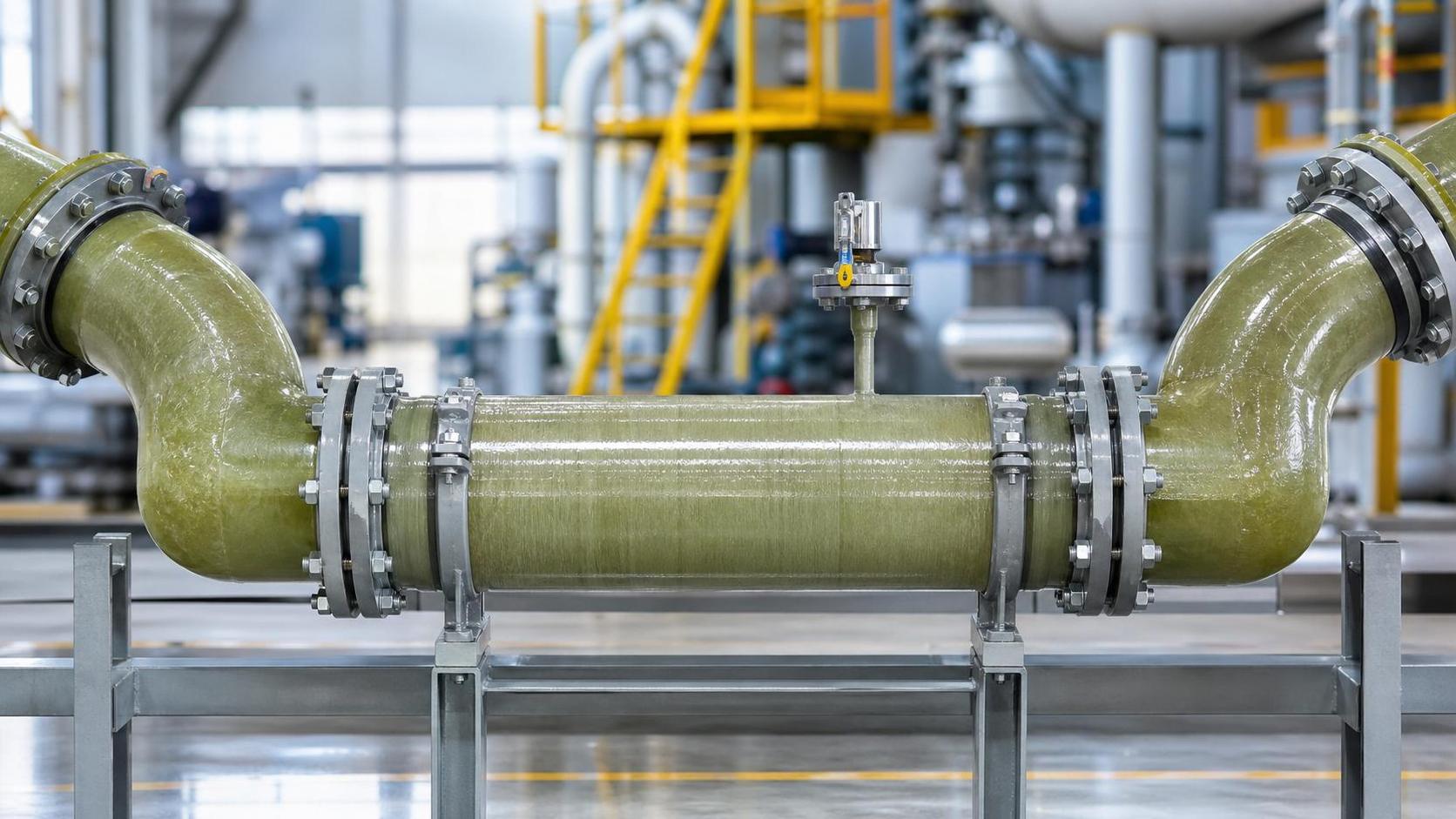
Top FRP Pipe Problems and How to Avoid Them
FRP Pipe is chosen for one main reason: it survives where metal piping struggles. It resists corrosion, keeps weight low, and supports long service life in aggressive media.
Still, reliable material does not mean trouble-free operation. In real plants, most failures come from installation errors, load mismatch, poor support layout, or overlooked thermal movement.
That is why maintenance reviews should focus on the full system, not only the damaged section. A leaking FRP Pipe joint often points to stress transfer, alignment drift, or pressure cycling elsewhere.
This matters even more in oil and gas, ship ballast piping, LNG, chemical plants, hot spring lines, and salt-making service, where media, temperature, and vibration combine in demanding ways.
Manufacturers with broad field exposure usually design around those conditions more effectively. Ocean Pipe, established in 2012 in Shandong, supports these sectors with large-scale GRE production and pressure testing capacity.
Why does FRP Pipe fail earlier than expected?
Premature failure usually starts long before a visible crack. The first warning is often a pattern: repeated seepage, unusual support wear, flange distortion, or localized whitening on the laminate.
In many cases, FRP Pipe itself is not the weak point. The issue is that operating conditions exceed the original design assumptions for pressure, temperature, vacuum, surge, or external restraint.
A common example is hidden point loading. If one support settles, load shifts to nearby joints. That creates bending stress the pipeline was never meant to carry continuously.
Another cause is poor handling during shutdown work. Dragging pipe across hard surfaces can damage the outer resin layer. The defect may look cosmetic, yet it can become a moisture path later.
More subtle failures come from process change. A line first selected for stable chemical service may later face higher temperature swings, stronger cleaning agents, or faster start-stop cycles.
A quick field check helps separate symptom from cause
This kind of table is useful because it prevents random repair. If the same FRP Pipe section keeps failing, replacing it without load review only resets the clock.
Leakage at joints: is it a sealing problem or a piping stress problem?
It is often both, but stress is the deeper issue. Joint leakage tends to appear at flanges, adhesive-bonded connections, and transitions to metal equipment.
When technicians focus only on gaskets, they may miss the real trigger. Uneven bolt tightening, poor face parallelism, and unsupported valve weight can gradually deform the connection.
Thermal expansion is another frequent driver. FRP Pipe expands differently from steel structures around it. If movement is restrained, joint loads increase with each operating cycle.
The more reliable approach is to inspect the connection as a stress point, not just a seal point. Look at support distance, nozzle alignment, and whether nearby equipment introduces vibration.
- Confirm flange faces are clean and parallel before retightening.
- Use the specified torque sequence instead of tightening one side first.
- Check whether valves or reducers need independent support.
- Review recent temperature or pressure changes before replacing components.
In retrofit sections, a compact solution like GRE Tubing may also help when space, corrosion resistance, and controlled routing all matter together.
Can thermal stress and vibration damage FRP Pipe even without visible impact?
Yes, and this is one of the most underestimated risks. FRP Pipe may look stable from the outside while internal stress builds through repeated movement.
Thermal stress usually shows up near anchors, branch connections, and equipment nozzles. The problem grows when expansion loops are missing or support guides restrict the wrong direction.
Vibration acts differently. It creates fatigue over time, especially near pumps, compressors, and marine systems. Small-amplitude vibration can still weaken a laminated structure if exposure is continuous.
A practical sign is repeated maintenance in dynamic zones. If clamps loosen, resin dust appears, or one support shows abnormal rubbing, movement is likely higher than expected.
In actual service, the better fix is rarely a thicker clamp alone. It usually involves adjusting support type, changing guide spacing, or reducing equipment-induced movement at the source.
What should be reviewed after process changes?
Any change in fluid temperature, startup speed, cleaning chemistry, or flow pulsation should trigger a piping review. Many FRP Pipe problems begin after operations change but drawings do not.
That is especially relevant in export and multi-industry projects. Systems serving LNG, chemical media, ballast water, or hot brine all impose different thermal and mechanical demands.
When does wear become a serious structural issue?
Surface wear is not always critical, but it should never be ignored. FRP Pipe relies on a layered structure, so external abrasion can gradually reduce protection for the structural laminate.
Support contact points deserve close attention. If the pipe slides where it should guide, or binds where it should move, localized wear can accelerate quickly.
Internal wear also matters in slurry, salt, or high-velocity service. The first clue may be wall thinning at elbows, reducers, or flow disturbance zones rather than in straight pipe runs.
The sensible approach is to compare wear pattern with process behavior. Random scratches suggest handling damage. Repeating wear at fixed positions suggests design or support mismatch.
- Measure support condition, not just pipe condition.
- Inspect elbows and branch points during planned shutdowns.
- Record flow changes that may increase erosion rate.
- Repair coating loss early before laminate exposure spreads.
In systems built around corrosion resistance and stable pressure performance, matching the line class to the medium is just as important as repairing visible wear.
How can recurring FRP Pipe problems be prevented instead of repeatedly repaired?
The most effective prevention method is to build a failure history by location and operating event. Once incidents are linked to startup, shutdown, cleaning, or vibration periods, patterns become clear.
It also helps to separate material defects from application mismatch. Established producers with winding control systems, hydrostatic testing capability, and broad industrial references can support this judgment more accurately.
Ocean Pipe’s manufacturing scale, including 16 winding lines and extensive fitting production, reflects the type of process control often needed for consistent GRE system performance across complex projects.
That does not remove the need for field discipline. Even a well-made FRP Pipe system can lose years of service life if supports are altered, replacement parts are mismatched, or pressure testing is rushed.
A practical prevention checklist
- Verify actual temperature and pressure against original design data.
- Review supports, anchors, and guides after any modification.
- Track leak points by exact position, not only by line number.
- Inspect transition joints between FRP Pipe and metal equipment.
- Use compatible replacement components across the full system.
- Reassess dynamic zones if new pumps or flow conditions are introduced.
Where compact corrosion-resistant branch solutions are needed, GRE Tubing can fit naturally into a broader review of material compatibility and lifecycle planning.
What is the smartest next step when FRP Pipe issues keep returning?
Start with evidence, not assumptions. Repeated FRP Pipe failures usually come from a small number of system conditions that were never fully corrected.
A useful next step is to map each problem against load, temperature, support condition, and recent operating change. That turns maintenance records into a decision tool.
If the pattern points to design stress, focus on movement control and support layout. If it points to media or wear, review material selection and local flow conditions.
FRP Pipe delivers strong long-term value when corrosion resistance is matched with correct installation, inspection, and operating discipline. The best results come from solving the cause once, not the symptom many times.
From there, the path is clear: confirm service data, inspect critical joints, compare recurring damage locations, and set practical criteria for future repair or replacement decisions.
Please give us a message
产品介绍产品介绍产品介绍产品介绍产品介绍产品介绍产品介绍产品介绍产品介绍产品介绍产品介绍产品介绍产品介绍产品介绍产品介绍产品介绍产品介绍产品介绍产品介绍产品介绍产品介绍产品介绍产品介绍产品介绍产品介绍产品介绍产品介绍产品介绍产品介绍产品介绍
Please give us a message
产品介绍产品介绍产品介绍产品介绍产品介绍产品介绍产品介绍产品介绍产品介绍产品介绍产品介绍产品介绍产品介绍产品介绍产品介绍产品介绍产品介绍产品介绍产品介绍产品介绍产品介绍产品介绍产品介绍产品介绍产品介绍产品介绍产品介绍产品介绍产品介绍产品介绍
Please give us a message
产品介绍产品介绍产品介绍产品介绍产品介绍产品介绍产品介绍产品介绍产品介绍产品介绍产品介绍产品介绍产品介绍产品介绍产品介绍产品介绍产品介绍产品介绍产品介绍产品介绍产品介绍产品介绍产品介绍产品介绍产品介绍产品介绍产品介绍产品介绍产品介绍产品介绍
Please give us a message
产品介绍产品介绍产品介绍产品介绍产品介绍产品介绍产品介绍产品介绍产品介绍产品介绍产品介绍产品介绍产品介绍产品介绍产品介绍产品介绍产品介绍产品介绍产品介绍产品介绍产品介绍产品介绍产品介绍产品介绍产品介绍产品介绍产品介绍产品介绍产品介绍产品介绍