
FRP Pipe for Corrosive Media: Best Use Cases
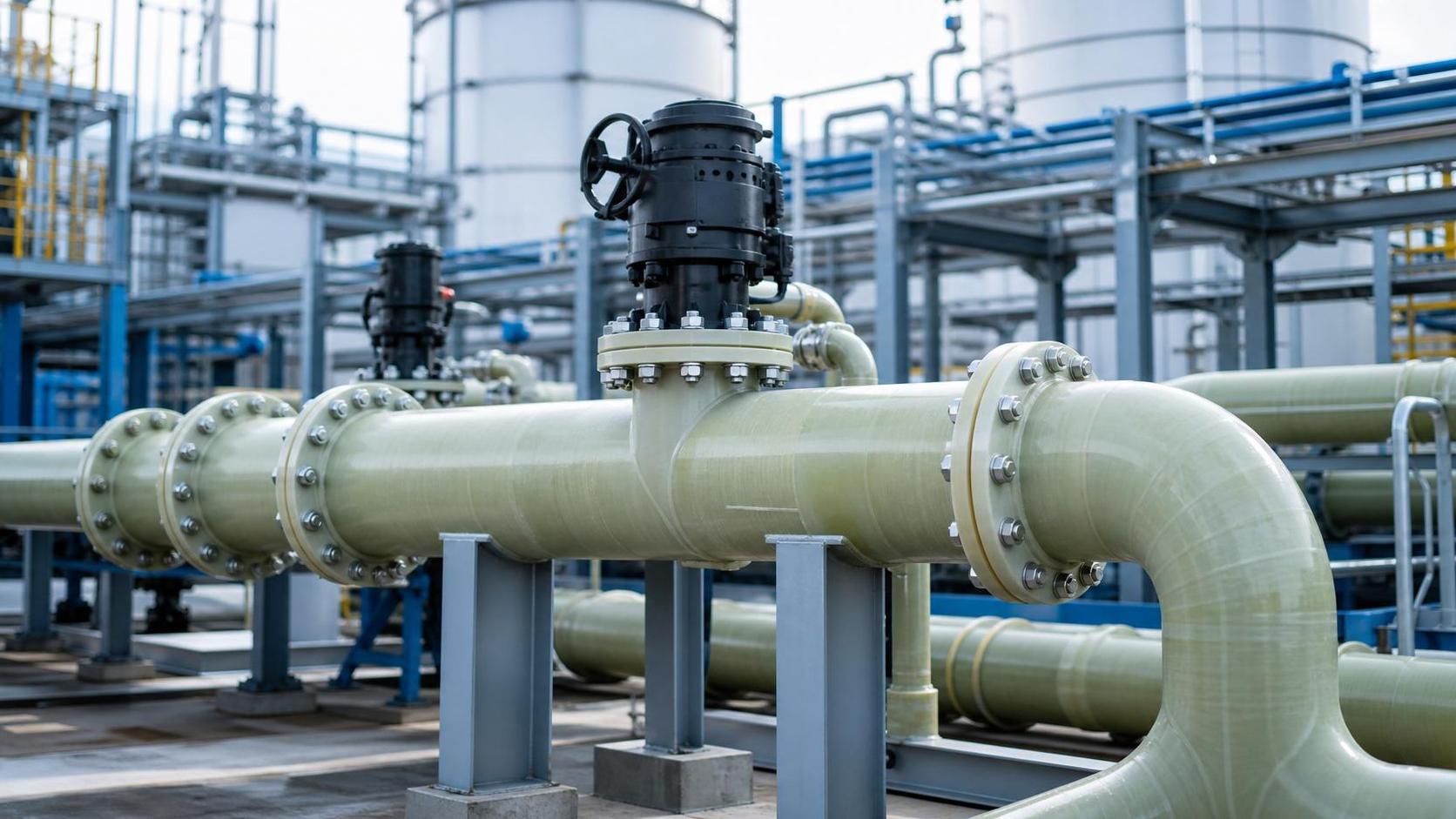
Why FRP Pipe matters when corrosive media changes the whole operating picture
Choosing the right FRP Pipe is rarely only about chemical resistance.
In real projects, service life depends on temperature swings, pressure cycles, installation quality, and maintenance access.
That is why FRP Pipe performs very differently in a chlor-alkali plant, a ballast line, or a salt-processing loop.
When corrosive media is continuous, even small material mismatches can lead to leakage, shutdowns, and repeated replacement work.
A well-matched FRP Pipe system helps control those risks while improving uptime and reducing long-term maintenance pressure.
Within glass and ceramic material engineering, composite pipe selection also reflects how resin systems, reinforcement structure, and process stability work together.
This becomes more relevant when projects require both corrosion resistance and predictable mechanical performance over long operating periods.
Actual use conditions create very different demands
Many pipelines carry “corrosive media,” but the media alone does not define the right FRP Pipe specification.
Acid concentration, slurry content, external weathering, vibration, and cleaning frequency all change the selection logic.
In practice, the better approach is to judge the whole operating envelope instead of one isolated parameter.
Manufacturing capability matters here as much as material choice.
Shandong Ocean Pipe Technology Co., Ltd., established in 2012 in Dezhou, has scaled GRE pipe production through 16 winding lines and extensive fitting equipment.
That background is relevant because consistent winding control and pressure testing directly affect field reliability in aggressive service.
For corrosive applications, repeatable production quality often decides whether an FRP Pipe system stays stable after years of exposure.
A quick comparison of what changes by scenario
Chemical plants usually need more than simple corrosion resistance
Chemical transfer lines are often the first place where FRP Pipe is considered, but not all chemical services behave the same.
Some media are stable at ambient temperature, while others become more aggressive during cleaning, flushing, or upset conditions.
That difference changes the required corrosion liner and safety margin.
Another common issue is concentration fluctuation.
A line designed for one acid concentration may face diluted phases, vapor contact, or intermittent alkaline wash cycles.
In those conditions, FRP Pipe selection should include the full cleaning and standby profile, not only the nominal fluid sheet.
Where routing is complex, fittings deserve the same attention as straight pipe.
Poorly matched elbows or adhesive systems can become the first failure point even when the pipe wall performs well.
Marine and offshore lines bring salt, motion, and space limits together
Marine service is one of the clearest examples where FRP Pipe value goes beyond corrosion resistance.
Seawater systems must handle chlorides continuously, yet weight and installation flexibility also influence the decision.
That is why GRE solutions are often preferred for ballast, cooling, and utility systems.
Still, offshore use is not just “chemical plant logic at sea.”
Movement, vibration, support spacing, and limited maintenance windows can change how an FRP Pipe system should be designed.
For that reason, projects sometimes review dedicated options such as GRE Pipe for Marine & Offshore when seawater duty and vessel conditions overlap.
The stronger judgment point is whether the system can keep stable joints and wall integrity under both corrosion and mechanical motion.
This is also where manufacturers with ship ballast and offshore references tend to have a practical advantage.
Oil and gas service often depends on pressure behavior, not chemistry alone
Produced water, injection water, and process utility lines can all look suitable for FRP Pipe at first glance.
The real screening factor is often pressure cycling combined with corrosive content.
A pipeline with frequent startup and shutdown stress may require more conservative structural design than a steady chemical transfer line.
Oilfield media can also include solids, hydrocarbons, dissolved gases, and temperature variation in one operating loop.
That mixed condition affects liner performance, abrasion resistance, and joint selection.
Ocean Pipe’s use history in oil and gas, LNG, and large industrial groups shows why field-proven FRP Pipe systems are valued in this sector.
The point is not brand visibility alone.
It is the accumulated understanding of where fatigue, installation discipline, and test verification must be tighter.
Salt processing and hot brine loops expose hidden wear points
Salt making operations are sometimes underestimated because the chemistry appears familiar.
In reality, concentrated brine, crystallization tendency, and entrained particles can turn a corrosion problem into a combined corrosion-abrasion problem.
In these loops, FRP Pipe must be judged by flow regime and maintenance practice as much as by corrosion tables.
If cleaning is frequent, thermal shock and pressure fluctuation may become more important over time.
If the line includes long horizontal runs, deposit formation may affect velocity and create uneven internal wear.
A better adaptation strategy is to review media composition, solid content, and washdown routines together before locking the FRP Pipe structure.
What usually deserves closer checking
- Whether corrosion data covers startup, shutdown, and cleaning phases.
- Whether solids or crystals raise abrasion beyond normal chemical service assumptions.
- Whether support spacing and anchors match real thermal and mechanical loads.
- Whether joints, reducers, and elbows share the same durability logic as the straight run.
Misjudgments appear when similar corrosive systems are treated as identical
One frequent mistake is choosing FRP Pipe from a basic media list and stopping there.
That shortcut ignores stress cycling, installation constraints, and the effect of occasional abnormal operation.
Another mistake is focusing only on initial cost.
In corrosive duty, replacement access, production interruption, and repeated maintenance often outweigh a small purchasing difference.
There is also a tendency to assume all seawater lines, all acid lines, or all brine lines need the same FRP Pipe build.
They do not.
Temperature profile, pressure pattern, and operating rhythm can reshape the recommendation even when the fluid family looks similar.
A practical way to decide where FRP Pipe fits best
Start with the full service envelope, not the fluid name alone.
That means checking media composition, concentration changes, maximum temperature, pressure class, solids, and cleaning method together.
Then review the pipeline layout.
Long straight runs, deck exposure, buried sections, vertical risers, and tight equipment areas do not create the same demands on FRP Pipe installation.
After that, compare lifecycle implications.
A system that reduces corrosion failures but complicates maintenance access may still need adjustment at the design stage.
Where marine or offshore duty is involved, reviewing options such as GRE Pipe for Marine & Offshore can be useful if space, motion, and chloride exposure are all present.
The better next step is to map each operating section by condition, then match the FRP Pipe specification to the hardest real condition, not the average one.
That approach usually leads to more stable service, clearer maintenance planning, and better control of lifecycle cost.
Please give us a message
产品介绍产品介绍产品介绍产品介绍产品介绍产品介绍产品介绍产品介绍产品介绍产品介绍产品介绍产品介绍产品介绍产品介绍产品介绍产品介绍产品介绍产品介绍产品介绍产品介绍产品介绍产品介绍产品介绍产品介绍产品介绍产品介绍产品介绍产品介绍产品介绍产品介绍
Please give us a message
产品介绍产品介绍产品介绍产品介绍产品介绍产品介绍产品介绍产品介绍产品介绍产品介绍产品介绍产品介绍产品介绍产品介绍产品介绍产品介绍产品介绍产品介绍产品介绍产品介绍产品介绍产品介绍产品介绍产品介绍产品介绍产品介绍产品介绍产品介绍产品介绍产品介绍
Please give us a message
产品介绍产品介绍产品介绍产品介绍产品介绍产品介绍产品介绍产品介绍产品介绍产品介绍产品介绍产品介绍产品介绍产品介绍产品介绍产品介绍产品介绍产品介绍产品介绍产品介绍产品介绍产品介绍产品介绍产品介绍产品介绍产品介绍产品介绍产品介绍产品介绍产品介绍
Please give us a message
产品介绍产品介绍产品介绍产品介绍产品介绍产品介绍产品介绍产品介绍产品介绍产品介绍产品介绍产品介绍产品介绍产品介绍产品介绍产品介绍产品介绍产品介绍产品介绍产品介绍产品介绍产品介绍产品介绍产品介绍产品介绍产品介绍产品介绍产品介绍产品介绍产品介绍