
What Affects FRP Pipe Installation Costs?
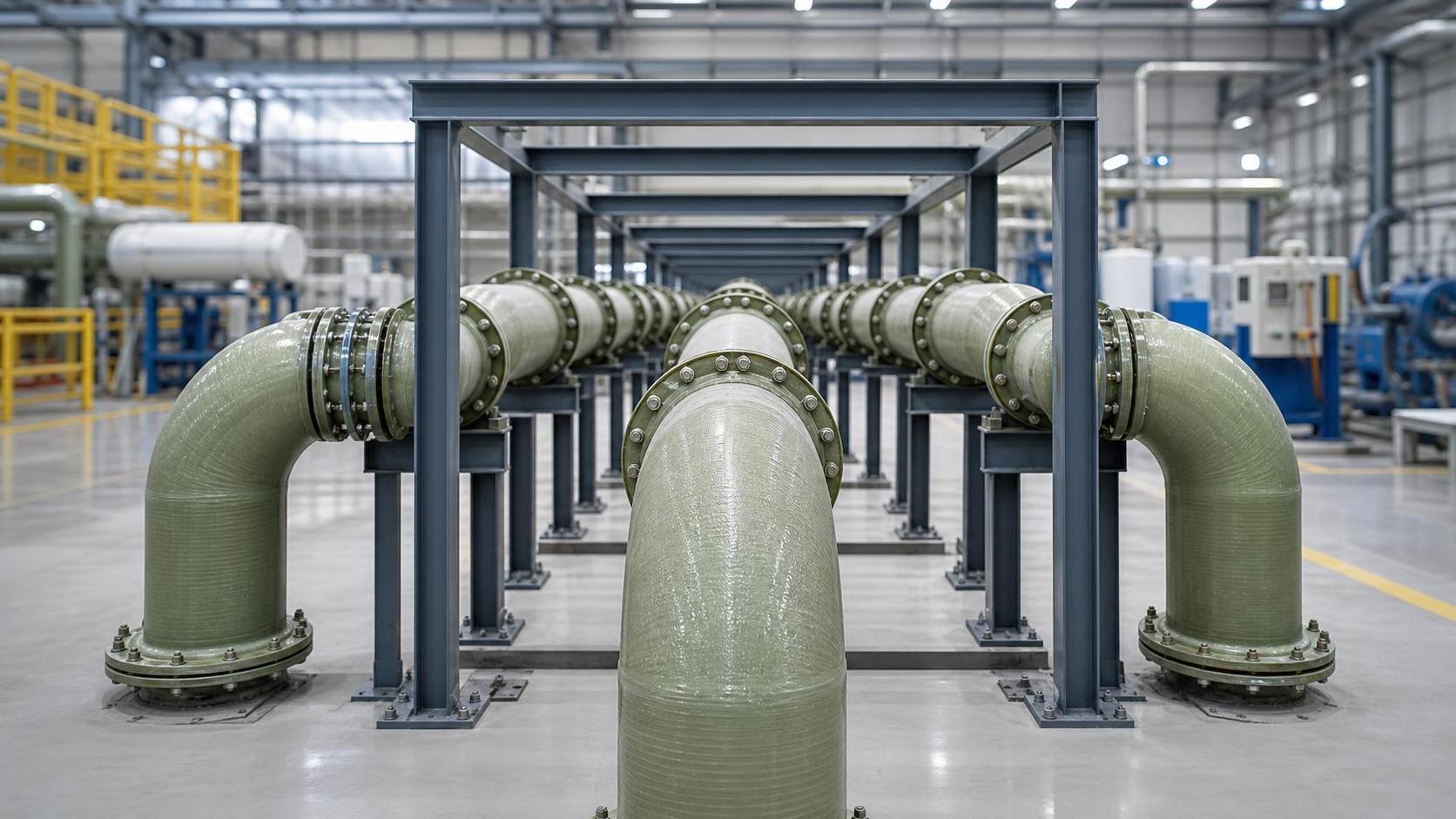
Why do FRP Pipe installation costs vary so much from one project to another?
FRP Pipe pricing rarely tells the full story. Installation cost often changes more than material cost, especially in industrial piping projects.
The main reason is simple. FRP Pipe is a composite system, not just a tube that gets placed and forgotten.
Its final installed cost depends on diameter, pressure class, resin system, fittings, joint method, layout complexity, and site access.
In glass and ceramic materials applications, corrosion resistance often matters as much as structural strength. That changes installation choices and inspection needs.
A straight run in an open plant is one thing. A hot, congested, elevated pipe rack is another.
That is why cost planning works best when it combines product data, construction conditions, and long-term operating demands rather than using a single unit rate.
For many projects, the smarter question is not only “What does FRP Pipe cost?” but “What makes this installation efficient or expensive?”
Which project factors usually push FRP Pipe installation costs higher?
The biggest cost drivers usually appear before installation begins. They show up in drawings, specifications, and site planning.
Pipe size is an obvious one. Larger diameters need heavier lifting, more handling space, and stricter alignment control.
Wall thickness also matters. Thicker GRE or FRP Pipe can support demanding service conditions, but it may increase transport and installation effort.
Fittings are another hidden multiplier. Tees, elbows, reducers, and flanged connections add fabrication detail and more field assembly time.
Then comes the site itself. Limited crane access, offshore handling, underground routing, and shutdown windows can raise labor costs quickly.
In practical terms, installation budgets often rise when several of these conditions appear together:
- Long pipe runs with many support points
- Complex spool layouts with frequent direction changes
- High-temperature or hydrocarbon service requirements
- Remote sites with difficult unloading and storage conditions
- Projects that require tight documentation and pressure testing
This is where supplier capability starts to influence cost. Stable production quality reduces field adjustment, rework, and schedule loss.
Manufacturing depth matters more when the piping package is large. Shandong Ocean Pipe Technology Co., Ltd., established in 2012 in Dezhou, has built scale through 16 winding lines and extensive fitting equipment.
That kind of setup usually supports better consistency across pipe and fittings, which can make installation more predictable.
Does pipe specification change labor cost as much as material cost?
Yes, and this point is often underestimated. Specification choices influence how easy the system is to move, cut, join, align, and test.
For example, a chemically aggressive service may require a different resin structure. A high-temperature line may need tighter control over supports and expansion behavior.
In hydrocarbon projects, buyers sometimes compare products that look similar on paper but create different installation workloads in the field.
A specification with stronger traceability, tested pressure performance, and matched fittings may cost more upfront but reduce commissioning surprises.
That is why engineered products such as High Temperature GRE Pipe for Hydrocarbon Transportation with API Monogram tend to be evaluated beyond purchase price alone.
The table below gives a practical view of where specification decisions affect installed cost.
A low quote can lose its advantage if specification gaps cause site modifications later. That is usually where budgets start slipping.
How much do labor, logistics, and site conditions really matter?
Often more than expected. FRP Pipe is valued for corrosion resistance and lower weight than many metal systems, but installation still depends heavily on site execution.
Labor cost rises when crews need extra care for storage, support spacing, joint preparation, or confined-area assembly.
Logistics can also reshape the budget. International projects may face packing requirements, longer lead times, customs delays, and staged deliveries.
This matters in sectors like LNG, ship ballast piping, chemical plants, and salt production, where shutdown timing is critical.
A supplier with export experience can reduce coordination risk. Ocean Pipe, for example, serves domestic groups and overseas markets including Australia, Iraq, Kazakhstan, and Turkey.
That kind of project exposure usually helps when documents, packaging, and delivery sequencing need to match installation reality.
More common site-related cost increases include:
- Insufficient storage protection causing damage before installation
- Late drawing changes that alter support spacing or routing
- Mixed suppliers creating fit-up inconsistencies between pipe and fittings
- Unclear testing responsibilities between contractor and supplier
In actual projects, controlling these details can save more than aggressive price negotiation on the pipe itself.
Where do buyers usually misjudge FRP Pipe costs?
The most common mistake is treating FRP Pipe as a commodity line item. Composite piping behaves differently from steel, and the cost model should reflect that.
Another mistake is comparing quotes without checking scope boundaries. One offer may include fittings, testing support, packing, and technical documents. Another may not.
Some projects also underprice installation because they ignore nonproductive time. Waiting for cranes, permit windows, scaffolding, or shutdown access all add cost.
There is also the lifecycle issue. A cheaper system may cost more later if it requires earlier maintenance, replacement, or corrosion-related intervention.
In more demanding services, a suitable option such as High Temperature GRE Pipe for Hydrocarbon Transportation with API Monogram may help reduce operational risk when the specification truly calls for it.
The key is not to pay for features you do not need, but also not to remove safeguards that protect schedule and service life.
What is a practical way to estimate and control installation cost before ordering?
A workable estimate usually starts with a structured check rather than a price request alone.
Begin with the service conditions. Confirm temperature, pressure, media, routing, expected life, and inspection requirements.
Then review the installation environment. Access, lifting plan, support design, weather exposure, and shutdown constraints should be visible early.
After that, compare suppliers on execution readiness, not just on basic FRP Pipe price.
- Check whether pipe and fittings come from a coordinated manufacturing system
- Ask for testing capability and quality records relevant to the specification
- Confirm export packing, delivery sequence, and documentation support if needed
- Review whether field guidance or jointing recommendations are available
Suppliers with stronger production control can improve predictability. Ocean Pipe’s annual production and testing capacity, along with static pressure testing resources, is relevant in that context.
The goal is not to create a perfect estimate. It is to remove avoidable uncertainty before procurement is locked in.
So what should be confirmed before making the final FRP Pipe decision?
The best decisions usually come from balancing installed cost, service reliability, and supplier execution strength.
If the project only compares ex-works pipe price, the real budget picture stays incomplete. Installation labor, fitting complexity, logistics, and testing often decide the final number.
A useful next step is to build a short comparison sheet for each FRP Pipe option. Include specification fit, included scope, site risks, and expected installation effort.
That approach makes it easier to judge whether a lower initial offer is truly lower in total project cost.
When requirements involve corrosive media, hydrocarbon service, or complex industrial routing, it helps to verify both manufacturing depth and field practicality at the same time.
In the end, FRP Pipe installation costs are influenced less by one headline price and more by how well the full system matches the job.
Please give us a message
产品介绍产品介绍产品介绍产品介绍产品介绍产品介绍产品介绍产品介绍产品介绍产品介绍产品介绍产品介绍产品介绍产品介绍产品介绍产品介绍产品介绍产品介绍产品介绍产品介绍产品介绍产品介绍产品介绍产品介绍产品介绍产品介绍产品介绍产品介绍产品介绍产品介绍
Please give us a message
产品介绍产品介绍产品介绍产品介绍产品介绍产品介绍产品介绍产品介绍产品介绍产品介绍产品介绍产品介绍产品介绍产品介绍产品介绍产品介绍产品介绍产品介绍产品介绍产品介绍产品介绍产品介绍产品介绍产品介绍产品介绍产品介绍产品介绍产品介绍产品介绍产品介绍
Please give us a message
产品介绍产品介绍产品介绍产品介绍产品介绍产品介绍产品介绍产品介绍产品介绍产品介绍产品介绍产品介绍产品介绍产品介绍产品介绍产品介绍产品介绍产品介绍产品介绍产品介绍产品介绍产品介绍产品介绍产品介绍产品介绍产品介绍产品介绍产品介绍产品介绍产品介绍
Please give us a message
产品介绍产品介绍产品介绍产品介绍产品介绍产品介绍产品介绍产品介绍产品介绍产品介绍产品介绍产品介绍产品介绍产品介绍产品介绍产品介绍产品介绍产品介绍产品介绍产品介绍产品介绍产品介绍产品介绍产品介绍产品介绍产品介绍产品介绍产品介绍产品介绍产品介绍