
How GRVE Pipe Reduces Corrosion Repair Frequency
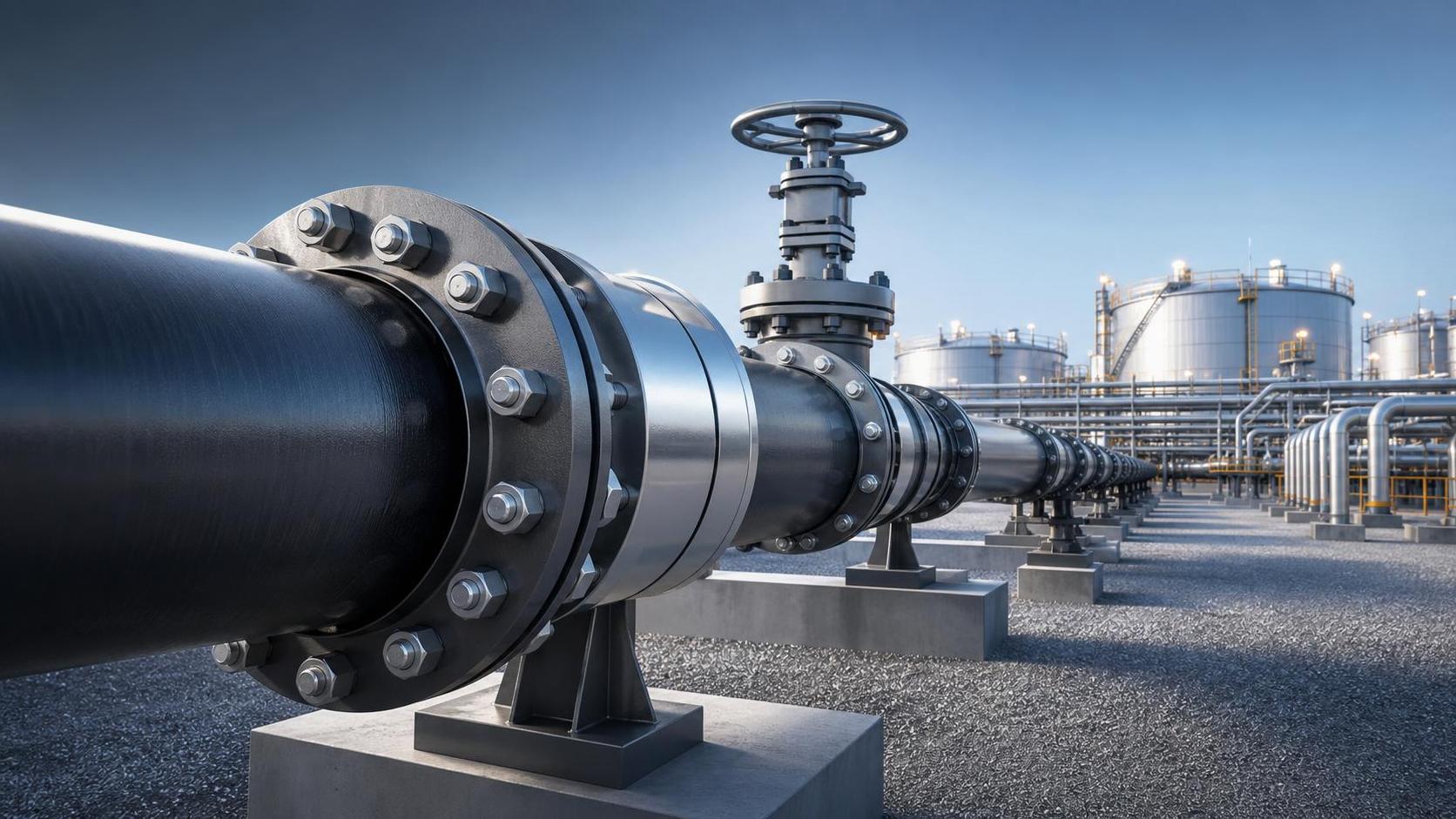
How GRVE Pipe Reduces Corrosion Repair Frequency
For oil and gas operators, corrosion is rarely a small maintenance issue.
It drives shutdowns, weakens safety margins, and keeps repair budgets under pressure.
That is why GRVE Pipe is getting more attention in corrosive service lines.
It offers a practical way to reduce corrosion repair frequency without sacrificing operating reliability.
In demanding oilfield environments, that shift can improve uptime and support better lifecycle cost control.
Why Corrosion Repairs Keep Returning in Oil Systems
Traditional metallic piping faces constant attack from water, chlorides, acids, and produced fluids.
Even well-coated steel can degrade when operating conditions fluctuate or internal chemistry becomes more aggressive.
Small coating failures often become larger integrity problems over time.
The repair cycle becomes familiar: inspect, isolate, patch, test, and repeat.
In actual operations, that cycle creates hidden costs beyond the repair itself.
- Production interruptions that affect throughput
- Hot work and confined space exposure
- Repeated labor mobilization and inspection expense
- Inventory pressure for spare parts and emergency fittings
- Long-term uncertainty in asset planning
This is where GRVE Pipe changes the maintenance equation.
Instead of managing corrosion after it appears, the system is designed to resist it from the start.
What Makes GRVE Pipe Different
GRVE Pipe combines fiberglass reinforcement with epoxy resin to create a corrosion-resistant composite structure.
That structure performs differently from carbon steel in wet, saline, and chemically active conditions.
It does not rely on sacrificial thickness to survive corrosive exposure.
It relies on material resistance across the pipe wall and internal surface.
Key performance advantages
- High resistance to internal and external corrosion
- Stable hydraulic performance with a smooth inner wall
- Low maintenance demand over long service periods
- Good strength-to-weight ratio for easier installation
- Reliable operation in produced water and chemical service
From a decision-making perspective, these features matter because they directly affect repair intervals.
The fewer corrosion triggers a pipeline faces, the fewer corrective events operations teams need to manage.
How GRVE Pipe Lowers Corrosion Repair Frequency
1. It resists aggressive media at the source
Produced water, seawater, brine, and process chemicals are common causes of pipe degradation.
GRVE Pipe is built for environments where those media cause repeated metal failures.
This lowers the chance of pitting, scaling-related damage, and wall loss that drive emergency repairs.
2. It reduces weak points linked to coating damage
Steel systems often depend on coatings and linings staying intact for years.
Once they crack or separate, corrosion accelerates quickly at those damaged spots.
GRVE Pipe reduces that dependency, which helps cut recurring localized repairs.
3. It maintains smoother internal flow
A smoother bore reduces deposit buildup and minimizes friction-related operating stress.
That can limit areas where corrosive agents concentrate or where cleaning becomes more frequent.
Over time, stable flow conditions support longer service intervals.
4. It improves lifecycle predictability
Frequent repair programs make long-term budgeting difficult.
GRVE Pipe supports a more predictable maintenance profile, especially in corrosion-intensive service areas.
That predictability helps asset teams plan shutdowns and capital allocation with more confidence.
Where GRVE Pipe Delivers the Most Value
Not every line sees the same corrosion risk.
The biggest value usually appears in systems with wet service, harsh chemicals, or high replacement frequency.
- Produced water transfer lines
- Injection water pipelines
- Offshore and coastal utility piping
- Chemical handling systems
- Wastewater and treatment-related piping
This is also why similar composite piping logic is discussed in adjacent facilities.
For example, corrosion control remains central in assets such as Wastewater Treatment Plant systems.
The common goal is straightforward: fewer failures, steadier throughput, and lower repair disruption.
What to Evaluate Before Selecting GRVE Pipe
A lower repair rate starts with correct system design.
Material selection should match pressure, temperature, media composition, and installation conditions.
Key evaluation points
- Review the fluid chemistry, including salinity, acidity, and solids content.
- Confirm pressure class and operating temperature range.
- Assess above-ground or buried installation requirements.
- Check joint design, fittings, and field assembly quality.
- Estimate lifecycle cost, not only initial procurement cost.
These points matter because even the best GRVE Pipe solution depends on fit-for-service engineering.
The real advantage appears when pipe design and operating conditions are aligned early.
Manufacturing Capability Also Affects Reliability
A corrosion-resistant material still needs consistent manufacturing quality.
That includes winding precision, process control, testing discipline, and fitting compatibility.
Shandong Ocean Pipe Technology Co., Ltd., established in 2012, is one of China’s major GRE pipe manufacturers.
The company operates 16 winding production lines and 174 pipe fitting winding machines with micro control systems.
Its factory also has five static water pressure testing machines.
Annual GRE pipe production and testing capacity reaches 25,000 tons.
Products serve oil and gas, ship ballast piping, LNG, chemical plants, hot spring pipelines, and salt-making applications.
In practical terms, that scale matters because proven manufacturing reduces variation that can shorten service life.
A Practical Way to Reduce Long-Term Repair Pressure
GRVE Pipe helps reduce corrosion repair frequency by addressing the root causes of repeated pipe failure.
It brings corrosion resistance, stable flow performance, and stronger lifecycle predictability into one piping solution.
For oil and gas assets facing constant repair cycles, that makes GRVE Pipe more than a material choice.
It becomes an operational strategy for lowering risk, protecting uptime, and improving total cost performance.
The next sensible step is to map high-failure lines, compare lifecycle costs, and evaluate where GRVE Pipe can deliver the fastest maintenance impact.
Please give us a message
产品介绍产品介绍产品介绍产品介绍产品介绍产品介绍产品介绍产品介绍产品介绍产品介绍产品介绍产品介绍产品介绍产品介绍产品介绍产品介绍产品介绍产品介绍产品介绍产品介绍产品介绍产品介绍产品介绍产品介绍产品介绍产品介绍产品介绍产品介绍产品介绍产品介绍
Please give us a message
产品介绍产品介绍产品介绍产品介绍产品介绍产品介绍产品介绍产品介绍产品介绍产品介绍产品介绍产品介绍产品介绍产品介绍产品介绍产品介绍产品介绍产品介绍产品介绍产品介绍产品介绍产品介绍产品介绍产品介绍产品介绍产品介绍产品介绍产品介绍产品介绍产品介绍
Please give us a message
产品介绍产品介绍产品介绍产品介绍产品介绍产品介绍产品介绍产品介绍产品介绍产品介绍产品介绍产品介绍产品介绍产品介绍产品介绍产品介绍产品介绍产品介绍产品介绍产品介绍产品介绍产品介绍产品介绍产品介绍产品介绍产品介绍产品介绍产品介绍产品介绍产品介绍
Please give us a message
产品介绍产品介绍产品介绍产品介绍产品介绍产品介绍产品介绍产品介绍产品介绍产品介绍产品介绍产品介绍产品介绍产品介绍产品介绍产品介绍产品介绍产品介绍产品介绍产品介绍产品介绍产品介绍产品介绍产品介绍产品介绍产品介绍产品介绍产品介绍产品介绍产品介绍