
FRP Pipe Specifications That Matter Most
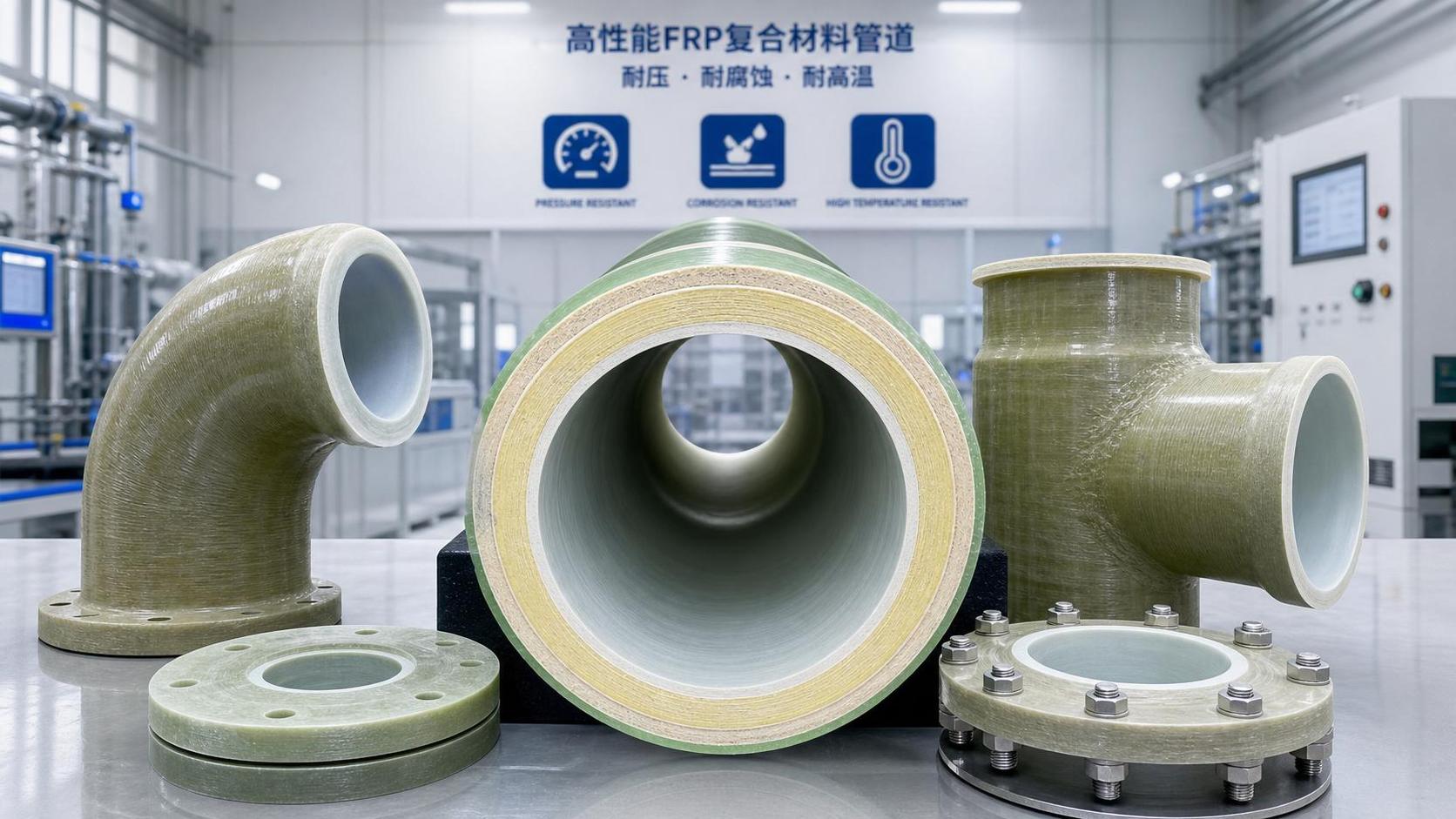
FRP Pipe Specifications That Matter Most
When evaluating FRP Pipe options, the specifications that matter most go far beyond basic dimensions.
For procurement and technical decision-makers, pressure class, corrosion resistance, and temperature range often shape total project value.
Manufacturing consistency matters just as much.
A well-specified FRP Pipe can reduce maintenance, limit downtime, and improve lifecycle cost control.
Why FRP Pipe specification review matters early
Many buyers compare price first.
In real projects, that approach can be risky.
The same FRP Pipe size may perform very differently under heat, pressure, chemicals, or cyclic loading.
That is why specification review should happen before supplier shortlisting, not after.
A clear technical checklist helps businesses compare offers on a like-for-like basis.
The first filter is service condition fit
Start with the actual operating environment.
A good FRP Pipe selection must match media type, pressure profile, temperature variation, and installation method.
If one of these is overlooked, the pipe may still pass factory tests but struggle in service.
Pressure rating is more than a catalog number
Pressure class is usually one of the first data points checked.
But in practice, the key question is how that rating was derived.
For FRP Pipe, pressure capability depends on resin system, glass content, winding angle, wall structure, and quality control.
Static pressure is only part of the story.
Surge loads, start-stop cycles, and long-term creep behavior also deserve attention.
What to ask suppliers
- What is the design pressure and test pressure?
- Is the rating based on recognized standards and long-term regression data?
- How does temperature affect pressure derating?
- What safety factor is applied in the design?
- Is the pipe qualified for vacuum or external pressure if required?
These questions make supplier comparison much more realistic.
Corrosion resistance often drives the real return
One major reason companies choose FRP Pipe is corrosion performance.
Still, not every resin system offers the same protection.
The conveyed medium should guide the resin choice.
Acids, alkalis, seawater, hydrocarbons, and mixed industrial fluids create very different demands.
In business terms, chemical compatibility can determine whether the asset lasts ten years or several decades.
Look beyond generic corrosion claims
Suppliers may describe FRP Pipe as highly corrosion resistant.
That sounds good, but it is too broad for technical evaluation.
Ask for medium-specific performance data, liner details, and recommended operating limits.
This is especially important in oil and gas, chemical processing, LNG support systems, and marine ballast lines.
Temperature tolerance changes the selection logic
Temperature tolerance is another critical FRP Pipe specification.
Many evaluation errors happen because teams focus on normal temperature, not peak temperature.
Short spikes, seasonal variation, and cleaning conditions all matter.
As temperature rises, resin behavior changes and pressure capacity may need derating.
That also means a lower-cost option may become expensive if it limits operations later.
For high-temperature hydrocarbon service, some projects consider specialized options such as High Temperature GRE Pipe for Hydrocarbon Transportation with API Monogram .
That kind of product fit can be more valuable than simply choosing the thickest wall.
Diameter and wall thickness should be read together
Nominal diameter is easy to compare.
Wall thickness is often less straightforward.
In FRP Pipe design, thickness affects pressure containment, stiffness, joint reliability, and installation behavior.
However, thicker is not always better.
Poor laminate balance or inconsistent winding can still create weak points.
Installation also matters here
Buried systems, above-ground lines, and marine applications place different loads on the pipe body.
So, stiffness class and allowable deflection should be reviewed alongside size and thickness.
This prevents a mismatch between design assumptions and actual site conditions.
Joint type and fittings deserve equal attention
An FRP Pipe system is only as reliable as its joints and fittings.
This is where some project reviews become too pipe-centered.
Flanges, elbows, tees, reducers, and bonding systems should be checked with the same discipline.
Joint style affects installation time, sealing confidence, and future maintenance planning.
Compatibility between pipe and fittings should be confirmed, not assumed.
Standards, testing, and traceability reduce risk
Technical claims are stronger when backed by standards and testing records.
For FRP Pipe, buyers should look for manufacturing discipline, inspection routines, and documented traceability.
Hydrostatic testing, raw material control, dimensional checks, and laminate verification all support quality confidence.
Traceability is especially useful when projects involve international approvals or long operating lives.
A supplier’s production capability is a practical signal
Production scale does not guarantee quality, but it often reveals process maturity.
Shandong Ocean Pipe Technology Co., Ltd. was established in 2012 in Dezhou, Shandong, China.
With 16 winding production lines and 174 pipe fitting winding machines, the company supports stable GRE manufacturing capacity.
Its factory also includes 5 static water pressure testing machines.
That matters because repeatable testing and fitting control directly support consistent FRP Pipe system performance.
Application history can reveal real-world confidence
Past project use is not just a marketing point.
It helps confirm whether an FRP Pipe supplier understands demanding service environments.
Ocean Pipe products are used in oil and gas, ship ballast piping, LNG, chemical plants, hot spring transport, and salt-making operations.
The company has supplied customers such as CNOOC, CNPC, Sinopec, and major Chinese shipyards.
It has also expanded into Australia, Iraq, Kazakhstan, and Turkey, which suggests broader project adaptation capability.
A practical checklist for comparing FRP Pipe suppliers
To make evaluation easier, use a short but disciplined checklist.
- Confirm operating media, pressure, temperature, and installation conditions.
- Review the FRP Pipe resin system and corrosion compatibility data.
- Check pressure class, derating basis, and long-term performance evidence.
- Compare wall structure, stiffness, and joint design together.
- Verify standards, testing capability, and batch traceability.
- Ask for similar project references in matching service conditions.
This approach keeps decisions grounded in operating value rather than headline pricing.
Final thought
The most important FRP Pipe specifications are the ones that connect directly to service life and project risk.
Pressure rating, corrosion resistance, temperature tolerance, wall design, fittings, and testing quality all work together.
When those factors are reviewed carefully, supplier comparison becomes clearer and more defensible.
That also improves long-term cost control.
If the application involves demanding heat and hydrocarbon service, solutions like High Temperature GRE Pipe for Hydrocarbon Transportation with API Monogram are worth reviewing as part of a broader technical comparison.
Please give us a message
产品介绍产品介绍产品介绍产品介绍产品介绍产品介绍产品介绍产品介绍产品介绍产品介绍产品介绍产品介绍产品介绍产品介绍产品介绍产品介绍产品介绍产品介绍产品介绍产品介绍产品介绍产品介绍产品介绍产品介绍产品介绍产品介绍产品介绍产品介绍产品介绍产品介绍
Please give us a message
产品介绍产品介绍产品介绍产品介绍产品介绍产品介绍产品介绍产品介绍产品介绍产品介绍产品介绍产品介绍产品介绍产品介绍产品介绍产品介绍产品介绍产品介绍产品介绍产品介绍产品介绍产品介绍产品介绍产品介绍产品介绍产品介绍产品介绍产品介绍产品介绍产品介绍
Please give us a message
产品介绍产品介绍产品介绍产品介绍产品介绍产品介绍产品介绍产品介绍产品介绍产品介绍产品介绍产品介绍产品介绍产品介绍产品介绍产品介绍产品介绍产品介绍产品介绍产品介绍产品介绍产品介绍产品介绍产品介绍产品介绍产品介绍产品介绍产品介绍产品介绍产品介绍
Please give us a message
产品介绍产品介绍产品介绍产品介绍产品介绍产品介绍产品介绍产品介绍产品介绍产品介绍产品介绍产品介绍产品介绍产品介绍产品介绍产品介绍产品介绍产品介绍产品介绍产品介绍产品介绍产品介绍产品介绍产品介绍产品介绍产品介绍产品介绍产品介绍产品介绍产品介绍