
FRP Pipe Market Trends to Watch in 2026
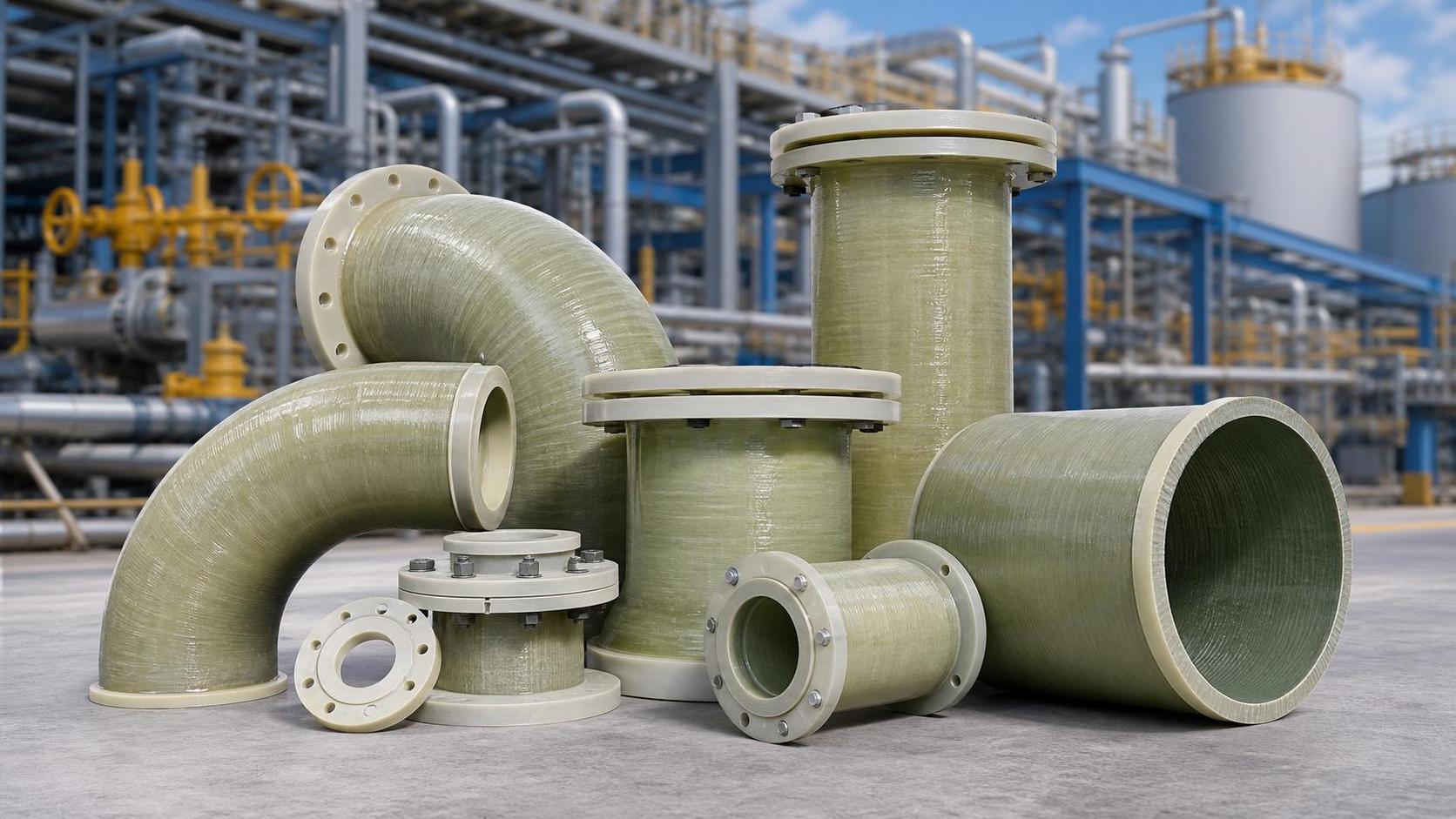
The FRP Pipe market is moving into 2026 with stronger demand, wider export activity, and clearer performance expectations from end users.
Oil and gas projects remain active, but marine systems, LNG facilities, chemical plants, and industrial utility networks are also shaping the next stage of growth.
For businesses following supply opportunities, the key question is no longer whether FRP Pipe is accepted.
The more useful question is where demand is shifting, which specifications are becoming standard, and how supply reliability affects long-term market share.
Why FRP Pipe is drawing more attention
FRP Pipe, including GRE and related composite piping systems, sits at the intersection of glass-based reinforcement and corrosion-resistant engineering.
That matters in the glass and ceramic materials sector because the value comes from material design, not only from pipe dimensions.
The glass fiber structure provides strength and stability.
The resin system supports chemical resistance, pressure performance, and durability in harsh operating conditions.
In 2026, buyers are comparing lifecycle economics more carefully.
This gives FRP Pipe an advantage in projects where steel corrosion, coating maintenance, or weight limitations increase total system cost.
It also explains why the market conversation is becoming more technical and less price-only.
The trends that are likely to define 2026
1. Corrosion resistance is becoming a procurement filter
In refineries, chemical handling systems, ballast lines, and salt-related applications, corrosion is still one of the biggest operating risks.
Because of that, FRP Pipe is increasingly evaluated as a preventive asset, not just a substitute material.
Projects now look more closely at resin selection, pressure class, and service medium compatibility.
2. GRE demand is rising in energy infrastructure
GRE Pipe continues to gain ground where temperature, pressure, and chemical exposure must be balanced with installation efficiency.
Refinery upgrades and LNG-related investments are especially relevant in 2026.
In these environments, a solution such as GRE Pipe for Refinery fits the market direction because performance must remain stable across demanding media and operating cycles.
3. Supply capacity is becoming part of product value
In earlier years, many discussions focused on technical suitability alone.
Now, delivery confidence, testing capability, and production consistency matter just as much.
Shandong Ocean Pipe Technology Co., Ltd. reflects this shift clearly.
Established in 2012 in Dezhou, Shandong, the company has grown into one of China’s top ten manufacturers of Fiberglass Reinforced Epoxy pipe.
With 16 winding production lines, 174 pipe fitting winding machines, micro control systems, and static water pressure testing equipment, the business offers scale that supports repeatable output.
An annual production and testing capacity of 25,000 tons sends an important signal to the market.
For channel development, stable supply is often the difference between a trial order and a lasting account.
4. Export-ready suppliers are gaining an edge
The FRP Pipe market is no longer shaped by domestic demand alone.
Projects in Australia, Iraq, Kazakhstan, and Turkey show how regional infrastructure investment is widening the addressable market.
Suppliers already serving global names in energy and shipbuilding usually enter new markets faster because their qualification track record reduces uncertainty.
Where demand is strongest
The 2026 picture is not uniform.
Some segments value chemical durability most, while others focus on weight reduction or installation speed.
A practical view helps separate headline growth from usable opportunity.
This spread of applications is important because it reduces dependence on one sector.
A broader demand base usually supports steadier ordering patterns and healthier inventory turnover.
What the market now expects from a reliable FRP Pipe source
In 2026, product acceptance starts before the first shipment.
Documentation, testing discipline, and manufacturing transparency all influence conversion.
- Clear pressure and temperature performance data for each system.
- Consistent winding quality across pipes and fittings.
- Testing capability that supports project qualification and inspection needs.
- Application references in sectors such as oil, gas, marine, LNG, and chemicals.
- Export handling experience, especially for multi-country or specification-sensitive orders.
Ocean Pipe’s customer base, including CNOOC, CNPC, Sinopec, and major Chinese shipyards, shows why reference quality matters.
Large accounts do not remove the need for evaluation, but they do indicate operating credibility.
How to read the opportunity more accurately
The FRP Pipe market can look attractive on volume alone, but the better opportunities often sit in specification depth.
A refinery project and a ship ballast project may both use composite pipes, yet the decision logic is different.
That is why simple price comparison rarely gives a complete picture.
Focus on project fit, not only catalog range
A wide catalog is useful, but fit-to-application matters more.
Chemical medium, operating pressure, joining method, and site environment should guide the selection process.
Check whether capacity matches growth plans
A supplier may perform well on samples but struggle on larger repeat orders.
Production scale, fitting support, and testing resources help reveal whether growth can be sustained.
Treat application diversity as a risk control factor
Suppliers active across oil and gas, marine, LNG, and chemical sectors often respond better to changing demand cycles.
That flexibility can improve continuity when one end market slows temporarily.
What to watch next
The FRP Pipe market in 2026 is likely to reward businesses that read technical trends and supply-side signals together.
Material performance still matters, but market timing, certification readiness, and reliable manufacturing now shape competitive position more directly.
A practical next step is to map target sectors by corrosion risk, service conditions, and order frequency.
Then compare which FRP Pipe sources can support both present demand and future expansion.
Where refinery or process applications are under review, it is also worth tracking solutions such as GRE Pipe for Refinery within a broader system evaluation.
The strongest decisions in this market usually come from matching application detail with proven production strength, rather than chasing short-term volume alone.
Please give us a message
产品介绍产品介绍产品介绍产品介绍产品介绍产品介绍产品介绍产品介绍产品介绍产品介绍产品介绍产品介绍产品介绍产品介绍产品介绍产品介绍产品介绍产品介绍产品介绍产品介绍产品介绍产品介绍产品介绍产品介绍产品介绍产品介绍产品介绍产品介绍产品介绍产品介绍
Please give us a message
产品介绍产品介绍产品介绍产品介绍产品介绍产品介绍产品介绍产品介绍产品介绍产品介绍产品介绍产品介绍产品介绍产品介绍产品介绍产品介绍产品介绍产品介绍产品介绍产品介绍产品介绍产品介绍产品介绍产品介绍产品介绍产品介绍产品介绍产品介绍产品介绍产品介绍
Please give us a message
产品介绍产品介绍产品介绍产品介绍产品介绍产品介绍产品介绍产品介绍产品介绍产品介绍产品介绍产品介绍产品介绍产品介绍产品介绍产品介绍产品介绍产品介绍产品介绍产品介绍产品介绍产品介绍产品介绍产品介绍产品介绍产品介绍产品介绍产品介绍产品介绍产品介绍
Please give us a message
产品介绍产品介绍产品介绍产品介绍产品介绍产品介绍产品介绍产品介绍产品介绍产品介绍产品介绍产品介绍产品介绍产品介绍产品介绍产品介绍产品介绍产品介绍产品介绍产品介绍产品介绍产品介绍产品介绍产品介绍产品介绍产品介绍产品介绍产品介绍产品介绍产品介绍