
Testing and Compliance Basics for GRE Tubing
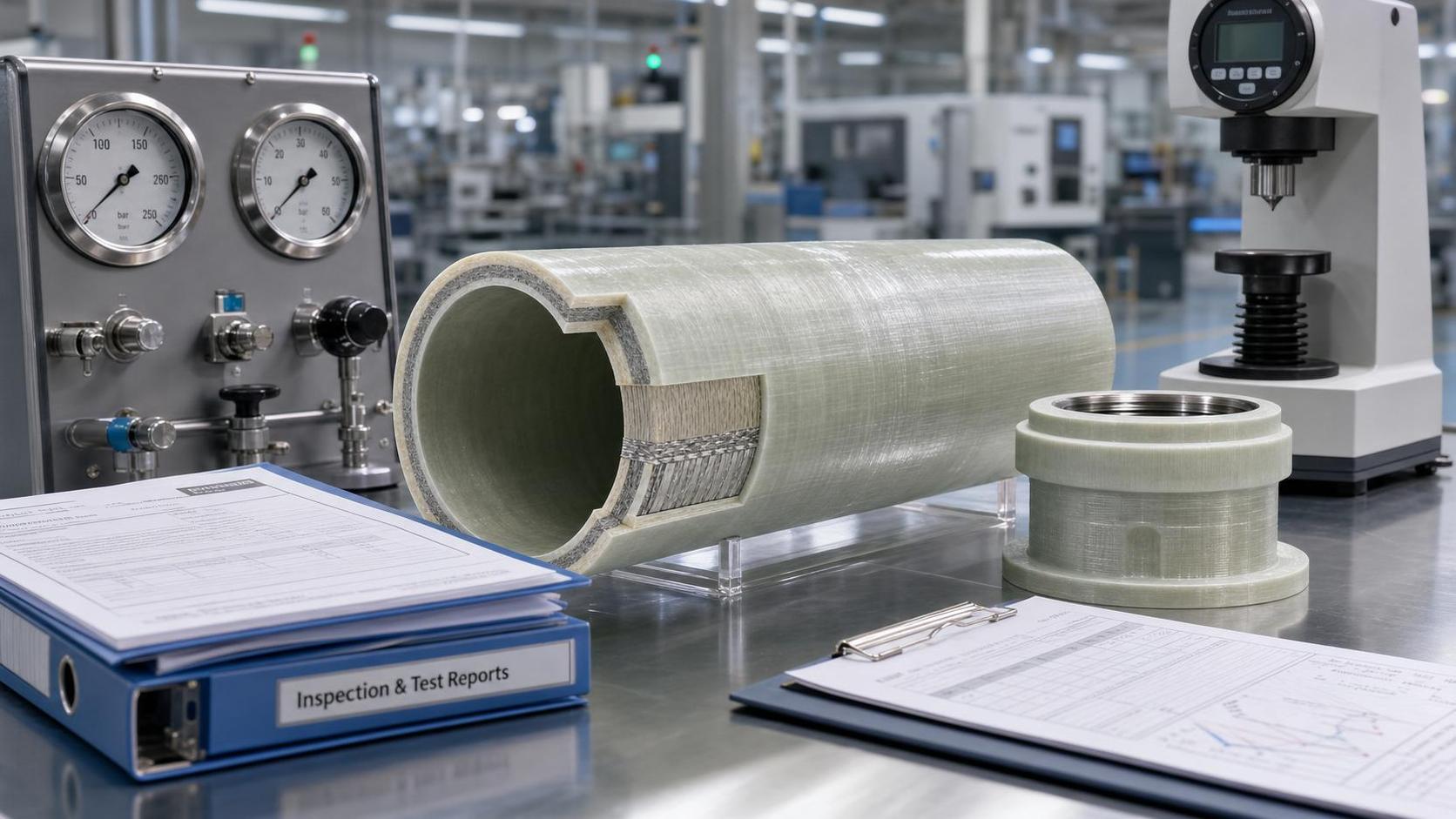
Why do testing and compliance matter so much for GRE Tubing?
GRE Tubing is chosen for corrosion resistance, light weight, and stable flow performance in aggressive services.
That does not mean compliance can be treated lightly.
In oil and gas, marine ballast, LNG, chemical transfer, and hot water systems, one weak section can affect the whole line.
A sound testing plan helps confirm pressure integrity, laminate quality, dimensional accuracy, and long-term suitability.
For many projects, the real question is not whether GRE Tubing works, but whether each batch is verified against the right standard.
This is especially relevant in fiberglass and ceramic-related materials, where structure, curing, and resin-glass bonding directly influence service life.
In practice, compliance reduces operational uncertainty.
It supports safer startup, cleaner audits, fewer repair interruptions, and more reliable acceptance during installation and commissioning.
When people ask if GRE Tubing is compliant, what are they really checking?
Usually, they are checking more than one thing.
They want to know whether the material composition, manufacturing control, pressure performance, and inspection records match project and regulatory requirements.
For GRE Tubing, compliance often connects to recognized standards such as ISO, ASTM, API-related specifications, or owner-approved internal procedures.
The exact reference depends on service conditions and end-use location.
A practical way to read compliance is to separate it into four checkpoints:
- Material verification, including resin system, glass reinforcement, and cure condition.
- Mechanical and hydrostatic performance under specified pressure and temperature limits.
- Dimensional and visual inspection, especially wall thickness, ovality, ends, and surface defects.
- Traceability, meaning batch records, test reports, and inspection release documents.
Without all four, it is difficult to defend the quality status of GRE Tubing during review.
Manufacturing background also matters.
A producer with controlled winding lines, micro-controlled fitting equipment, and in-house static pressure testing can usually provide more consistent evidence.
That is one reason large-scale facilities such as Shandong Ocean Pipe Technology, established in 2012 in Dezhou, emphasize both production capacity and testing capacity together.
Which tests are considered basic, and which ones are often misunderstood?
The basic tests for GRE Tubing are not complicated, but they must be selected carefully.
Hydrostatic testing is the most familiar one.
It confirms that the tubing and joints can hold a defined pressure for a specified time without leakage or failure.
Still, hydrotest alone is not enough.
A tube may pass short-term pressure testing and still have curing defects, resin-rich zones, dry glass areas, or dimensional deviations.
That is where routine inspection and destructive qualification tests become important.
A frequent misunderstanding is that laboratory qualification and production release testing are interchangeable.
They are not.
Qualification proves the design concept.
Routine production testing proves that actual GRE Tubing matches that concept every time.
How do you judge whether testing is enough for the actual service condition?
The best approach is to start from service reality, not from a generic checklist.
GRE Tubing in a marine ballast line faces different risks than GRE Tubing in a chemical plant or hot brine system.
Pressure class matters, but so do temperature cycles, media composition, supports, vibration, and installation quality.
A useful screening method is to ask these questions before approving test scope:
- Is the conveyed media chemically compatible with the epoxy resin system?
- Are surge pressure and operating pressure both included in design review?
- Will the tubing see offshore movement, thermal expansion, or repeated shock loading?
- Are fittings, joints, and supports inspected with the same rigor as straight lengths?
- Does the documentation identify batch numbers and test dates clearly?
If one answer is unclear, the testing plan is usually incomplete.
In actual project reviews, marine and offshore lines often receive extra attention because movement and corrosion exposure act together.
That is also why some teams compare data from specialized systems such as GRE Pipe for Marine & Offshore when reviewing tubing suitability and test expectations.
What documentation should be ready before inspection, shipment, or site acceptance?
This is where many delays happen.
The GRE Tubing itself may be acceptable, but missing records can stop release or create doubt during audits.
A complete document pack should be easy to trace and easy to read.
Typical contents include material certificates, production records, inspection reports, hydrotest results, dimensional checks, and nonconformance closure if any issue occurred.
It also helps to align the record structure with the project inspection and test plan.
That way, site teams do not need to reinterpret factory data.
For suppliers serving sectors like oil and gas, shipbuilding, LNG, and chemical processing, document discipline is often as important as physical test results.
Large manufacturers with multiple winding lines and dedicated static pressure machines usually build this traceability into normal production flow, which improves consistency across export projects as well.
If the tubing will be installed in marine systems, reviewing related records against solutions such as GRE Pipe for Marine & Offshore can also help clarify expected acceptance standards.
Where do compliance failures usually start, even when the material looks fine?
Most failures begin at transitions, assumptions, or shortcuts.
The tubing may look smooth and well finished, yet problems appear in joints, unsupported spans, incorrect adhesives, poor storage, or unverified repairs.
Another common issue is using a pass result from one service condition to justify another.
GRE Tubing tested for clean water duty cannot automatically be assumed suitable for hot chemicals or pulsating service.
Need-to-watch warning signs usually include:
- Repair areas without defined acceptance criteria.
- Inconsistent wall readings between pipe body and pipe ends.
- Pressure test records without clear hold time or calibration reference.
- Fittings supplied from a different batch without linked traceability.
- Storage damage from sunlight, impact, or stacking pressure before installation.
More often than not, compliance problems are process problems.
That is why prevention should cover manufacturing, packing, transport, installation, and final inspection together.
What is a sensible next step if you want fewer surprises with GRE Tubing?
Start by matching the test plan to the service condition, not just to the purchase description.
Then check whether the compliance file proves material identity, pressure capability, dimensional control, and batch traceability in one chain.
For GRE Tubing, the safest decisions usually come from comparing design intent, factory testing, and installation reality side by side.
If any part is disconnected, risk increases quietly.
A practical review can be simple:
- Confirm the governing standards before production starts.
- Define routine tests for pipe, fittings, and joints separately.
- Require traceable records before shipment release.
- Recheck storage and site installation conditions before commissioning.
That kind of disciplined review does more than satisfy paperwork.
It helps keep GRE Tubing reliable in the environments where failure is hardest to tolerate.
Please give us a message
产品介绍产品介绍产品介绍产品介绍产品介绍产品介绍产品介绍产品介绍产品介绍产品介绍产品介绍产品介绍产品介绍产品介绍产品介绍产品介绍产品介绍产品介绍产品介绍产品介绍产品介绍产品介绍产品介绍产品介绍产品介绍产品介绍产品介绍产品介绍产品介绍产品介绍
Please give us a message
产品介绍产品介绍产品介绍产品介绍产品介绍产品介绍产品介绍产品介绍产品介绍产品介绍产品介绍产品介绍产品介绍产品介绍产品介绍产品介绍产品介绍产品介绍产品介绍产品介绍产品介绍产品介绍产品介绍产品介绍产品介绍产品介绍产品介绍产品介绍产品介绍产品介绍
Please give us a message
产品介绍产品介绍产品介绍产品介绍产品介绍产品介绍产品介绍产品介绍产品介绍产品介绍产品介绍产品介绍产品介绍产品介绍产品介绍产品介绍产品介绍产品介绍产品介绍产品介绍产品介绍产品介绍产品介绍产品介绍产品介绍产品介绍产品介绍产品介绍产品介绍产品介绍
Please give us a message
产品介绍产品介绍产品介绍产品介绍产品介绍产品介绍产品介绍产品介绍产品介绍产品介绍产品介绍产品介绍产品介绍产品介绍产品介绍产品介绍产品介绍产品介绍产品介绍产品介绍产品介绍产品介绍产品介绍产品介绍产品介绍产品介绍产品介绍产品介绍产品介绍产品介绍