
GRE Tubing Specifications That Affect Performance
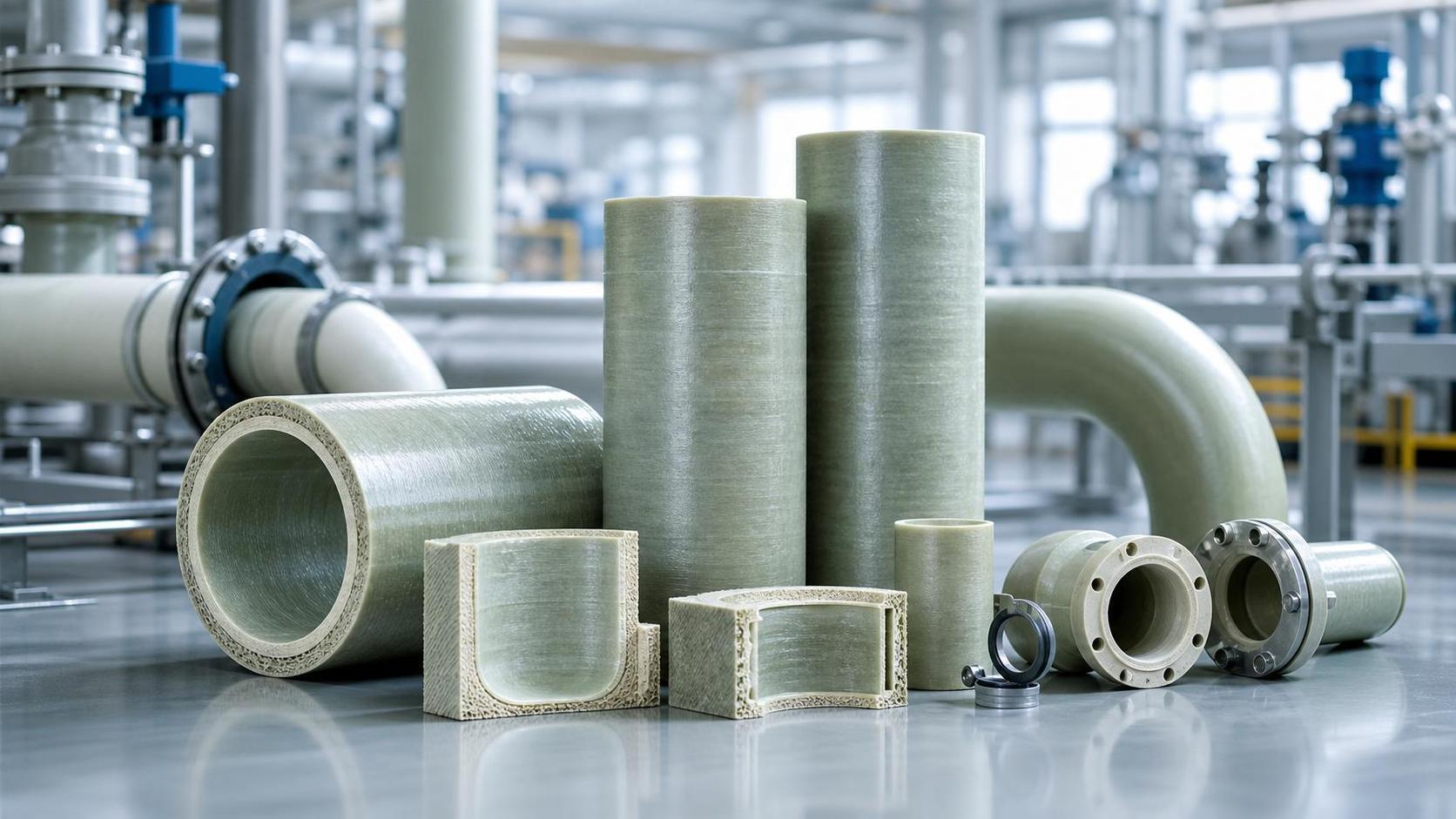
GRE Tubing Specifications That Affect Performance
When evaluating GRE Tubing for industrial systems, the right specifications shape real-world performance from day one.
Pressure resistance, corrosion control, service life, and installation speed all depend on technical details that are easy to overlook.
That is why buyers and engineers often look past basic dimensions and focus on the full specification profile.
A well-selected GRE Tubing system usually performs better, lasts longer, and reduces maintenance disruption across demanding applications.
In the glass and ceramic materials field, the same logic applies.
Material compatibility, stable flow, and resistance to harsh media matter just as much as initial purchase cost.
Why GRE Tubing Specifications Matter
GRE Tubing is not a one-size-fits-all product.
Small changes in wall thickness, resin type, winding angle, or pressure class can significantly change system behavior.
For example, a tube designed for clean water service may underperform in chemical transfer or hot brine conditions.
This also means a lower-priced option is not always the lower-cost option over its full operating life.
The performance of GRE Tubing depends on matching the specification to the operating environment, not just matching diameter and length.
Key GRE Tubing Specifications to Review
1. Diameter and Wall Thickness
Internal diameter affects flow rate, pressure drop, and pump efficiency.
Wall thickness directly affects structural strength, vacuum resistance, and long-term pressure stability.
If the tubing is too thin, deformation risk rises under pressure cycling.
If it is too thick, weight, cost, and installation effort may increase without adding useful value.
2. Pressure Rating
Pressure class is one of the first filters in GRE Tubing selection.
However, the stated rating should be checked against operating pressure, surge pressure, and testing pressure.
Many systems fail early because the design only considered steady-state conditions.
Short pressure spikes, water hammer, and thermal shock often reveal weak specification choices.
3. Resin System
The resin system largely determines chemical resistance and temperature tolerance.
Epoxy-based GRE Tubing is often chosen for strong adhesion, stable mechanical performance, and reliable corrosion protection.
Even so, not every epoxy formula behaves the same way in acids, salts, hydrocarbons, or hot process fluids.
Always review chemical compatibility data before making a final material decision.
4. Glass Reinforcement Structure
The reinforcement design affects axial strength, hoop strength, and fatigue resistance.
Filament winding angle is especially important because it controls how loads are distributed through the tube wall.
A balanced structure can improve pressure handling and reduce crack propagation over time.
This is one reason manufacturing consistency matters as much as raw material quality.
5. Temperature Range
Temperature changes can reduce mechanical strength and change pressure capacity.
A GRE Tubing specification that works at ambient conditions may not perform the same way at elevated service temperatures.
This is especially relevant in hot spring lines, chemical systems, and some marine operating zones.
Testing Standards That Support Reliable Performance
Specifications on paper need proof in testing.
Reliable GRE Tubing should be validated through hydrostatic testing, stiffness checks, dimensional inspection, and long-term performance evaluation.
Depending on the application, standards such as ASTM, ISO, or project-specific marine requirements may apply.
A strong supplier should also show traceable quality control, not just a test summary sheet.
- Check hydrostatic pressure test records.
- Confirm dimensional tolerance consistency.
- Review raw material source and batch control.
- Ask about long-term qualification methods.
- Verify joint and fitting performance data.
How Specifications Affect Actual Applications
The impact of GRE Tubing specifications becomes clearer in practical service conditions.
In oil and gas facilities, corrosion resistance and pressure reliability are usually top priorities.
In ship ballast systems, weight reduction and seawater resistance often matter more.
In chemical plants, the resin system and liner design can become the deciding factors.
This application logic is also seen in The application of GRE piping in marine ballast water systems, where corrosion control and service stability are closely linked.
Looking at use conditions first usually leads to better GRE Tubing selection than starting from price alone.
Common Specification Mistakes During Selection
Some specification mistakes are surprisingly common.
- Choosing GRE Tubing by nominal size only.
- Ignoring transient pressure conditions.
- Assuming all epoxy systems offer equal corrosion resistance.
- Overlooking joint design and fitting compatibility.
- Failing to review operating temperature correction factors.
- Accepting limited test evidence from the supplier.
These issues often stay hidden at the purchasing stage.
Later, they appear as leakage, shortened life, unstable performance, or expensive replacement work.
What to Look for in a GRE Tubing Manufacturer
Supplier capability has a direct effect on product consistency.
Shandong Ocean Pipe Technology Co., Ltd., established in 2012 in Dezhou, Shandong, is one of China’s major Fiberglass Reinforced Epoxy pipe manufacturers.
The company operates 16 winding production lines and 174 pipe fitting winding machines with micro control systems.
It also has 5 static water pressure testing machines and an annual GRE pipe production and testing capacity of 25,000 tons.
Its products are used in oil and gas, LNG, ship ballast piping, chemical plants, hot spring systems, and salt making operations.
Customers include major groups such as CNOOC, CNPC, Sinopec, and well-known Chinese shipyards.
The company has also expanded to Australia, Iraq, Kazakhstan, Turkey, and other overseas markets, which signals broad application experience.
A Practical Checklist Before Final Selection
Before approving a GRE Tubing solution, use a short technical checklist.
- Define fluid type, temperature, pressure, and expected service life.
- Match diameter and wall thickness to hydraulic and structural needs.
- Confirm resin compatibility with the actual media.
- Review winding structure and manufacturing quality controls.
- Check applicable standards and third-party or factory testing evidence.
- Evaluate fittings, joints, and installation conditions together.
This process keeps the decision practical and lowers avoidable risk.
It also helps compare suppliers on engineering value, not just quoted price.
Final Takeaway
The performance of GRE Tubing depends on more than material type alone.
Dimensions, pressure rating, resin chemistry, reinforcement design, temperature limits, and testing standards all work together.
When these specifications align with the application, GRE Tubing can deliver strong corrosion resistance, efficient installation, and long service life.
When they do not, performance problems usually arrive sooner than expected.
A careful review now saves time, cost, and operational trouble later.
If you are comparing industrial piping options, start with specifications, verify testing, and choose a manufacturer with proven application experience.
Please give us a message
产品介绍产品介绍产品介绍产品介绍产品介绍产品介绍产品介绍产品介绍产品介绍产品介绍产品介绍产品介绍产品介绍产品介绍产品介绍产品介绍产品介绍产品介绍产品介绍产品介绍产品介绍产品介绍产品介绍产品介绍产品介绍产品介绍产品介绍产品介绍产品介绍产品介绍
Please give us a message
产品介绍产品介绍产品介绍产品介绍产品介绍产品介绍产品介绍产品介绍产品介绍产品介绍产品介绍产品介绍产品介绍产品介绍产品介绍产品介绍产品介绍产品介绍产品介绍产品介绍产品介绍产品介绍产品介绍产品介绍产品介绍产品介绍产品介绍产品介绍产品介绍产品介绍
Please give us a message
产品介绍产品介绍产品介绍产品介绍产品介绍产品介绍产品介绍产品介绍产品介绍产品介绍产品介绍产品介绍产品介绍产品介绍产品介绍产品介绍产品介绍产品介绍产品介绍产品介绍产品介绍产品介绍产品介绍产品介绍产品介绍产品介绍产品介绍产品介绍产品介绍产品介绍
Please give us a message
产品介绍产品介绍产品介绍产品介绍产品介绍产品介绍产品介绍产品介绍产品介绍产品介绍产品介绍产品介绍产品介绍产品介绍产品介绍产品介绍产品介绍产品介绍产品介绍产品介绍产品介绍产品介绍产品介绍产品介绍产品介绍产品介绍产品介绍产品介绍产品介绍产品介绍