
GRE Tubing Demand Trends Across Energy Markets
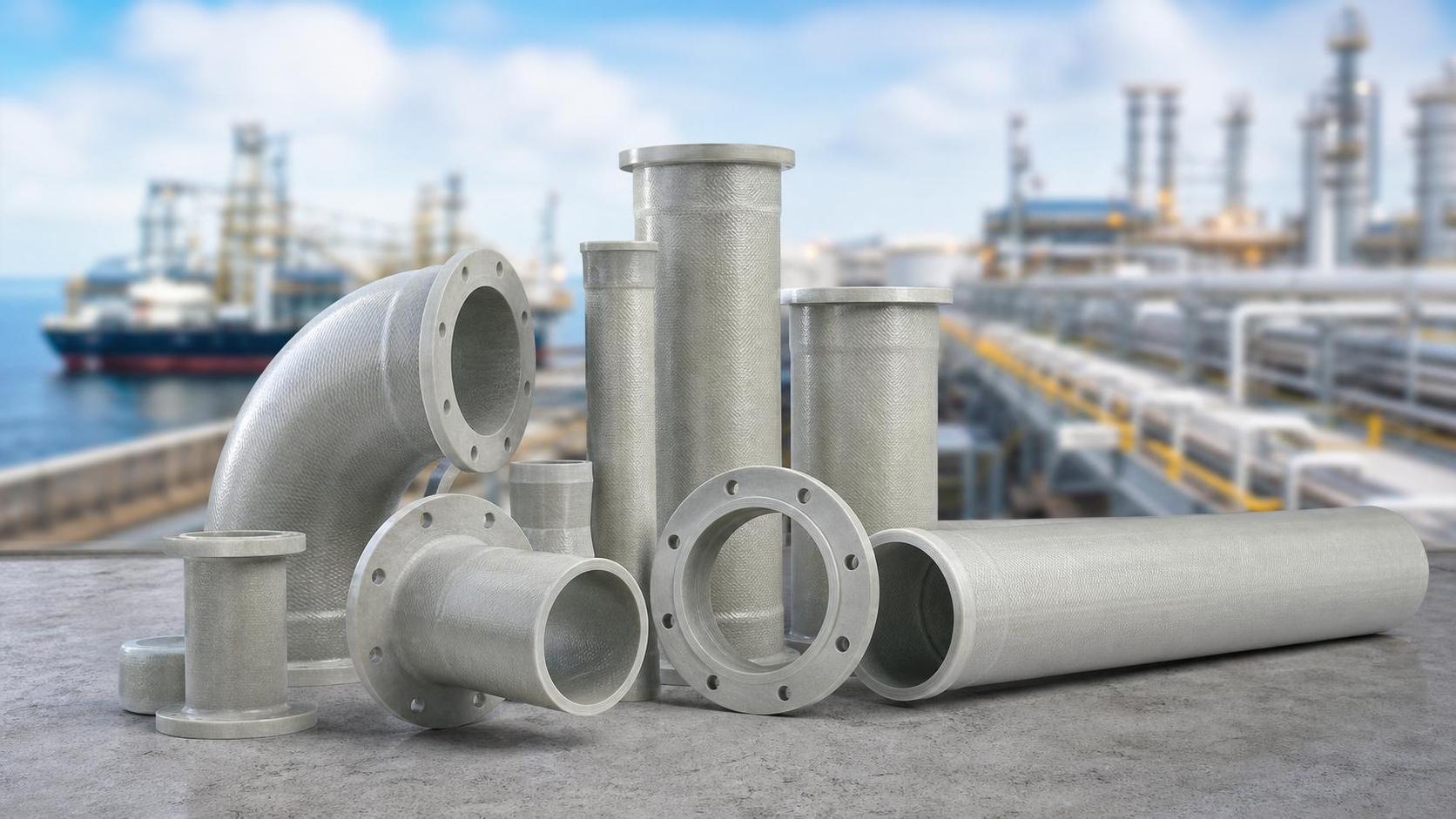
GRE Tubing demand is rising because energy infrastructure now faces stricter expectations around safety, corrosion resistance, weight reduction, and long-term operating efficiency.
Across oil and gas, LNG, marine systems, and process facilities, buyers are moving beyond upfront pipe cost and looking harder at lifecycle performance.
That shift matters for fiberglass and composite materials, where GRE Tubing combines glass reinforcement with epoxy resin to deliver a practical alternative to traditional metallic systems.
Why GRE Tubing is getting more attention
Energy markets are under pressure from several directions at once.
Projects must control capital spending, but they also need to limit maintenance downtime, reduce corrosion risk, and keep installation schedules predictable.
In that context, GRE Tubing stands out because it is light, durable, and well suited to harsh service environments.
The material sits at an interesting point within glass-based industrial materials.
It uses fiberglass reinforcement for structural strength and epoxy chemistry for chemical and environmental resistance, making it relevant well beyond a single niche.
This is one reason demand trends are no longer limited to replacement projects.
GRE Tubing is increasingly considered at the design stage, especially where corrosion, transport weight, and installation labor can influence total project economics.
What the market is really buying
The market is not simply buying a pipe.
It is buying reliability over time, fewer shutdowns, lower handling burden, and more stable performance in aggressive operating conditions.
That changes how GRE Tubing is evaluated.
Corrosion resistance remains the best-known advantage, but current purchasing behavior often centers on broader business outcomes.
- Reduced maintenance frequency in corrosive fluids or saline environments
- Lower transport and lifting costs because composite systems are lighter
- Faster field installation where labor access is limited or costly
- Longer useful service life under demanding operating cycles
- Better predictability in remote or offshore assets
For decision-making, that means the demand trend is linked less to novelty and more to risk management.
Demand signals across major energy segments
Different energy markets adopt GRE Tubing for different reasons.
The common thread is that metal is not always the most efficient answer when corrosion, weight, or maintenance exposure become dominant concerns.
In oil and gas, GRE Tubing is increasingly tied to water handling, injection support, produced water, and utility lines where internal corrosion can drive expensive failures.
In marine systems, the value is often more visible.
Ship ballast piping faces continuous exposure to seawater, and lighter composite systems can ease installation while supporting vessel efficiency goals.
In process industries, specification decisions usually depend on the exact fluid, temperature, pressure, and maintenance philosophy.
How manufacturing capacity shapes confidence
Demand trends are not driven by material benefits alone.
They also depend on whether suppliers can deliver consistent quality, testing discipline, and scalable production for large projects.
That is why manufacturing depth matters when evaluating GRE Tubing partners.
Shandong Ocean Pipe Technology Co., Ltd., established in 2012 in Dezhou, Shandong, reflects this industrial direction through focused GRE pipe production.
With 16 winding production lines, 174 pipe fitting winding machines and micro control systems, and five static water pressure testing machines, the company supports both scale and verification.
Its annual GRE pipe production and testing capacity reaches 25,000 tons, which is meaningful for projects requiring continuity of supply.
The customer base also says something about market acceptance.
Use across CNOOC, CNPC, Sinopec, major shipyards, and overseas markets such as Australia, Iraq, Kazakhstan, and Turkey suggests GRE Tubing demand is supported by real operating environments, not only promotional claims.
Where application decisions become more specific
Broad demand growth does not mean every line should use the same specification.
Actual selection becomes more precise when the operating context is clear.
Chemical and process systems
In chemical service, media compatibility should come before price comparison.
For facilities reviewing transfer lines, circulation systems, or corrosive utility service, Chemical Plant requirements often highlight the practical value of GRE Tubing.
Hot, saline, and utility environments
Hot spring piping and salt-making operations represent another useful reference point.
These services show why material stability in corrosive and mineral-rich environments can shape long-term economics more than initial procurement cost.
In other words, GRE Tubing demand is strongest where system failure would create repeat maintenance, downtime exposure, or difficult replacement conditions.
What to check before specifying GRE Tubing
The growing market does not remove the need for disciplined evaluation.
A good decision usually comes from matching system conditions with material capability, manufacturing control, and installation planning.
- Confirm fluid chemistry, operating temperature, and pressure envelope
- Review joint design, fittings quality, and system integration details
- Check hydrostatic testing capability and production traceability
- Compare lifecycle cost, not only purchase price
- Assess logistics and installation constraints for the project site
- Use supplier experience in similar sectors as a practical risk indicator
This is where many energy projects gain clarity.
If the line will operate in corrosive media, distant locations, offshore platforms, or shipboard layouts, GRE Tubing often becomes easier to justify.
If service conditions are unusually severe, the discussion should move quickly toward detailed engineering validation rather than generic material preference.
What the next few years are likely to show
The next phase of GRE Tubing demand will likely come from a mix of replacement, expansion, and new-build decisions.
Operators are becoming more selective, but also more open to composite materials when the business case is measurable.
That favors suppliers with proven manufacturing scale, testing systems, and sector-specific references.
It also favors buyers who build a decision framework around service conditions, lifecycle exposure, and project execution realities.
A useful next step is to map current and planned piping networks by corrosion risk, maintenance cost, and installation difficulty.
From there, GRE Tubing can be evaluated where it offers the clearest operational advantage, whether in offshore support lines, LNG utility systems, marine ballast service, or selected Chemical Plant applications.
That approach turns a broad demand trend into a more practical and defensible material strategy.
Please give us a message
产品介绍产品介绍产品介绍产品介绍产品介绍产品介绍产品介绍产品介绍产品介绍产品介绍产品介绍产品介绍产品介绍产品介绍产品介绍产品介绍产品介绍产品介绍产品介绍产品介绍产品介绍产品介绍产品介绍产品介绍产品介绍产品介绍产品介绍产品介绍产品介绍产品介绍
Please give us a message
产品介绍产品介绍产品介绍产品介绍产品介绍产品介绍产品介绍产品介绍产品介绍产品介绍产品介绍产品介绍产品介绍产品介绍产品介绍产品介绍产品介绍产品介绍产品介绍产品介绍产品介绍产品介绍产品介绍产品介绍产品介绍产品介绍产品介绍产品介绍产品介绍产品介绍
Please give us a message
产品介绍产品介绍产品介绍产品介绍产品介绍产品介绍产品介绍产品介绍产品介绍产品介绍产品介绍产品介绍产品介绍产品介绍产品介绍产品介绍产品介绍产品介绍产品介绍产品介绍产品介绍产品介绍产品介绍产品介绍产品介绍产品介绍产品介绍产品介绍产品介绍产品介绍
Please give us a message
产品介绍产品介绍产品介绍产品介绍产品介绍产品介绍产品介绍产品介绍产品介绍产品介绍产品介绍产品介绍产品介绍产品介绍产品介绍产品介绍产品介绍产品介绍产品介绍产品介绍产品介绍产品介绍产品介绍产品介绍产品介绍产品介绍产品介绍产品介绍产品介绍产品介绍