
Is GRE Pipe Worth the Higher Initial Cost?
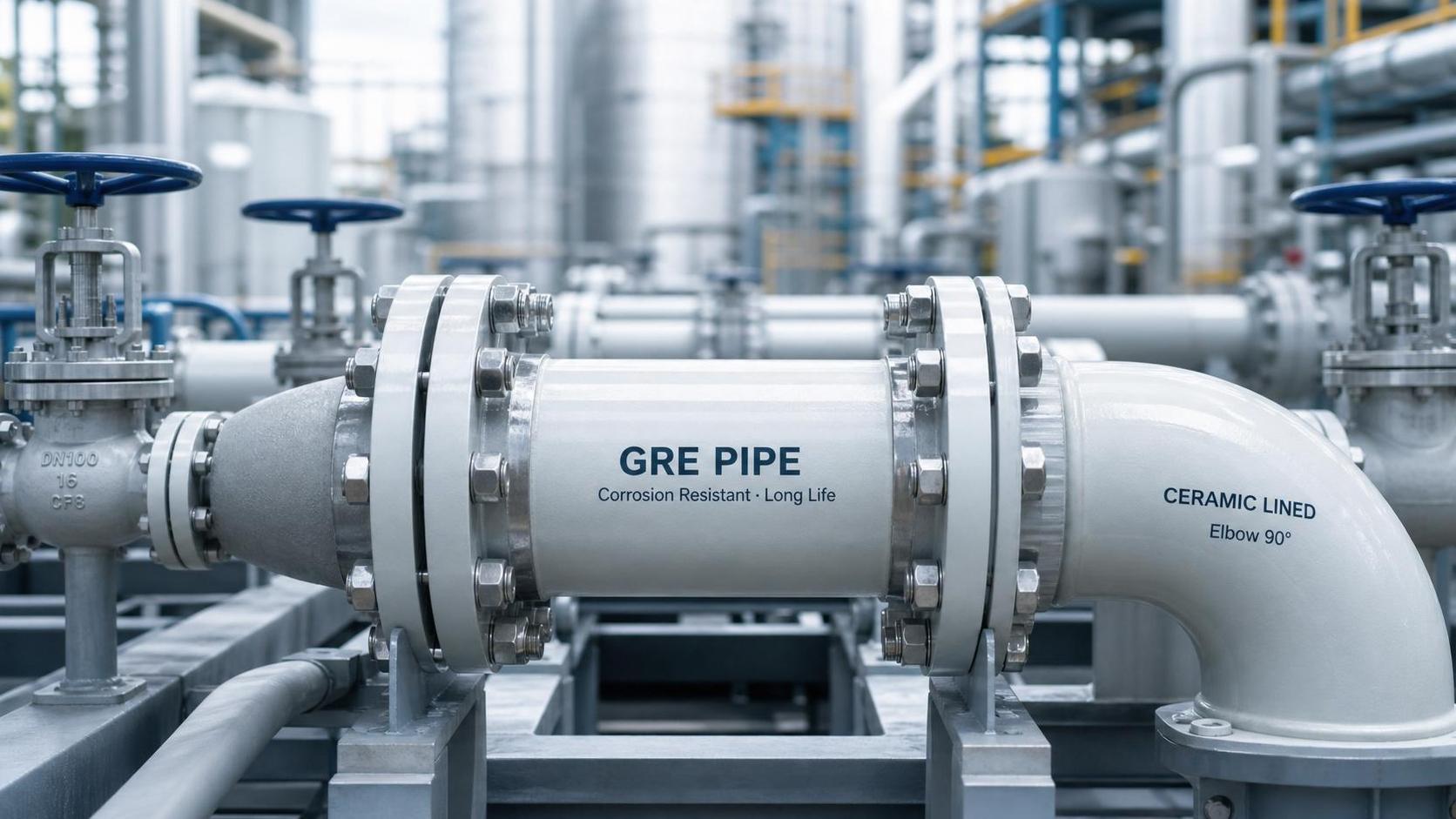
Is GRE Pipe Worth the Higher Initial Cost?
When pipeline budgets are reviewed, the first number usually gets the most attention.
That is why GRE Pipe often raises a tough question.
Its upfront price is usually higher than steel, ductile iron, or some plastic options.
But in real purchasing decisions, initial cost is only one part of the story.
A better question is this: what does the full cost look like over ten, fifteen, or twenty years?
For many industrial systems, GRE Pipe earns its value through lower maintenance, corrosion resistance, and longer service life.
That matters even more in oil and gas, LNG, ship ballast piping, chemical plants, hot spring networks, and salt-making operations.
In those environments, repair costs, shutdown losses, and replacement cycles can easily exceed the original purchase price.
Why GRE Pipe Costs More at the Start
GRE Pipe is not a commodity material.
It combines fiberglass reinforcement with epoxy resin to deliver strength, chemical resistance, and stable performance.
That engineered structure requires specialized production lines, winding systems, testing equipment, and process control.
So yes, the procurement quote can look higher on day one.
However, higher initial cost does not automatically mean higher total cost.
In fact, GRE Pipe often avoids hidden expenses that traditional materials create later.
- Less spending on anti-corrosion coatings
- Fewer shutdowns for leak repair
- Lower labor demand for maintenance
- Longer intervals before replacement
This is where cost evaluation starts to shift from purchase price to asset performance.
The Lifecycle Cost View Matters More
Short-term budgeting can make GRE Pipe seem expensive.
Lifecycle costing often tells a different story.
A pipeline is not bought for a quarter.
It is bought for reliable service over many years.
When reviewing GRE Pipe, consider five cost layers instead of one.
- Initial material and fitting cost
- Installation cost
- Maintenance and inspection cost
- Downtime and failure cost
- Replacement and disposal cost
In aggressive service conditions, the last three items usually decide the real return.
That is why many buyers now compare total ownership cost instead of unit price alone.
A Simple Cost Comparison Framework
Where GRE Pipe Delivers Financial Value
The value of GRE Pipe becomes clearer in difficult operating conditions.
These are usually the same conditions where metal systems create repeated maintenance expenses.
1. Corrosive Media
Chemical exposure is one of the biggest budget risks in pipeline ownership.
GRE Pipe performs well where corrosion damages steel from the inside or outside.
That reduces the need for coatings, repairs, and early replacement.
2. Remote or Hard-to-Access Projects
A leak is expensive anywhere.
It is far more expensive offshore, in remote plants, or across large industrial sites.
In these cases, reliability matters more than the lowest bid.
3. Systems Requiring Stable Long-Term Performance
Ship ballast piping, LNG service, and hot spring transport need durable materials.
Frequent repair work disrupts operations and increases total handling cost.
GRE Pipe helps control that risk more effectively over time.
Common Budget Mistakes in Pipe Procurement
Many procurement reviews still focus too heavily on quoted price per meter.
That approach seems efficient, but it can distort the final decision.
Here are the most common mistakes.
- Ignoring maintenance cost after installation
- Underestimating corrosion-related downtime
- Comparing materials without matching service conditions
- Choosing low initial cost for long-life assets
A lower purchase price can look good in the approval stage.
It may look very different after two years of repairs.
This is especially true when the line handles aggressive fluids or critical utility service.
How to Judge Whether GRE Pipe Is Worth It
The answer depends on operating conditions, replacement risk, and time horizon.
A practical evaluation usually includes the following questions.
- What fluid or media will the system carry?
- How costly is unplanned downtime?
- How difficult is field maintenance at the site?
- What service life is expected from the asset?
- What are the real costs of failure, not just repair?
If the system runs in a mild, low-risk setting, cheaper materials may be acceptable.
If the project faces corrosion, pressure, or costly interruption, GRE Pipe often becomes the smarter financial choice.
Supplier Strength Also Affects Total Value
Material selection is important, but supplier capability matters too.
A strong manufacturer reduces quality risk and supports consistent delivery.
Shandong Ocean Pipe Technology Co., Ltd. was established in 2012 in Dezhou, Shandong, China.
With registered capital of USD4,200,000, it has become one of China’s top large-scale GRE Pipe manufacturers.
The company operates 16 winding production lines and 174 pipe fitting winding machines.
It also uses winding micro control systems and five static water pressure testing machines.
Its annual GRE pipe production and testing capacity reaches 25,000 tons.
That scale supports stable supply for industrial and export projects.
Its products are widely used in oil and gas, ship ballast piping, LNG, chemical plants, hot spring pipe systems, and salt-making companies.
Customers include CNOOC, CNPC, Sinopec, major shipyards, and overseas markets such as Australia, Iraq, Kazakhstan, and Turkey.
In some projects, related flow control and well-support components also matter.
That is why buyers may also review solutions like Sand Control Screens when planning broader system performance.
Final Answer: Is GRE Pipe Worth the Higher Initial Cost?
In many industrial cases, yes.
GRE Pipe is worth the higher initial cost when the project values reliability, corrosion resistance, and lower lifetime expense.
The biggest savings usually appear after installation, not before it.
That includes fewer repairs, less downtime, and longer service stability.
So the right decision is not to ask whether GRE Pipe costs more today.
The better question is whether cheaper pipe will cost more over the asset’s life.
If your project faces corrosion, strict uptime targets, or expensive maintenance conditions, GRE Pipe usually offers stronger long-term value.
A smart approval process should compare lifecycle cost, risk exposure, and supplier strength before making the final call.
That approach leads to a more durable investment and a more predictable operating budget.
Please give us a message
产品介绍产品介绍产品介绍产品介绍产品介绍产品介绍产品介绍产品介绍产品介绍产品介绍产品介绍产品介绍产品介绍产品介绍产品介绍产品介绍产品介绍产品介绍产品介绍产品介绍产品介绍产品介绍产品介绍产品介绍产品介绍产品介绍产品介绍产品介绍产品介绍产品介绍
Please give us a message
产品介绍产品介绍产品介绍产品介绍产品介绍产品介绍产品介绍产品介绍产品介绍产品介绍产品介绍产品介绍产品介绍产品介绍产品介绍产品介绍产品介绍产品介绍产品介绍产品介绍产品介绍产品介绍产品介绍产品介绍产品介绍产品介绍产品介绍产品介绍产品介绍产品介绍
Please give us a message
产品介绍产品介绍产品介绍产品介绍产品介绍产品介绍产品介绍产品介绍产品介绍产品介绍产品介绍产品介绍产品介绍产品介绍产品介绍产品介绍产品介绍产品介绍产品介绍产品介绍产品介绍产品介绍产品介绍产品介绍产品介绍产品介绍产品介绍产品介绍产品介绍产品介绍
Please give us a message
产品介绍产品介绍产品介绍产品介绍产品介绍产品介绍产品介绍产品介绍产品介绍产品介绍产品介绍产品介绍产品介绍产品介绍产品介绍产品介绍产品介绍产品介绍产品介绍产品介绍产品介绍产品介绍产品介绍产品介绍产品介绍产品介绍产品介绍产品介绍产品介绍产品介绍