
How to prevent handling damage during GRP Pipe unloading and storage
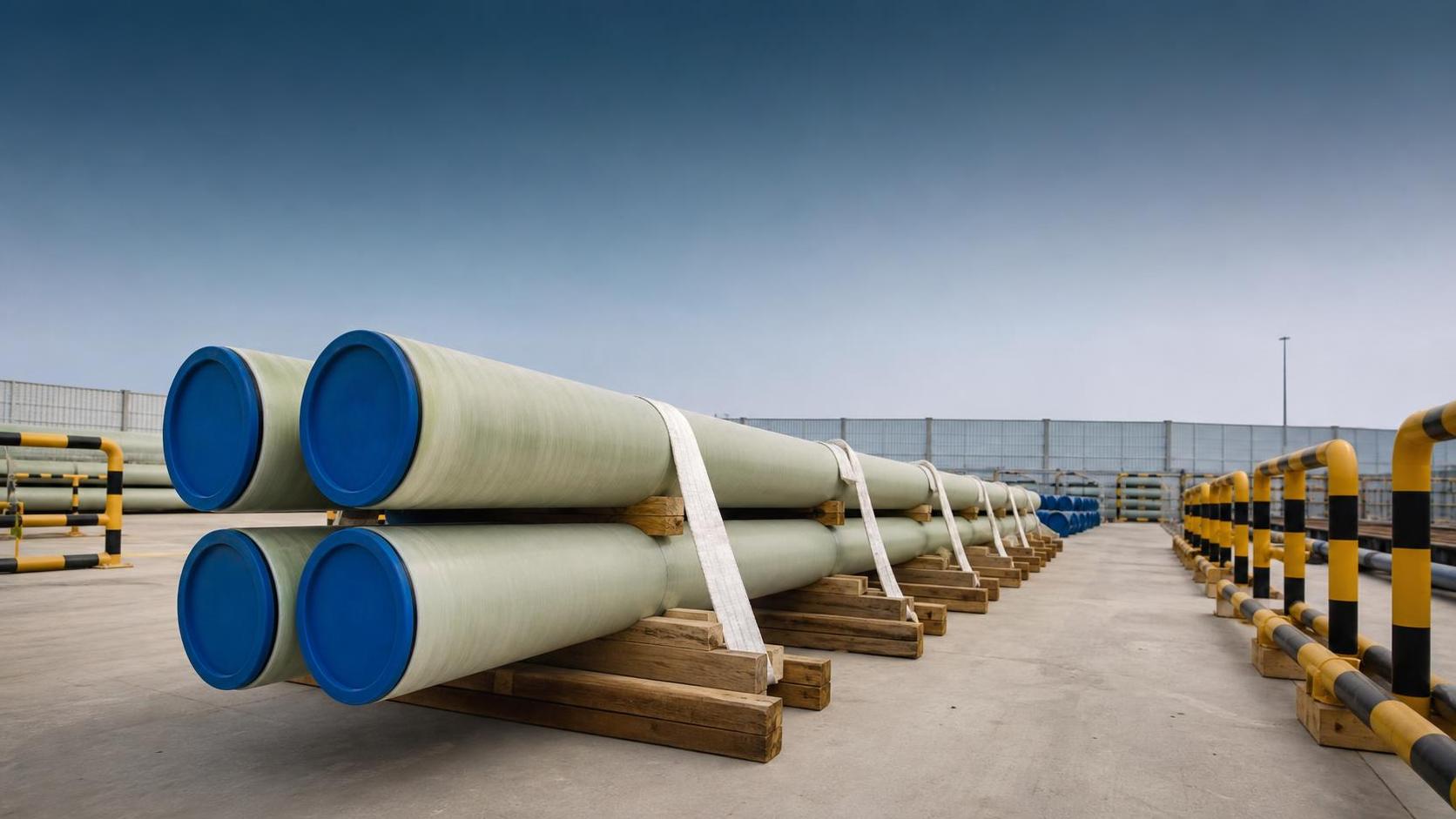
Damage during unloading and storage often starts before anyone notices it. A pipe arrives on site looking acceptable from a distance, but once installation begins, there are scratches at the bell end, flattened support points, chipped edges, or a section that no longer sits evenly. In oil industry work, that kind of damage causes delays fast. A team may have to stop fit-up, inspect more pieces, separate usable stock from doubtful stock, and explain why a pipe that passed transport still became a problem on the ground.
This is especially common with GRP Pipe because people sometimes handle it with habits borrowed from steel. The material is strong in service, but it does not respond well to impact, point loading, rough dragging, or careless stacking. If you are trying to prevent repeat issues at site, the answer is usually not one single rule. It comes from improving several small handling steps: before the truck arrives, during unloading, while moving pipes around the yard, and throughout storage until installation starts.
Where handling damage usually begins
Many unloading problems are not caused by bad intent. They come from speed, space limits, mixed materials in one laydown area, or a crew that was not briefed on composite pipe handling. A common situation is a truck arriving when lifting equipment is already in use elsewhere. The team then tries to unload quickly with whatever sling, fork, or support is available. That is when avoidable damage starts.
Typical early-stage damage includes:
- abrasion from dragging on truck beds, concrete, or compacted gravel,
- gouges caused by bare forks or sharp contact points,
- end damage from pipes striking each other during lifting,
- out-of-round sections from poor support or excessive stacking height,
- surface cracks or chips near supports where impact was concentrated.
Not every mark means the pipe is unusable, but small defects can create doubt later during assembly or pressure-related inspection. For maintenance and service teams, the practical goal is to stop new damage from being introduced after delivery. That means treating unloading and storage as part of pipe protection, not just site housekeeping.
One mistake: assuming “careful enough” is enough
A lot of crews are generally careful, but without a defined method, each person makes different judgments. One operator may think a short lift with chains is acceptable if the lift is slow. Another may set the pipe on timber that is too narrow, creating a concentrated load. Someone else may stack smaller pipes inside larger ones without separators because it saves space.
These choices seem minor at the time. The problem is that GRP Pipe can be damaged without the kind of obvious dent that would be expected on metal. Surface damage, laminate bruising, or local deformation may only become visible when the pipe is rolled, cleaned, aligned, or connected. By then, the unloading moment has passed and nobody is fully sure where the damage happened.
The most useful change is to replace informal handling with a simple site routine. Once that routine is set, damage prevention becomes easier even on busy days.
Before the truck arrives, prepare the ground and the lifting method
Good unloading starts well before the first sling is attached. If the receiving area is uneven, muddy, crowded, or filled with debris, the crew is forced into awkward movements. Pipes get set down temporarily in poor locations, then moved again. Extra handling usually means extra risk.
Prepare a laydown area that is level and free from sharp objects. If timber supports are used, they should be wide enough to spread load and positioned so the pipe body is supported rather than left bridging over gaps. If the site has gravel, check for protruding stones or metal scraps that can scratch the outer surface when rolling or setting down.
Lifting gear should be chosen for contact protection, not only lifting capacity. Wide fabric slings are usually preferred over methods that create hard point contact. Any equipment that touches the pipe should be clean and free of burrs, exposed edges, or trapped grit. If a forklift must be used, the forks should not contact the pipe directly without proper softening and load-spreading measures. The issue is not just dropping the pipe; it is concentrated pressure during a normal lift.
It also helps to decide in advance where each diameter or spool type will be placed. When there is no plan, pipes often get unloaded into the nearest open space and later shifted multiple times. Every additional movement increases the chance of impact or abrasion.
During unloading, control contact points and pipe movement
The most important rule during unloading is to keep the pipe under control from lift to landing. Sudden swinging, hard set-downs, and pipe-to-pipe contact are frequent sources of damage. A slow lift by itself is not enough if the balance is poor or if the landing spot is not ready.
Several practical habits help:
- Use lifting points that keep the pipe stable and prevent excessive flexing.
- Keep slings spaced appropriately so the load does not tilt and slide.
- Do not allow one pipe to strike another while separating bundled pieces.
- Lower the pipe onto supports gently; do not drop the final few centimeters.
- Avoid dragging the pipe to “fine tune” its position after landing.
Dragging is especially common when crews are trying to line up a stack quickly. On rough ground or timber edges, this can leave long abrasion marks. It is better to relift and reposition than to force the pipe across a surface. The same applies on truck beds. If a pipe is stuck or trapped by packing materials, remove the obstruction first instead of pulling harder.
End protection matters too. Pipe ends are often the first part to contact a hard object during unloading, and even small edge damage can complicate later assembly. Keep the ends clear of steel corners, truck rails, and other pipe ends. If end caps or protectors are supplied, they should stay in place as long as practical during handling and storage.
Storage damage is often slower, but just as costly
Once pipes are on the ground, attention usually shifts to other tasks. That is where slow damage begins. Poor support spacing, overstacking, exposure to repeated vehicle contact, or storing mixed items together can turn an acceptable delivery into problematic stock over time.
Pipes should rest on clean, broad supports arranged so the load is shared properly. The support line should be straight, and the pipe should not be twisted between blocks. If multiple layers are stacked, separators need to align vertically so the weight transfers evenly. Random separator placement can create localized loading and out-of-round conditions, especially if the stack remains untouched for a long period.
Stack height should be controlled by the pipe size, wall structure, and site conditions. There is no safe universal number that fits every laydown area. If the lower layer begins carrying uneven weight or if pipes can shift when one piece is removed, the stack is already too difficult to manage safely. A lower, more stable stack often prevents far more damage than it seems to cost in yard space.
Do not store GRP Pipe where mobile equipment regularly passes close by. A pipe may not be directly hit, but repeated bumping of supports, dust contamination, or vibration from nearby movement can create trouble. In crowded yards, barrier marking is often more useful than people expect because it prevents casual contact by forklifts and trucks.
Weather, site dirt, and mixed storage create avoidable problems
In oil project environments, laydown areas are rarely ideal. Windblown sand, oily residues, welding activity nearby, and mixed material storage are normal conditions. None of these automatically ruins a pipe, but they increase the chances of hidden damage or poor handling decisions.
For example, if pipes are stored beside steel items, workers may rest tools, clamps, or supports against them without thinking. If the area is muddy, lifting slings and support surfaces can pick up grit that later scratches the pipe during movement. If heat-generating work is carried out too close, the pipe surface may be exposed to conditions it was not meant to see during storage.
The practical response is separation and housekeeping. Keep composite pipe in its own marked area. Keep supports clean. Remove loose metal scraps and sharp debris. If pipes are stored for a longer period, carry out periodic visual checks rather than assuming they remain in the same condition as the day they arrived.
On projects where composite piping is also considered for process-related environments, teams sometimes review handling practices alongside application suitability for areas such as Chemical Plant service, because storage discipline often affects confidence in the material long before installation begins. That does not change the basic rule: protection at site matters as much as transport protection.
When damage is found, do not guess
One of the most expensive habits is making quick assumptions about visible marks. Some crews dismiss scratches as cosmetic; others reject any marked pipe immediately. Neither approach is reliable. The better response is to separate the affected piece, identify the type of damage, and assess whether it is surface-level, edge-related, or potentially structural.
Questions worth asking include:
- Is the mark only superficial, or does it break into the laminate?
- Is the damage at the pipe body, the end, or a load-bearing support area?
- Is there visible flattening, cracking, delamination, or edge chipping?
- Did the pipe suffer impact, abrasion, or deformation from storage?
- Has the pipe remained dimensionally stable for fit-up?
If there is uncertainty, hold the pipe for proper review instead of pushing it into installation. Maintenance teams usually know that a doubtful piece consumes more time later than an early inspection decision. The key point is traceability: once damage is noticed, stop further handling that could make the original condition harder to interpret.
Simple site habits that prevent repeat problems
Most repeat damage comes from repeated small failures, not one dramatic event. That is actually good news, because small failures are easier to fix. A short pre-unloading briefing helps more than a long written procedure that nobody reads in the yard. The crew only needs a few clear instructions: approved lifting contact, landing area, no dragging, end protection awareness, and assigned storage positions.
It also helps to make one person responsible for observing the first few lifts. When a site receives several deliveries, the first truck usually shows whether the method is working. If forks are contacting the pipe incorrectly or the supports are too narrow, that can be corrected immediately before the same mistake affects the whole shipment.
For ongoing projects, mark storage rows by size or line class so pipes are not constantly moved during searching and picking. The more a stored pipe is touched, rolled, restacked, or relocated, the greater the chance of unnecessary damage. Even a product reference used elsewhere on the project, such as Chemical Plant related piping discussions, should not distract from keeping laydown rules consistent across materials.
When the pipe is about to be issued for installation
Before release to installation, it is worth doing one final visual review. This is the point where hidden handling problems are often caught: worn support lines, end defects, ovality concerns, or scuffed surfaces from storage movement. A quick review at this stage is far easier than discovering the issue after alignment has started.
Look closely at the pipe ends and at the underside contact areas where supports carried the load. Roll the pipe if needed and if site conditions allow safe inspection. If separators have compressed into the surface or if the pipe no longer sits evenly, do not ignore it. A pipe can look fine from the exposed side while the contact side tells a different story.
Preventing handling damage during unloading and storage is mostly about discipline in ordinary moments. The truck arrives, the lift is routine, the yard is busy, and everyone wants to move on. That is exactly when GRP Pipe needs a more deliberate approach. If unloading is controlled, supports are prepared properly, stacks remain stable, and visible damage is assessed instead of guessed at, most site-created problems can be reduced before they reach installation.
Please give us a message
产品介绍产品介绍产品介绍产品介绍产品介绍产品介绍产品介绍产品介绍产品介绍产品介绍产品介绍产品介绍产品介绍产品介绍产品介绍产品介绍产品介绍产品介绍产品介绍产品介绍产品介绍产品介绍产品介绍产品介绍产品介绍产品介绍产品介绍产品介绍产品介绍产品介绍
Please give us a message
产品介绍产品介绍产品介绍产品介绍产品介绍产品介绍产品介绍产品介绍产品介绍产品介绍产品介绍产品介绍产品介绍产品介绍产品介绍产品介绍产品介绍产品介绍产品介绍产品介绍产品介绍产品介绍产品介绍产品介绍产品介绍产品介绍产品介绍产品介绍产品介绍产品介绍
Please give us a message
产品介绍产品介绍产品介绍产品介绍产品介绍产品介绍产品介绍产品介绍产品介绍产品介绍产品介绍产品介绍产品介绍产品介绍产品介绍产品介绍产品介绍产品介绍产品介绍产品介绍产品介绍产品介绍产品介绍产品介绍产品介绍产品介绍产品介绍产品介绍产品介绍产品介绍
Please give us a message
产品介绍产品介绍产品介绍产品介绍产品介绍产品介绍产品介绍产品介绍产品介绍产品介绍产品介绍产品介绍产品介绍产品介绍产品介绍产品介绍产品介绍产品介绍产品介绍产品介绍产品介绍产品介绍产品介绍产品介绍产品介绍产品介绍产品介绍产品介绍产品介绍产品介绍