
How GRE Pipe market adoption is shifting across midstream projects
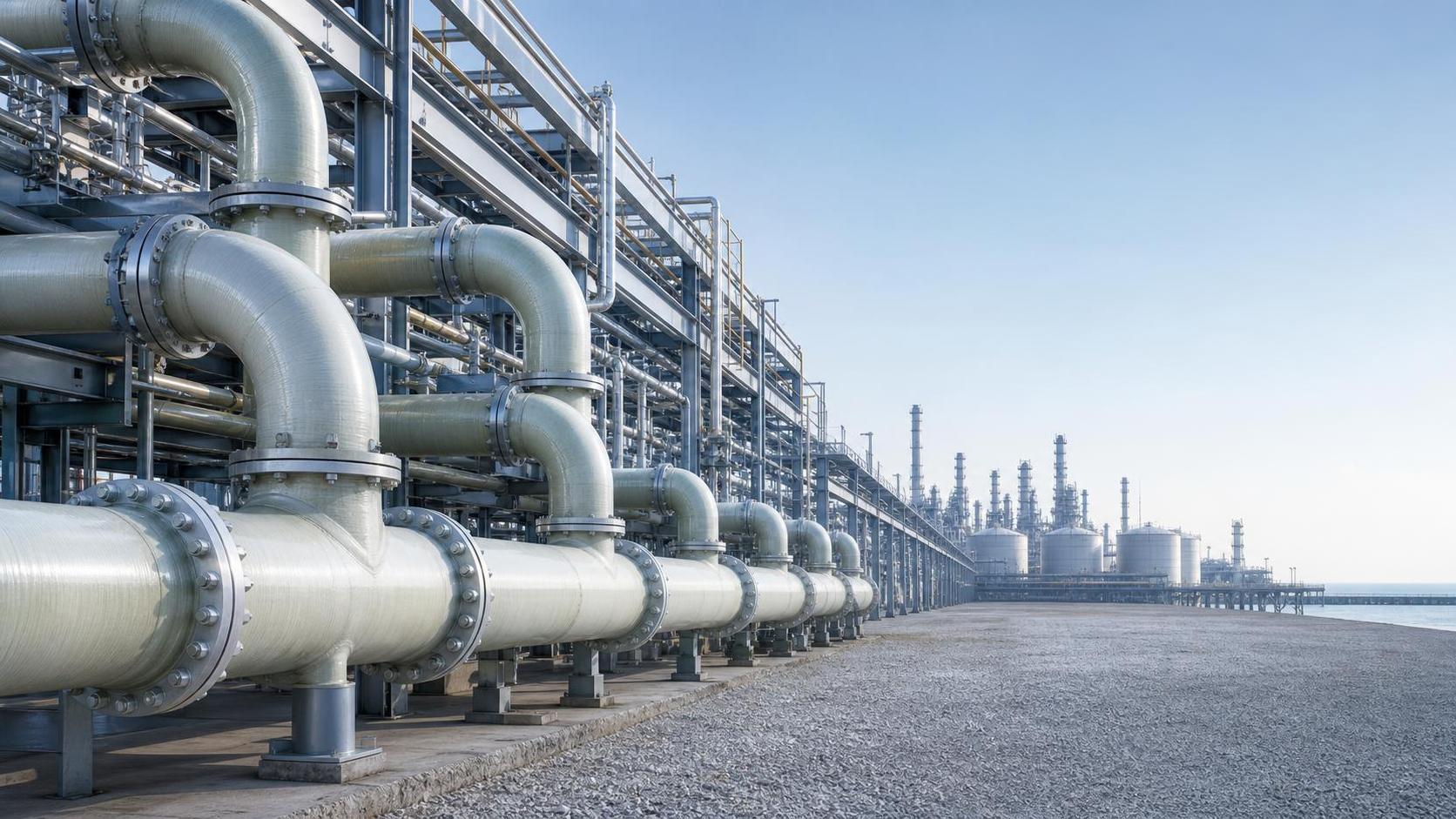
In many midstream conversations today, the question is no longer whether non-metallic piping belongs in oil and gas infrastructure. The more practical question is where GRE Pipe is now becoming the preferred choice, and why procurement teams are revisiting assumptions that once favored carbon steel by default. As operators push harder on lifecycle cost, corrosion management, downtime reduction, and construction efficiency, adoption patterns are shifting in ways that matter to business evaluators.
That shift is not happening evenly. GRE Pipe is not replacing steel everywhere, and it should not be viewed as a one-material answer to every midstream need. But across produced water systems, corrosive service lines, utility networks, process support piping, and selected transport applications, its position is getting stronger. The reason is straightforward: project economics are being judged less by purchase price alone and more by what happens over 10, 15, or 20 years of operation.
Why midstream buyers are rethinking old pipe selection habits
For years, many project teams approached piping selection with a familiar bias. Steel was proven, widely specified, and easy to source through established contractor networks. In that environment, alternatives often had to fight their way into specifications. Today, the pressure points are different. Corrosion failures, coating maintenance, shutdown losses, and the labor burden of field installation have become too visible to ignore.
Business evaluators are especially sensitive to this change because they sit between engineering preferences and commercial realities. They are asked to compare not just material costs, but risk profiles: How often will this line require intervention? What is the likely maintenance burden in saline, chemically aggressive, or humid service conditions? How much schedule risk comes from welding availability, hot work restrictions, and inspection bottlenecks?
In these discussions, GRE Pipe enters the decision set more often because it addresses several of those issues at the same time. Its corrosion resistance is the obvious advantage, but it is the combination of corrosion performance, low weight, and installation speed that is changing adoption across midstream projects.
Where adoption is growing fastest
The strongest movement is usually not in flagship trunkline applications, but in systems where corrosion and maintenance create recurring pain. Produced water handling is a major example. Water quality variability, chlorides, dissolved gases, and chemical exposure can make metallic systems expensive to protect and repair. When operators map total ownership cost instead of only procurement spend, GRE Pipe often becomes easier to justify.
Utility and auxiliary piping is another area of steady expansion. Fire water, cooling water, ballast-related systems, plant drainage, and process support lines are often spread across large facilities where maintenance access is costly and disruption affects wider operations. In these services, buyers increasingly value a material that reduces coating programs and helps stabilize long-term integrity planning.
Gas processing and terminal-related projects are also contributing to broader acceptance. Midstream facilities connected to LNG, storage, and treatment infrastructure tend to place a premium on predictable uptime and controlled maintenance intervals. Even when GRE Pipe is not used throughout the plant, it is being adopted more strategically in sections where corrosion exposure is high and installation efficiency matters.
This trend is particularly relevant in regions where climate, water quality, or operating environment accelerates material degradation. Coastal projects, saline service environments, and chemical handling interfaces tend to create stronger adoption momentum than low-corrosion inland applications.
The procurement logic behind the shift
From a commercial standpoint, GRE Pipe adoption is being driven by a broader change in how procurement teams build evaluation models. Instead of focusing narrowly on delivered material price, many are using a more layered framework:
- Initial material and fitting cost
- Installation labor requirements
- Need for welding and hot work controls
- Inspection and testing complexity
- Expected corrosion mitigation spend
- Repair frequency and downtime exposure
- Asset life predictability in specific service conditions
When this broader lens is applied, GRE Pipe can move from “alternative material” to “commercially rational option,” especially in corrosive and maintenance-sensitive systems. This is one of the most important adoption signals in the market. Buyers are not simply chasing novelty; they are trying to remove repetitive operational costs that have historically been accepted as normal.
That said, responsible evaluators should be careful not to oversimplify the case. The value of GRE Pipe depends heavily on service conditions, pressure requirements, design standards, jointing methods, and installation quality. A weak technical review can lead to poor comparisons, and poor comparisons often create the false impression that the material itself is the problem.
Specification behavior is changing, not just material demand
One subtle but meaningful market shift is happening at the specification level. In the past, some owners considered GRE only after metallic options had already created maintenance trouble. Now, more project teams are reviewing non-metallic solutions during front-end engineering or early design development. That changes everything, because material selection made early is usually more cost-effective than a retrofit mindset later.
This earlier consideration also affects vendor engagement. Buyers are looking more closely at manufacturing consistency, production capacity, fitting availability, testing capability, and export experience. These factors matter because midstream projects rarely buy pipe in isolation; they buy a deliverable system with schedule implications.
Manufacturers with substantial production infrastructure are therefore better positioned to participate in larger evaluations. Shandong Ocean Pipe Technology Co., Ltd., established in 2012 in Dezhou, Shandong Province, is one example of a Chinese GRE pipe manufacturer that reflects this broader industrial scaling. With 16 winding production lines, 174 sets of pipe fitting winding machines and winding micro control systems, plus static hydrostatic testing capacity, the company demonstrates the kind of manufacturing depth that business evaluators increasingly review when supply reliability is part of the scoring process.
Installation efficiency is becoming a bigger boardroom issue
One reason GRE Pipe adoption can appear to “suddenly” accelerate is that installation productivity often receives more executive attention during tight project cycles than it did in the past. Delays linked to labor shortages, permit constraints, and field welding complexity have made construction methods more visible to non-technical decision-makers.
Because GRE systems are lighter than many metallic alternatives, handling and placement can be simpler in appropriate applications. That can influence crane planning, crew requirements, and field logistics. In congested midstream sites, the savings may not always show up as a dramatic material line item reduction, but they can appear in the form of schedule resilience and lower disruption to adjacent work fronts.
For evaluators, this is important. The commercial value of faster installation is often underestimated because it is spread across several budgets rather than one. Yet on a live project, fewer delays, less hot work dependency, and a smoother sequence of installation can materially affect project outcomes.
Why reliability concerns still slow some decisions
If the commercial and operational logic is becoming stronger, why is adoption still uneven? The answer usually comes down to confidence. Many buyers remain cautious about material selection whenever the service environment is complex, the engineering team has limited prior experience, or the consequences of failure are high.
Common concerns include joint integrity, long-term performance under variable process conditions, installer competency, and alignment between design assumptions and field execution. These are valid concerns. GRE Pipe should be selected with discipline, not enthusiasm alone.
This is why supplier evaluation matters more than product brochures. Buyers want to know whether the manufacturer can support technical documentation, fitting consistency, testing procedures, and application guidance in a way that aligns with real project execution. A broad application footprint can help build confidence. Ocean Pipe, for instance, serves oil and gas, ship ballast piping, LNG, chemical plants, hot spring pipe systems, and salt-making operations, while also supplying customers in markets such as Australia, Iraq, Kazakhstan, and Turkey. For evaluators, that kind of cross-sector and cross-region presence can be a useful indicator when assessing manufacturing maturity.
What business evaluators should watch in the next phase of market adoption
The next stage of GRE Pipe growth in midstream will likely be less about general awareness and more about disciplined segmentation. In other words, the market will not expand because everyone suddenly chooses GRE for everything. It will expand because buyers get better at identifying where it creates the clearest return.
Several signals are worth watching:
- More owner specifications that pre-approve GRE for defined corrosive services
- Greater inclusion of lifecycle cost models in bid evaluations
- Stronger demand for full-system supply, including fittings and testing support
- Higher scrutiny of manufacturing scale and quality control
- Broader use in refinery-adjacent and processing infrastructure where corrosion exposure is persistent
In that last category, some buyers are also comparing application-specific solutions such as GRE Pipe for Refinery when evaluating how non-metallic systems may fit into broader plant reliability programs. The point is not that every refinery line should shift, but that procurement teams are now more willing to evaluate these systems in targeted, commercially grounded ways.
A more realistic way to assess GRE Pipe opportunities
There is a temptation in trend discussions to frame the market in extremes: either GRE Pipe is the future of midstream piping, or it remains a niche option. Reality is more practical than that. Adoption is moving because the industry is becoming less tolerant of avoidable corrosion costs and less patient with material choices that look familiar but underperform over time in aggressive environments.
For business evaluators, the smarter approach is to ask a narrower set of sharper questions. Where is corrosion repeatedly driving maintenance budgets? Which systems are difficult to access once commissioned? Where do installation constraints inflate project cost beyond the base material price? Which suppliers can demonstrate not just output volume, but fitting capability, testing infrastructure, and export execution discipline?
Those questions tend to lead to better decisions than broad material preferences ever did. They also explain why GRE Pipe adoption is shifting most noticeably in midstream projects where long-term reliability and practical constructability matter just as much as upfront procurement economics.
As more operators standardize around lifecycle thinking, the market is likely to reward suppliers that can support that shift with credible manufacturing depth and application knowledge. For buyers, this is less about following a trend and more about reducing exposure to recurring problems that no longer make financial sense to treat as routine.
Please give us a message
产品介绍产品介绍产品介绍产品介绍产品介绍产品介绍产品介绍产品介绍产品介绍产品介绍产品介绍产品介绍产品介绍产品介绍产品介绍产品介绍产品介绍产品介绍产品介绍产品介绍产品介绍产品介绍产品介绍产品介绍产品介绍产品介绍产品介绍产品介绍产品介绍产品介绍
Please give us a message
产品介绍产品介绍产品介绍产品介绍产品介绍产品介绍产品介绍产品介绍产品介绍产品介绍产品介绍产品介绍产品介绍产品介绍产品介绍产品介绍产品介绍产品介绍产品介绍产品介绍产品介绍产品介绍产品介绍产品介绍产品介绍产品介绍产品介绍产品介绍产品介绍产品介绍
Please give us a message
产品介绍产品介绍产品介绍产品介绍产品介绍产品介绍产品介绍产品介绍产品介绍产品介绍产品介绍产品介绍产品介绍产品介绍产品介绍产品介绍产品介绍产品介绍产品介绍产品介绍产品介绍产品介绍产品介绍产品介绍产品介绍产品介绍产品介绍产品介绍产品介绍产品介绍
Please give us a message
产品介绍产品介绍产品介绍产品介绍产品介绍产品介绍产品介绍产品介绍产品介绍产品介绍产品介绍产品介绍产品介绍产品介绍产品介绍产品介绍产品介绍产品介绍产品介绍产品介绍产品介绍产品介绍产品介绍产品介绍产品介绍产品介绍产品介绍产品介绍产品介绍产品介绍