
How to Select Corrosion-Resistant Pipe Systems for FPSO Projects
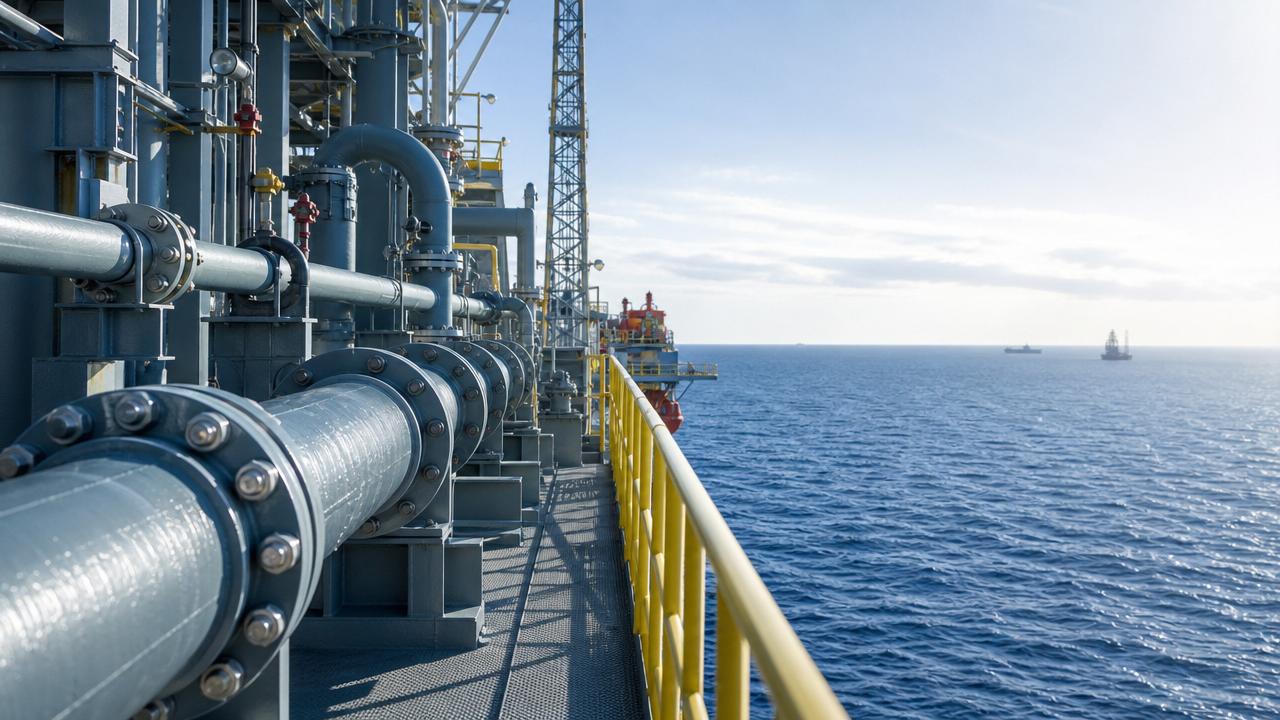
Selecting corrosion-resistant pipe systems for an FPSO project is a high-impact decision that affects safety, lifecycle cost, installation efficiency, and long-term operational reliability.
The challenge is to balance harsh offshore conditions, chemical exposure, limited deck space, and strict delivery schedules.
Fiberglass Reinforced Epoxy, or GRE, offers a lightweight, durable, and corrosion-resistant alternative to metallic piping in demanding FPSO environments.
FPSO piping decisions are shifting from material replacement to lifecycle risk control
Modern FPSO projects operate longer, farther offshore, and under tighter maintenance windows than many fixed offshore facilities.
This changes how corrosion-resistant pipe systems are selected, specified, inspected, and maintained.
A pipe system is no longer judged only by purchase cost or pressure rating.
It must support safety, uptime, weight reduction, installation speed, and predictable integrity across the FPSO service life.
Corrosion risk is especially important in seawater, ballast, produced water, chemical dosing, and utility systems.
Metallic systems can require coatings, cathodic protection, corrosion allowance, and frequent inspection.
GRE piping, made from glass fiber reinforcement and epoxy resin, removes many electrochemical corrosion mechanisms.
For an FPSO, that material difference can translate into lower maintenance demand and improved reliability.
Trend signals show stronger demand for non-metallic FPSO pipe systems
Several offshore trends are pushing GRE and other composite pipe solutions into wider FPSO evaluation.
The first signal is weight pressure during topside design.
Every kilogram saved can help module integration, lifting plans, and vessel stability.
The second signal is the growing use of brownfield conversions and fast-track FPSO schedules.
Lightweight pipe sections reduce handling effort and can simplify installation in congested areas.
The third signal is a wider lifecycle view of corrosion expenditure.
Operators increasingly compare total installed and maintained cost, not only initial material pricing.
This trend is favorable to corrosion-resistant GRE pipe systems when the application is correctly engineered.
Key forces shaping FPSO material selection
Why GRE materials fit many FPSO corrosion challenges
GRE piping belongs to the glass and ceramic-related materials field through its use of glass fiber reinforcement.
The glass fibers provide mechanical strength, while epoxy resin delivers chemical resistance and structural bonding.
This composite structure is different from steel, copper-nickel, or stainless systems.
It does not rust, pit, or suffer galvanic corrosion in the same way as metals.
For an FPSO, that advantage matters in saltwater-rich environments and enclosed piping zones.
GRE can also reduce the need for heavy corrosion allowance in suitable services.
Lower weight can reduce pipe support loads and improve installation ergonomics.
However, GRE is not selected by assumption.
Each FPSO application requires checks for pressure, temperature, fluid chemistry, fire performance, impact risk, and joining method.
- Seawater and ballast systems often benefit from strong corrosion resistance.
- Firewater systems need specific design attention to standards and fire endurance.
- Chemical lines require resin compatibility confirmation before approval.
- Produced water systems need careful review of temperature and contaminants.
Application boundaries are becoming more important than broad material claims
The strongest FPSO piping decisions define where GRE adds value and where alternatives remain necessary.
A corrosion-resistant pipe system should be mapped by service, pressure class, temperature band, and failure consequence.
This prevents both under-specification and over-specification.
Ballast water is a major focus because seawater creates continuous corrosion pressure on metallic pipework.
The solution The application of GRE piping in marine ballast water systems reflects this growing offshore direction.
For FPSO ballast service, corrosion resistance, low weight, and stable hydraulic performance are especially valuable.
Still, design teams should consider expansion, support spacing, impact protection, and access for inspection.
The best outcome comes from integrating material selection with layout engineering early.
Practical application screening for FPSO projects
- Classify the fluid by salinity, chemicals, solids, oxygen content, and operating temperature.
- Confirm design pressure, surge conditions, vacuum cases, and test pressure requirements.
- Review fire zones, dropped-object risks, vibration sources, and external exposure.
- Evaluate joining methods, spool dimensions, installation space, and curing conditions.
- Align the selected system with class society and project specification requirements.
Different FPSO work stages feel the impact in different ways
During concept design, GRE piping can influence weight studies, module design, and corrosion philosophy.
The earlier the material is evaluated, the easier it is to optimize supports, routes, and interfaces.
During detailed engineering, the focus shifts to stress analysis, supports, flange ratings, and spool fabrication tolerances.
For an FPSO, late changes can create schedule risk and interface conflicts.
During procurement, quality control becomes central.
Resin system, glass fiber architecture, manufacturing process, pressure testing, and documentation must be traceable.
During operation, benefits appear through reduced corrosion maintenance and improved system availability.
These benefits depend on correct installation, suitable supports, and disciplined field handling.
- Engineering gains better control over corrosion and weight assumptions.
- Construction gains easier handling for many pipe sizes and modules.
- Commissioning gains cleaner systems with no internal rust scale.
- Operations gain lower exposure to recurring metallic corrosion repairs.
Supplier capability is becoming a core FPSO risk filter
Material selection is only one part of corrosion-resistant FPSO piping success.
Manufacturing capacity, testing discipline, project experience, and technical support all affect final reliability.
Shandong Ocean Pipe Technology Co., Ltd. was established in 2012 in Dezhou, Shandong, China.
The company has become one of China’s top large manufacturers of Fiberglass Reinforced Epoxy pipe.
Its facilities include 16 winding production lines and 174 sets of pipe fitting winding machines.
The factory is also equipped with winding micro-control systems and static hydrostatic pressure testing machines.
Annual GRE pipe production and testing capacity reaches 25,000 tons.
Project references cover oil and gas, ship ballast piping, LNG, chemical plants, hot spring pipes, and salt production.
Such capability is important when FPSO schedules require stable quality and dependable delivery.
Supplier checks that reduce FPSO execution uncertainty
- Verify hydrostatic testing capacity for project pipe sizes and pressure classes.
- Review previous offshore, marine, LNG, chemical, and shipyard experience.
- Check resin traceability, glass fiber quality, and winding process control.
- Confirm fitting availability, spool planning support, and delivery sequence control.
- Assess installation guidance, repair procedures, and site technical assistance.
Decision priorities are moving toward verified performance data
FPSO pipe selection should be based on evidence rather than broad corrosion-resistant claims.
Useful evidence includes pressure qualification, chemical resistance data, joint testing, fire performance, and aging behavior.
Design teams should request documentation that matches the intended service conditions.
A GRE system approved for seawater may not automatically suit every chemical or thermal condition.
Likewise, an FPSO firewater line may require additional qualification compared with ballast water service.
The practical direction is clear: material benefits must be connected to verified project requirements.
A practical path for future FPSO corrosion-resistant piping choices
The next stage of FPSO piping development will not be defined by one universal material.
It will be defined by smarter matching between service conditions and material behavior.
GRE will continue gaining attention where corrosion, weight, and maintenance reduction are decisive.
For ballast, seawater, utility, and selected process systems, it can provide strong operational value.
The strongest approach is to start with a corrosion map of the FPSO piping network.
Then classify systems by risk, qualification needs, installation complexity, and lifecycle economics.
This method helps avoid last-minute material changes and improves confidence before fabrication begins.
Action steps before final specification
- Create a service-by-service FPSO corrosion and temperature matrix.
- Shortlist GRE applications where corrosion resistance clearly improves lifecycle performance.
- Request qualification documents that match actual fluids, pressures, and design codes.
- Review installation routes, supports, and field joint requirements before procurement.
- Choose a supplier with proven production scale, testing capacity, and offshore references.
Corrosion-resistant piping is now a strategic FPSO decision, not a late-stage material substitution.
By combining GRE material advantages with verified engineering data, projects can reduce risk and improve long-term reliability.
A well-structured review of service conditions, supplier capability, and lifecycle value is the best next step.
For FPSO projects facing severe seawater corrosion and tight offshore schedules, early GRE evaluation can create measurable advantages.
Related Posts
Please give us a message
产品介绍产品介绍产品介绍产品介绍产品介绍产品介绍产品介绍产品介绍产品介绍产品介绍产品介绍产品介绍产品介绍产品介绍产品介绍产品介绍产品介绍产品介绍产品介绍产品介绍产品介绍产品介绍产品介绍产品介绍产品介绍产品介绍产品介绍产品介绍产品介绍产品介绍
Please give us a message
产品介绍产品介绍产品介绍产品介绍产品介绍产品介绍产品介绍产品介绍产品介绍产品介绍产品介绍产品介绍产品介绍产品介绍产品介绍产品介绍产品介绍产品介绍产品介绍产品介绍产品介绍产品介绍产品介绍产品介绍产品介绍产品介绍产品介绍产品介绍产品介绍产品介绍
Please give us a message
产品介绍产品介绍产品介绍产品介绍产品介绍产品介绍产品介绍产品介绍产品介绍产品介绍产品介绍产品介绍产品介绍产品介绍产品介绍产品介绍产品介绍产品介绍产品介绍产品介绍产品介绍产品介绍产品介绍产品介绍产品介绍产品介绍产品介绍产品介绍产品介绍产品介绍
Please give us a message
产品介绍产品介绍产品介绍产品介绍产品介绍产品介绍产品介绍产品介绍产品介绍产品介绍产品介绍产品介绍产品介绍产品介绍产品介绍产品介绍产品介绍产品介绍产品介绍产品介绍产品介绍产品介绍产品介绍产品介绍产品介绍产品介绍产品介绍产品介绍产品介绍产品介绍