
FPSO Seawater Lines: Key Risks in Material Selection and Design
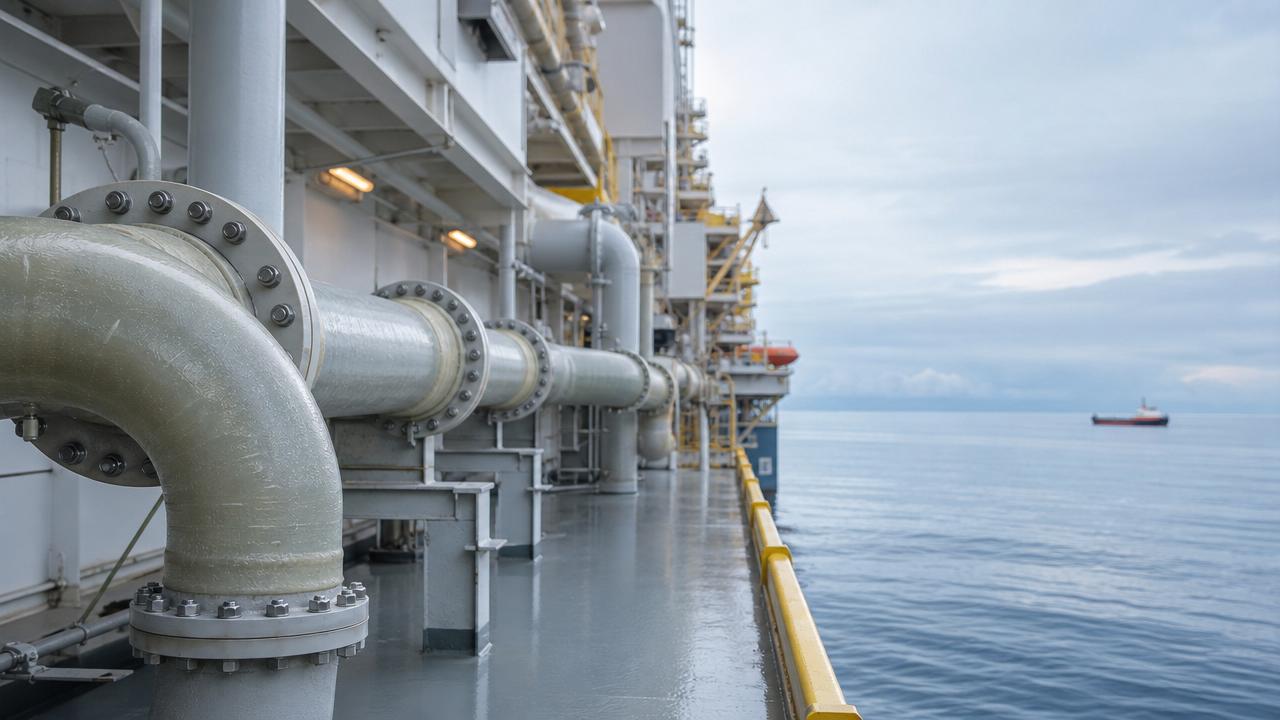
For FPSO seawater lines, material selection and piping design directly affect corrosion resistance, hydraulic performance, maintenance frequency, and long-term offshore reliability.
Technical evaluators must balance seawater chemistry, pressure cycles, installation constraints, and lifecycle cost when comparing metallic systems with GRE piping solutions.
This article highlights the key risks in FPSO seawater line materials and design, helping project teams identify failure points early and make more robust, cost-effective decisions.
Why FPSO Seawater Lines Create Higher Material Risk
An FPSO operates in a compact offshore environment where seawater systems support cooling, ballast, firewater, produced water handling, and utility services.
Unlike fixed onshore plants, an FPSO faces vessel motion, limited maintenance access, aggressive chlorides, marine growth, vibration, and tight shutdown windows.
- Seawater chloride content accelerates corrosion in unprotected carbon steel and challenges coating durability at joints and damaged areas.
- Pressure transients from pumps and valves can fatigue weak supports, elbows, reducers, and bonded or flanged connections.
- Space constraints increase the risk of poor routing, insufficient expansion allowance, and difficult inspection access.
- Offshore replacement costs are often driven less by pipe price and more by labor, lifting, isolation, and production impact.
For technical evaluators, the first question is not only whether a pipe can withstand seawater, but whether the whole FPSO line can remain serviceable.
Which Material Risks Should Be Checked Before Selection?
Material comparison for FPSO seawater lines should include corrosion, mechanical loading, temperature, installation method, fire exposure, and inspection philosophy.
The table below summarizes common evaluation risks when metallic piping is compared with fiberglass reinforced epoxy, commonly known as GRE piping.
This comparison does not mean one material suits every FPSO service. It shows why evaluators must link material behavior with design assumptions.
GRE piping is attractive for seawater because it belongs to the glass and ceramic materials field, using glass fibers and epoxy resin to create corrosion-resistant composites.
Corrosion Is Not the Only Failure Mechanism
A common FPSO mistake is treating seawater pipe selection as a corrosion-only decision. Mechanical design can be just as important.
GRE pipes need correct support spacing, axial restraint, thrust block logic, thermal movement allowance, and protection from concentrated impact loads.
How Design Choices Affect Hydraulic Performance and Reliability
FPSO seawater line design must maintain stable flow while minimizing energy consumption, vibration, air pockets, and erosion at high-velocity sections.
Material selection affects internal roughness, allowable velocity, pressure drop, and long-term cleanliness. These factors influence pump sizing and operating cost.
- Confirm the design pressure, test pressure, vacuum condition, and surge case before selecting pipe pressure class.
- Check velocity limits for seawater, suspended solids, and any intermittent chemical dosing used in the FPSO system.
- Review bends, reducers, tees, strainers, and valves because local turbulence often creates the first maintenance issue.
- Assess support loads under dry, filled, hydrotest, thermal, operating, and accidental impact conditions.
For GRE seawater lines, smooth internal surfaces can support lower friction loss compared with corroded steel surfaces over long service periods.
However, the designer must avoid assuming unlimited velocity. Resin system, solids content, fluid temperature, and fitting geometry still matter.
Where Evaluators Should Focus During Design Review
The strongest FPSO seawater line specification combines material data with practical installation rules, rather than relying only on nominal pressure rating.
- Verify that fittings, flanges, gaskets, and adhesives match the pipe system and the intended offshore environment.
- Check whether prefabricated spools can pass through available deck openings and equipment access routes.
- Require clear handling procedures because composite pipe edges and machined bonding areas should be protected before installation.
Procurement Criteria for FPSO GRE Piping Systems
Technical evaluators often face limited budget, short delivery schedules, and demanding documentation requirements during FPSO project procurement.
The following selection table helps convert technical concerns into measurable procurement checkpoints for seawater GRE piping and related composite materials.
A mature FPSO procurement review should examine both technical compliance and supplier execution capability, especially for customized pipe fittings.
Shandong Ocean Pipe Technology Co., Ltd. was established in 2012 in Wucheng Industrial Park, Dezhou City, Shandong Province, China.
With registered capital of USD 4,200,000, Ocean Pipe has developed into one of China’s top large manufacturers of fiberglass reinforced epoxy pipe.
Production Capability That Supports Technical Evaluation
Ocean Pipe operates 16 winding production lines, 174 sets of pipe fitting winding machines, and winding micro-control systems for consistent manufacturing.
The factory is equipped with 5 static water pressure testing machines, supporting annual GRE pipe production and testing capacity of 25,000 tons.
For FPSO technical evaluators, such capacity helps address schedule risk, fitting availability, hydrotest planning, and repeatable product quality.
Application Scenarios: Where GRE Seawater Lines Fit Best
FPSO seawater lines cover multiple duties, so evaluators should separate high-risk services from standard utility circuits before approving material selection.
The table below gives practical scenario guidance for GRE pipe use in offshore seawater and related industrial systems.
GRE pipes used for FPSO seawater services can also share engineering logic with ship ballast piping, LNG utilities, chemical plants, hot spring pipework, and salt-making systems.
For wastewater interfaces, pipe corrosion resistance should be reviewed together with equipment such as a Wastewater Treatment Plant to avoid material mismatch.
Common Design Mistakes That Increase FPSO Maintenance Cost
Many FPSO seawater line problems start before operation. They are hidden in unclear specifications, incomplete drawings, or unrealistic installation assumptions.
- Selecting material by initial pipe price only, while ignoring coating repair, scaffold access, shutdown labor, and spare spool cost.
- Using a generic pressure rating without checking surge pressure, vacuum resistance, external loads, and hydrotest condition.
- Treating composite pipe like steel pipe, especially around supports, clamp contact surfaces, and field modification methods.
- Leaving jointing procedures to the last stage, causing rework when shipyard access becomes limited.
The practical solution is early cooperation between process engineers, piping designers, material specialists, shipyard installers, and the GRE pipe manufacturer.
Cost Should Be Evaluated Across the Lifecycle
A GRE pipe may not always be the cheapest item on a single purchase order, but it may reduce corrosion maintenance cost.
For FPSO seawater lines, lifecycle evaluation should include installation weight, coating needs, inspection frequency, replacement difficulty, and operational downtime.
Standards, Testing, and Documentation Evaluators Should Request
FPSO projects usually require clear documentation because the piping system must satisfy owner specifications, classification expectations, and project quality plans.
Common references may include recognized composite pipe standards, project piping specifications, pressure testing procedures, material traceability, and inspection reports.
Documentation should be reviewed before purchase approval, not after delivery. Late clarification can delay FPSO integration and increase project cost.
FAQ for FPSO Seawater Line Technical Evaluators
How should an FPSO team compare GRE pipe with stainless steel?
Compare corrosion behavior, weight, support design, fire-zone requirements, joint method, inspection strategy, and lifecycle cost rather than only material price.
Stainless steel may suit specific high-temperature or mechanical zones, while GRE can be strong for seawater corrosion resistance and weight reduction.
What information is needed before selecting GRE piping for FPSO seawater?
Provide fluid composition, operating pressure, design pressure, temperature, flow rate, pipe diameter, installation location, support constraints, and expected testing requirements.
If dosing chemicals, suspended solids, or intermittent vacuum may occur, include those conditions during the technical evaluation stage.
Are composite pipes difficult to install offshore?
They are manageable when procedures are defined early. Joint preparation, cleanliness, curing time, support contact, and flange alignment require discipline.
The risk increases when installers treat GRE as ordinary steel pipe or modify spools without manufacturer guidance.
What is the most overlooked FPSO seawater line risk?
The most overlooked risk is interface management. Pumps, valves, steel nozzles, supports, and composite spools must work as one system.
A correct pipe material cannot compensate for misaligned flanges, excessive nozzle loads, unsupported branches, or uncontrolled pressure surge.
Why Choose Ocean Pipe for FPSO GRE Piping Consultation
Ocean Pipe products are used in oil and gas, ship ballast piping, LNG, chemical plants, hot spring piping, and salt-making applications.
Customers have included CNOOC, CNPC, Sinopec, Shanghai Waigaoqiao Shipyard, Ningbo Xinle Shipyard, and Wuhan Qingshan Shipyard, based on provided business experience.
The company has also expanded to overseas markets including Australia, Iraq, Kazakhstan, Turkey, and other countries, supporting broader project communication needs.
- Consult material selection for FPSO seawater, ballast, cooling, firewater, chemical utility, and corrosive water service conditions.
- Discuss pressure class, pipe diameter, fitting configuration, hydrostatic testing plan, and documentation requirements before procurement.
- Request support for customized spool planning, delivery schedule communication, sample discussion, and quotation based on project drawings.
- Coordinate certification expectations, inspection hold points, packing requirements, and installation guidance for shipyard or offshore work.
If your FPSO project needs seawater line evaluation, share the design basis, fluid data, layout drawings, and delivery schedule for a focused technical review.
Ocean Pipe can help clarify GRE pipe selection, fitting strategy, testing requirements, customization scope, and quotation details before critical procurement decisions are finalized.
Please give us a message
产品介绍产品介绍产品介绍产品介绍产品介绍产品介绍产品介绍产品介绍产品介绍产品介绍产品介绍产品介绍产品介绍产品介绍产品介绍产品介绍产品介绍产品介绍产品介绍产品介绍产品介绍产品介绍产品介绍产品介绍产品介绍产品介绍产品介绍产品介绍产品介绍产品介绍
Please give us a message
产品介绍产品介绍产品介绍产品介绍产品介绍产品介绍产品介绍产品介绍产品介绍产品介绍产品介绍产品介绍产品介绍产品介绍产品介绍产品介绍产品介绍产品介绍产品介绍产品介绍产品介绍产品介绍产品介绍产品介绍产品介绍产品介绍产品介绍产品介绍产品介绍产品介绍
Please give us a message
产品介绍产品介绍产品介绍产品介绍产品介绍产品介绍产品介绍产品介绍产品介绍产品介绍产品介绍产品介绍产品介绍产品介绍产品介绍产品介绍产品介绍产品介绍产品介绍产品介绍产品介绍产品介绍产品介绍产品介绍产品介绍产品介绍产品介绍产品介绍产品介绍产品介绍
Please give us a message
产品介绍产品介绍产品介绍产品介绍产品介绍产品介绍产品介绍产品介绍产品介绍产品介绍产品介绍产品介绍产品介绍产品介绍产品介绍产品介绍产品介绍产品介绍产品介绍产品介绍产品介绍产品介绍产品介绍产品介绍产品介绍产品介绍产品介绍产品介绍产品介绍产品介绍