
How to Read FRP Pipe Datasheets: Diameter, Pressure and Temperature Limits
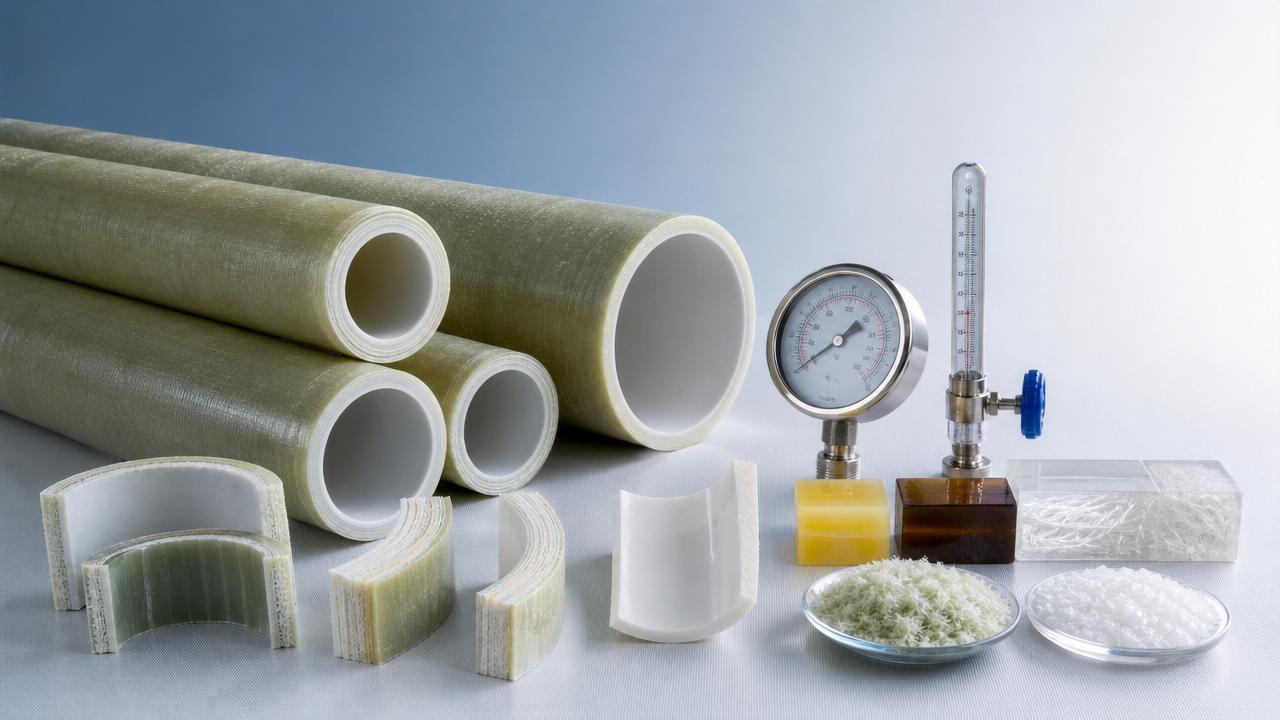
For procurement teams, an FRP Pipe datasheet is more than a technical document—it is the basis for safe selection, cost control, and long-term project reliability.
Understanding nominal diameter, pressure rating, temperature limits, resin system, and standards helps compare suppliers accurately and avoid costly specification errors.
This guide explains how to read FRP Pipe datasheets with confidence and connect technical data to real operating conditions.
FRP Pipe Datasheets Are Becoming More Decision-Critical
Industrial piping decisions are changing as projects demand lighter materials, corrosion resistance, and predictable lifecycle performance.
In oil and gas, ship ballast systems, LNG terminals, chemical plants, and salt production, FRP Pipe is increasingly evaluated against steel alternatives.
This shift makes datasheet literacy more important. A small misunderstanding can lead to wrong wall thickness, unsuitable resin, or unsafe pressure selection.
The trend is clear: buyers no longer assess FRP Pipe only by price or diameter. They examine temperature class, joint design, standards, and testing evidence.
Key Datasheet Fields Now Shape Long-Term Reliability
A good FRP Pipe datasheet normally starts with dimensions, pressure, temperature, stiffness, resin type, service medium, and applicable design codes.
These fields should be read together. Diameter alone does not define suitability, and pressure rating is incomplete without temperature context.
Nominal Diameter Shows System Fit, Not Full Capacity
Nominal diameter indicates the intended size category of the FRP Pipe, often listed as DN, NPS, or millimeter size.
It should not be confused with exact internal diameter. Wall thickness and liner design affect flow area and hydraulic performance.
When comparing suppliers, check whether the FRP Pipe datasheet lists outside diameter, inside diameter, wall thickness, and tolerances.
For replacement projects, outside diameter matters for supports, clamps, penetrations, and existing spool connections.
Pressure Rating Must Match Real Operating Conditions
Pressure rating defines the maximum allowable pressure under specified conditions. It is usually expressed in bar, MPa, or psi.
A datasheet may show nominal pressure, design pressure, test pressure, and burst pressure. These are not the same.
Nominal pressure supports product classification. Design pressure supports engineering calculation. Hydrostatic test pressure confirms production quality.
For FRP Pipe, pressure rating should be reviewed with service temperature, joint type, installation method, and surge conditions.
Temperature Limits Are Driving Material Selection
Temperature limits show the safe operating range for the resin matrix and reinforcement structure.
Unlike metal piping, FRP Pipe performance depends strongly on resin chemistry, cure quality, liner thickness, and long-term exposure.
Datasheets may list continuous operating temperature, maximum short-term temperature, and derated pressure at elevated temperatures.
If temperature rises, allowable pressure may decrease. This pressure-temperature relationship is essential for chemical and refinery applications.
Why the Market Is Reading FRP Pipe Data More Carefully
The move toward composite piping is supported by corrosion control, installation efficiency, and lifecycle cost reduction.
However, more applications also mean stricter documentation requirements. Datasheets must now support engineering review and compliance checks.
These drivers are especially visible in fiberglass and ceramic-related material industries, where corrosion, insulation, and durability define value.
Diameter, Pressure, and Temperature Should Be Checked Together
A reliable FRP Pipe selection process does not treat each datasheet field as an isolated number.
Diameter affects flow velocity. Flow velocity affects friction loss. Friction loss affects pump duty and system pressure.
Temperature affects resin strength. Resin strength affects pressure capability. Pressure capability affects safety margin.
This connected reading is vital when FRP Pipe is used for hot spring water, refinery fluids, seawater ballast, or chemical transfer.
For refinery service, products such as GRE Pipe for Refinery are commonly assessed through pressure-temperature compatibility and corrosion resistance.
A Practical Reading Sequence
- Confirm service medium, including concentration, impurities, and cleaning chemicals.
- Check operating temperature and possible short-term peaks.
- Match design pressure with surge, vacuum, and test requirements.
- Review nominal diameter, internal diameter, and wall thickness.
- Verify joint type, fittings, supports, and installation constraints.
- Compare standards, testing records, and quality documentation.
Resin System and Reinforcement Explain Performance Differences
Two FRP Pipe products with the same diameter and pressure rating may perform differently in service.
The reason is often the resin system, fiber architecture, liner design, and manufacturing control.
Epoxy-based GRE pipe is valued in demanding industrial environments because it combines mechanical strength with chemical resistance.
Glass fiber reinforcement carries load, while resin transfers stress and protects the structure from chemical attack.
Datasheets should identify whether the FRP Pipe uses epoxy, vinyl ester, polyester, or another resin system.
The chemical resistance table should align with actual fluids, not only broad categories such as acid, alkali, or seawater.
Standards and Testing Are Becoming Stronger Buying Signals
Standards help translate datasheet claims into recognized engineering language.
Common references may include ISO, ASTM, API, AWWA, or project-specific specifications, depending on application.
A FRP Pipe datasheet should state design basis, test method, dimensional tolerance, and acceptance criteria.
Hydrostatic pressure testing is particularly important. It verifies that production quality matches rated performance.
Shandong Ocean Pipe Technology Co., Ltd. operates static water pressure testing machines and large-scale GRE pipe production facilities.
Such testing capacity supports consistent quality control for oil and gas, LNG, shipbuilding, and chemical plant applications.
Business Impacts: What Datasheet Errors Can Change
Incorrect FRP Pipe selection can affect more than engineering calculations.
It may change delivery schedules, installation labor, inspection workload, and maintenance risk.
A wrong diameter may increase pressure loss or create connection mismatches.
An insufficient pressure rating may force redesign after technical review.
An unsuitable temperature limit may reduce service life even when the pipe appears acceptable at room temperature.
- Engineering teams face recalculation and documentation revisions.
- Project teams face delayed approval and possible installation changes.
- Operations teams face higher leakage, downtime, or inspection frequency.
- Finance teams face lifecycle cost uncertainty beyond purchase price.
Core Points to Check Before Comparing Suppliers
Supplier comparison should begin after the FRP Pipe datasheet has been checked against project conditions.
A low quotation may not be competitive if the pressure class, resin, or test evidence is weaker.
- Confirm whether pressure rating is valid at your operating temperature.
- Check whether diameter data includes internal and external dimensions.
- Review chemical compatibility for actual medium and concentration.
- Ask for hydrostatic test conditions and acceptance criteria.
- Verify fittings, flanges, and joints share the same rating basis.
- Check whether production capacity supports project delivery volume.
For demanding process lines, GRE Pipe for Refinery can be reviewed as part of a broader FRP Pipe specification strategy.
A Simple Response Framework for Better Selection
As FRP Pipe applications expand, the best response is a more disciplined review framework.
This framework prevents datasheet review from becoming a simple checklist.
It connects every FRP Pipe parameter to operational reliability and project execution.
Final Takeaway and Next Step
Reading an FRP Pipe datasheet well means understanding relationships, not memorizing numbers.
Diameter affects hydraulic performance. Pressure rating depends on design assumptions. Temperature limits influence resin behavior and long-term strength.
Before selection, prepare operating data, request complete datasheets, and compare suppliers using the same technical baseline.
For projects involving oil and gas, LNG, ship ballast, chemical plants, hot springs, or salt production, detailed FRP Pipe review is essential.
To move forward, share service medium, pressure, temperature, diameter, and standard requirements with an experienced GRE pipe supplier.
A clear datasheet review today can reduce redesign, improve safety, and support dependable FRP Pipe performance over the full service life.
Please give us a message
产品介绍产品介绍产品介绍产品介绍产品介绍产品介绍产品介绍产品介绍产品介绍产品介绍产品介绍产品介绍产品介绍产品介绍产品介绍产品介绍产品介绍产品介绍产品介绍产品介绍产品介绍产品介绍产品介绍产品介绍产品介绍产品介绍产品介绍产品介绍产品介绍产品介绍
Please give us a message
产品介绍产品介绍产品介绍产品介绍产品介绍产品介绍产品介绍产品介绍产品介绍产品介绍产品介绍产品介绍产品介绍产品介绍产品介绍产品介绍产品介绍产品介绍产品介绍产品介绍产品介绍产品介绍产品介绍产品介绍产品介绍产品介绍产品介绍产品介绍产品介绍产品介绍
Please give us a message
产品介绍产品介绍产品介绍产品介绍产品介绍产品介绍产品介绍产品介绍产品介绍产品介绍产品介绍产品介绍产品介绍产品介绍产品介绍产品介绍产品介绍产品介绍产品介绍产品介绍产品介绍产品介绍产品介绍产品介绍产品介绍产品介绍产品介绍产品介绍产品介绍产品介绍
Please give us a message
产品介绍产品介绍产品介绍产品介绍产品介绍产品介绍产品介绍产品介绍产品介绍产品介绍产品介绍产品介绍产品介绍产品介绍产品介绍产品介绍产品介绍产品介绍产品介绍产品介绍产品介绍产品介绍产品介绍产品介绍产品介绍产品介绍产品介绍产品介绍产品介绍产品介绍