
FRP Pipe Failure Causes: Poor Support, Wrong Resin and Installation Errors
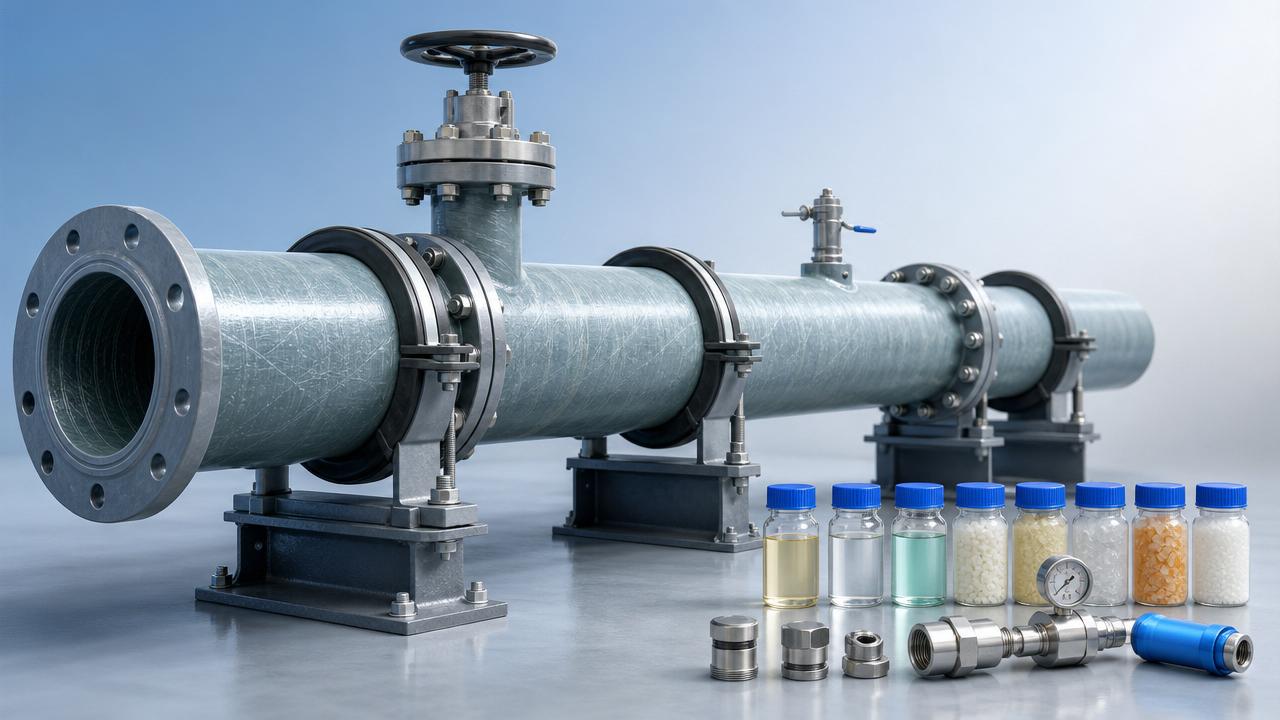
FRP Pipe failures rarely happen without warning; they often begin with poor support design, mismatched resin selection, or installation errors that compromise long-term safety. For quality control and safety managers, understanding these root causes is essential to prevent leakage, structural damage, downtime, and costly emergency repairs. This article examines the key failure mechanisms behind FRP piping systems and explains how proper material selection, engineering verification, and field installation control can improve reliability in demanding industrial applications.
Why FRP Pipe Failure Is Usually a System Problem, Not a Single Defect
In industrial plants, FRP Pipe failure is often described as cracking, joint leakage, blistering, delamination, or abnormal deformation. Yet the visible damage is usually the final stage of a longer chain of errors.
For quality control and safety managers, the important question is not only “where did it fail?” but “which decision allowed the failure mechanism to develop?” That decision may involve support spacing, resin chemistry, pressure class, installation workmanship, or hydrostatic testing.
Typical early warning signs to investigate
- Localized sagging between supports, especially near valves, reducers, flanges, or heavy pipe fittings.
- Weeping at bonded joints, threaded connections, or flange interfaces after thermal cycling.
- Outer surface cracks, discoloration, resin-rich areas, or fiber exposure caused by impact or poor handling.
- Unusual vibration, hammering noise, or repeated gasket compression loss during operation.
These symptoms should trigger a structured inspection. In GRE and FRP Pipe systems, small deviations can grow under internal pressure, chemical attack, temperature variation, or cyclic loading.
Poor Support Design: The Hidden Cause Behind Many FRP Pipe Failures
FRP Pipe is strong but not installed like steel. Its elastic modulus, wall structure, and allowable strain behavior require support design based on engineering calculation, not habit.
Poor support design creates bending stress, local crushing, flange misalignment, and fatigue around bonded joints. This is especially critical in oil and gas, ship ballast piping, LNG, chemical plants, hot spring piping, and salt-making systems.
The table below summarizes common support-related risks that quality control teams should check before commissioning an FRP Pipe line.
A support plan should be approved before materials arrive at site. Field teams should not relocate hangers casually, because a small change can alter load transfer across the whole FRP Pipe route.
Wrong Resin Selection: When Chemical Compatibility Is Underestimated
Resin is not a minor detail in FRP Pipe. It defines corrosion resistance, temperature tolerance, fluid compatibility, bonding performance, and long-term aging behavior.
In fiberglass reinforced epoxy pipe and other FRP systems, the wrong resin may survive initial pressure testing but fail after months of chemical exposure. This makes resin verification a key procurement and safety task.
What quality teams should confirm before approval
- Exact fluid composition, including cleaning agents, inhibitors, dissolved salts, and possible concentration changes.
- Continuous and peak operating temperature, because resin performance changes under thermal stress.
- Internal pressure, vacuum risk, surge pressure, and water hammer conditions.
- External environment, including UV exposure, marine atmosphere, soil condition, and mechanical impact risk.
For resin selection, practical comparison helps prevent unclear purchasing decisions and reduces disputes between engineering, procurement, and operations teams.
A resin decision should be documented in the material approval file. When operating media are complex, quality managers should request a technical review instead of relying only on a catalog pressure rating.
Installation Errors That Reduce FRP Pipe Service Life
Even correctly designed FRP Pipe can fail if installation control is weak. Many field errors are difficult to see after backfilling, insulation, or commissioning.
Safety managers should treat installation as a controlled process, not a simple mechanical assembly. Workmanship, curing conditions, alignment, and pressure testing directly affect future leakage risk.
High-risk installation mistakes
- Cutting pipe ends without proper squareness, which creates uneven joint gaps and stress concentration.
- Insufficient surface preparation before bonding, leading to weak adhesion and hidden joint defects.
- Forcing misaligned flanges into position, which transfers external load into the FRP Pipe wall.
- Ignoring curing time, ambient temperature, or humidity limits for adhesive systems.
- Conducting pressure tests too quickly, without gradual pressurization and hold-time observation.
A practical control method is to use inspection hold points. For example, check pipe cutting, joint preparation, alignment, support installation, and test pressure records before allowing the next work stage.
How to Diagnose Failure Modes Before They Become Safety Incidents
Failure diagnosis should combine visual inspection, operating history, material review, and installation records. A leak location alone rarely explains the full problem.
For FRP Pipe systems, the most useful approach is to compare symptoms with stress sources. This helps determine whether the root cause is design, material, manufacturing, installation, or operation.
The following diagnostic table can support internal investigation and supplier communication after abnormal conditions are found.
This diagnosis should be completed before replacing sections. Otherwise, the same FRP Pipe failure may repeat because the actual stress source remains unchanged.
Procurement Checklist for Quality Control and Safety Managers
Procurement is not only about unit price. For FRP Pipe projects, the lowest quotation can become expensive if it lacks engineering support, testing capacity, or traceable production control.
A strong purchasing specification should define operating data, inspection requirements, documents, packing method, and site support expectations. This reduces ambiguity before production begins.
Key documents to request from a supplier
- Technical datasheet covering pressure rating, diameter range, wall structure, temperature limits, and jointing method.
- Material compatibility confirmation based on process medium and operating temperature.
- Hydrostatic test plan or pressure test records according to the agreed project requirement.
- Installation guidance covering handling, storage, cutting, bonding, curing, supports, and pressure testing.
- Inspection and packing details for shipment, especially for export projects with long transport routes.
In some oilfield and sand management projects, buyers may also evaluate related equipment such as Sand Control Screens when planning a broader corrosion-resistant production system.
Standards, Testing, and Compliance: What Should Be Verified?
FRP Pipe projects often refer to recognized industry standards and project specifications. The exact standard depends on application, pressure class, joining method, and end-user requirements.
Quality managers should avoid vague phrases such as “standard product” without defining inspection criteria. Compliance should be linked to drawings, test methods, acceptance limits, and documentation.
The table below shows practical compliance points commonly reviewed in industrial fiberglass piping projects.
A clear compliance file makes safety review easier. It also helps procurement teams compare suppliers on engineering reliability instead of focusing only on initial material cost.
Why Manufacturing Control Matters for FRP Pipe Reliability
Manufacturing consistency is critical because FRP Pipe performance depends on resin ratio, fiber placement, winding angle, curing, and dimensional control. These variables cannot be corrected after installation.
Shandong Ocean Pipe Technology Co., Ltd. was established in 2012 in Wucheng Industrial Park, Dezhou City, Shandong Province, China. With registered capital of USD 4,200,000, Ocean Pipe has become one of the top 10 largest manufacturers in China for Fiberglass Reinforced Epoxy pipe.
The company operates 16 winding production lines, 174 sets of pipe fitting winding machines, and winding micro-control systems. Its factory is also equipped with 5 static water pressure testing machines, supporting annual GRE pipe production and testing capacity of 25,000 tons.
Applications supported by production and testing capacity
- Oil and gas piping where pressure integrity, corrosion resistance, and documented inspection are essential.
- Ship ballast piping where lightweight material, seawater resistance, and fitting accuracy affect installation safety.
- LNG and chemical plant systems where resin selection must match fluid and temperature exposure.
- Hot spring and salt-making pipelines where chloride-rich media can challenge metallic alternatives.
Ocean Pipe has served customers from groups including CNOOC, CNPC, Sinopec, Shanghai Waigaoqiao Shipyard, Ningbo Xinle Shipyard, and Wuhan Qingshan Shipyard. Its overseas markets include Australia, Iraq, Kazakhstan, Turkey, and other countries.
Cost and Risk: Why Cheap FRP Pipe Can Become Expensive
A cost review should include installation labor, shutdown risk, inspection workload, spare parts, and possible environmental or safety consequences. The purchase price is only one part of lifecycle cost.
If support design is incomplete, the project may require rework. If resin selection is wrong, the plant may face unexpected leakage. If installation training is weak, joint repairs can disrupt commissioning.
Practical risk-reduction actions
- Evaluate FRP Pipe suppliers by engineering review ability, not only by quotation speed.
- Confirm resin compatibility before purchase order approval, especially for chemical or high-salinity media.
- Require installation drawings and support details before mobilizing site labor.
- Use hydrostatic testing and inspection records as mandatory handover documents.
For budget-limited projects, reducing risk does not always mean choosing the most expensive option. It means matching the pipe system to actual operating conditions and controlling each decision point.
FAQ: Common Questions About FRP Pipe Failure Prevention
How can quality managers identify whether FRP Pipe failure is caused by support problems?
Check whether cracks or leakage appear near supports, anchors, valves, or flange interfaces. Review support spacing, contact surface, clamp pressure, and whether heavy accessories have independent support.
What should be confirmed before selecting resin for FRP Pipe?
Confirm fluid chemistry, temperature range, pressure, cleaning medium, and external exposure. Resin should be selected for the full operating envelope, not only for normal fluid concentration.
Is hydrostatic testing enough to prove long-term reliability?
Hydrostatic testing is important, but it mainly verifies short-term pressure integrity. Long-term reliability also depends on resin compatibility, installation workmanship, support design, and operating control.
What is the biggest installation mistake with FRP Pipe?
One common mistake is forcing misaligned joints or flanges into position. This creates locked-in stress that may later appear as leakage, cracking, or gasket failure during operation.
Why Choose Ocean Pipe for FRP Pipe Failure Prevention and Project Support
FRP Pipe reliability depends on coordinated control of design assumptions, resin selection, manufacturing consistency, testing, and installation guidance. Ocean Pipe supports these decisions through production capacity, winding control, fitting manufacturing, and pressure testing capability.
Quality control and safety managers can consult Ocean Pipe for parameter confirmation, pipe and fitting selection, resin compatibility review, project delivery planning, customized GRE pipe solutions, inspection document requirements, and quotation communication.
If your project involves oil and gas, ship ballast piping, LNG, chemical plants, hot spring pipelines, or salt-making systems, early technical discussion can reduce installation rework and prevent avoidable FRP Pipe failure.
Please give us a message
产品介绍产品介绍产品介绍产品介绍产品介绍产品介绍产品介绍产品介绍产品介绍产品介绍产品介绍产品介绍产品介绍产品介绍产品介绍产品介绍产品介绍产品介绍产品介绍产品介绍产品介绍产品介绍产品介绍产品介绍产品介绍产品介绍产品介绍产品介绍产品介绍产品介绍
Please give us a message
产品介绍产品介绍产品介绍产品介绍产品介绍产品介绍产品介绍产品介绍产品介绍产品介绍产品介绍产品介绍产品介绍产品介绍产品介绍产品介绍产品介绍产品介绍产品介绍产品介绍产品介绍产品介绍产品介绍产品介绍产品介绍产品介绍产品介绍产品介绍产品介绍产品介绍
Please give us a message
产品介绍产品介绍产品介绍产品介绍产品介绍产品介绍产品介绍产品介绍产品介绍产品介绍产品介绍产品介绍产品介绍产品介绍产品介绍产品介绍产品介绍产品介绍产品介绍产品介绍产品介绍产品介绍产品介绍产品介绍产品介绍产品介绍产品介绍产品介绍产品介绍产品介绍
Please give us a message
产品介绍产品介绍产品介绍产品介绍产品介绍产品介绍产品介绍产品介绍产品介绍产品介绍产品介绍产品介绍产品介绍产品介绍产品介绍产品介绍产品介绍产品介绍产品介绍产品介绍产品介绍产品介绍产品介绍产品介绍产品介绍产品介绍产品介绍产品介绍产品介绍产品介绍