
How to Choose the Right GRE Tubing Size
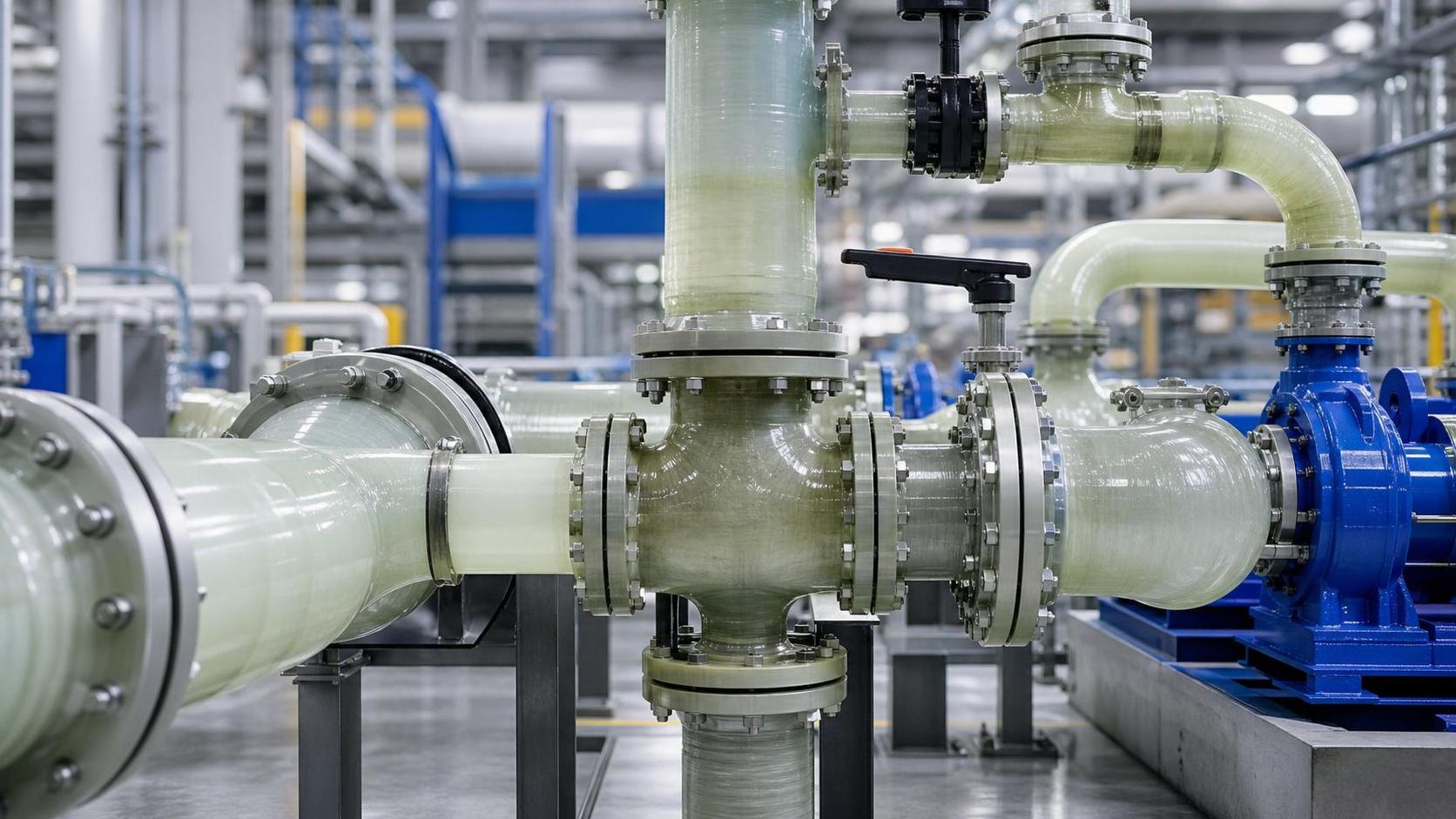
Choosing the right GRE Tubing size affects much more than simple fit-up. In glass and ceramic materials processing, it influences flow stability, pressure safety, maintenance intervals, and overall line reliability. When slurry, brine, cooling water, or chemical media move through a system, incorrect sizing often creates avoidable losses, from pressure drop and abrasion to vibration and premature joint stress.
That is why GRE Tubing selection should be treated as an operating decision, not only a purchasing step. Size must match the real process condition, the routing layout, and the medium being transported. A well-sized line supports smoother production, cleaner transfer, and better long-term control.
Why tubing size matters in glass and ceramic operations
In this sector, process lines often carry water, chemical additives, mineral suspensions, hot fluids, and corrosive solutions. These media do not behave the same way inside a pipe. Some demand higher velocity to prevent settling. Others need lower velocity to reduce wear.
If GRE Tubing is undersized, the system may see excessive friction loss, unstable discharge, and pump overload. If it is oversized, fluid speed can fall below a useful range, allowing sediment buildup or poor transfer efficiency. The best size sits between these two problems.
This is especially relevant where lines serve kilns, mineral preparation sections, glaze mixing units, or utility systems. In such environments, operating continuity often depends on keeping transport conditions predictable.
Start with the real duty, not the nominal diameter
A common mistake is selecting GRE Tubing by copying an existing line size. That approach ignores process changes, different media, and updated pressure targets. Tubing should be sized from duty data first.
The basic inputs to collect
- Required flow rate during normal and peak operation
- Operating pressure and surge pressure range
- Fluid temperature, including startup and shutdown changes
- Media type, viscosity, solids content, and corrosiveness
- Line length, elevation change, and number of fittings
- Installation space and support conditions
Once these values are clear, the size decision becomes more technical and far less guess-based. GRE Tubing performs well when its hydraulic behavior and mechanical limits are considered together.
Pressure and flow should be balanced together
Many selection problems come from treating flow and pressure as separate issues. In practice, they are closely linked. A smaller inner diameter raises velocity and friction loss. That usually means higher pump energy and stronger sensitivity to pressure surges.
A larger diameter reduces friction, but not always in a helpful way. If process media contain suspended particles, low velocity can lead to deposition. In ceramic material handling, settled particles may narrow the passage over time and create maintenance trouble later.
In other words, the right GRE Tubing size is usually the one that keeps velocity within a useful operating window while staying safely inside the pressure rating.
Media characteristics can change the sizing choice
Water service is only one case. In glass and ceramic plants, transfer lines may carry abrasive suspensions, salt-rich liquids, cleaning chemicals, or heated fluids. Each medium places different demands on GRE Tubing.
What to watch in typical services
For abrasive slurry, a larger bore may reduce local friction, but velocity must still remain high enough to avoid solids settling. For hot fluids, the design should account for thermal effects, support spacing, and expansion-related loads.
For corrosive chemical transfer, internal compatibility matters as much as size. A line that is correctly sized hydraulically can still fail early if resin structure and operating conditions do not match the medium.
This is one reason GRE systems are widely chosen in demanding process sectors. Their corrosion resistance and light weight support easier installation, but sizing still needs discipline.
Installation layout often decides whether a size works in practice
A pipe run on paper may look simple, yet the installed line may include elbows, branches, valves, reducers, and vertical sections. These details affect actual pressure loss and local turbulence.
In a compact production area, routing limitations can tempt teams to choose a smaller size. That may solve space issues briefly, but it can create long-term operating penalties. The correct approach is to review both hydraulic data and physical layout together.
- Check whether elbows are concentrated in one section
- Review pump discharge and suction conditions separately
- Consider flushing, drainage, and inspection access
- Allow for supports that limit vibration and misalignment
These points matter because GRE Tubing is part of a full piping system, not an isolated product.
Industry experience adds confidence to the sizing process
Reliable sizing becomes easier when it is supported by manufacturing experience and testing capacity. Shandong Ocean Pipe Technology Co., Ltd., established in 2012 in Dezhou, Shandong, has developed into one of China’s larger Fiberglass Reinforced Epoxy pipe manufacturers.
With 16 winding production lines, 174 pipe fitting winding machines, micro control systems, and static water pressure testing equipment, the company supports large-scale production and verification. Annual production and testing capacity reaches 25,000 tons.
That background matters because real performance data from oil and gas, LNG, ship ballast, chemical plants, hot spring systems, and salt-making operations helps inform how GRE Tubing sizes behave under different loads and media conditions.
In some process environments, reference solutions such as GRE Pipe for Refinery also show how sizing logic used in harsher service conditions can provide useful comparison points.
A practical way to narrow the right size
When several size options seem possible, it helps to compare them in a structured way. This usually reduces overdesign and avoids choosing a diameter only because it feels safer.
Compare candidate sizes against these questions
- Does the size keep operating velocity within a stable range?
- Can the line absorb normal and transient pressure safely?
- Will the media remain suspended, drained, or flushed as needed?
- Does the route introduce extra loss through fittings or elevation?
- Will maintenance become easier or more difficult over time?
- Is there enough evidence from similar applications?
This method turns GRE Tubing selection into a process decision based on performance, not just diameter labels.
Common sizing errors worth avoiding
One frequent error is ignoring startup and shutdown conditions. Thermal cycling, temporary blockage, or intermittent pumping can affect pressure behavior more than steady operation does.
Another is treating all fluids like clean water. In ceramic and glass-related lines, suspended solids and chemical concentration can completely change the preferred GRE Tubing size.
A third mistake is overlooking future changes. If capacity expansion is likely, it may be wise to assess whether the selected size can handle a moderate increase without harming flow stability.
Turning size selection into a better operating standard
The right GRE Tubing size is the result of matching flow demand, pressure class, media behavior, and installation reality. In glass and ceramic materials applications, that balance helps protect both process continuity and asset life.
A useful next step is to list actual process conditions for each line, compare them with current tubing dimensions, and identify where pressure loss, abrasion, or sediment risk may already be present. That makes later specification work faster, clearer, and more reliable.
Please give us a message
产品介绍产品介绍产品介绍产品介绍产品介绍产品介绍产品介绍产品介绍产品介绍产品介绍产品介绍产品介绍产品介绍产品介绍产品介绍产品介绍产品介绍产品介绍产品介绍产品介绍产品介绍产品介绍产品介绍产品介绍产品介绍产品介绍产品介绍产品介绍产品介绍产品介绍
Please give us a message
产品介绍产品介绍产品介绍产品介绍产品介绍产品介绍产品介绍产品介绍产品介绍产品介绍产品介绍产品介绍产品介绍产品介绍产品介绍产品介绍产品介绍产品介绍产品介绍产品介绍产品介绍产品介绍产品介绍产品介绍产品介绍产品介绍产品介绍产品介绍产品介绍产品介绍
Please give us a message
产品介绍产品介绍产品介绍产品介绍产品介绍产品介绍产品介绍产品介绍产品介绍产品介绍产品介绍产品介绍产品介绍产品介绍产品介绍产品介绍产品介绍产品介绍产品介绍产品介绍产品介绍产品介绍产品介绍产品介绍产品介绍产品介绍产品介绍产品介绍产品介绍产品介绍
Please give us a message
产品介绍产品介绍产品介绍产品介绍产品介绍产品介绍产品介绍产品介绍产品介绍产品介绍产品介绍产品介绍产品介绍产品介绍产品介绍产品介绍产品介绍产品介绍产品介绍产品介绍产品介绍产品介绍产品介绍产品介绍产品介绍产品介绍产品介绍产品介绍产品介绍产品介绍