
GRE Tubing Failure Causes in High-Pressure Service
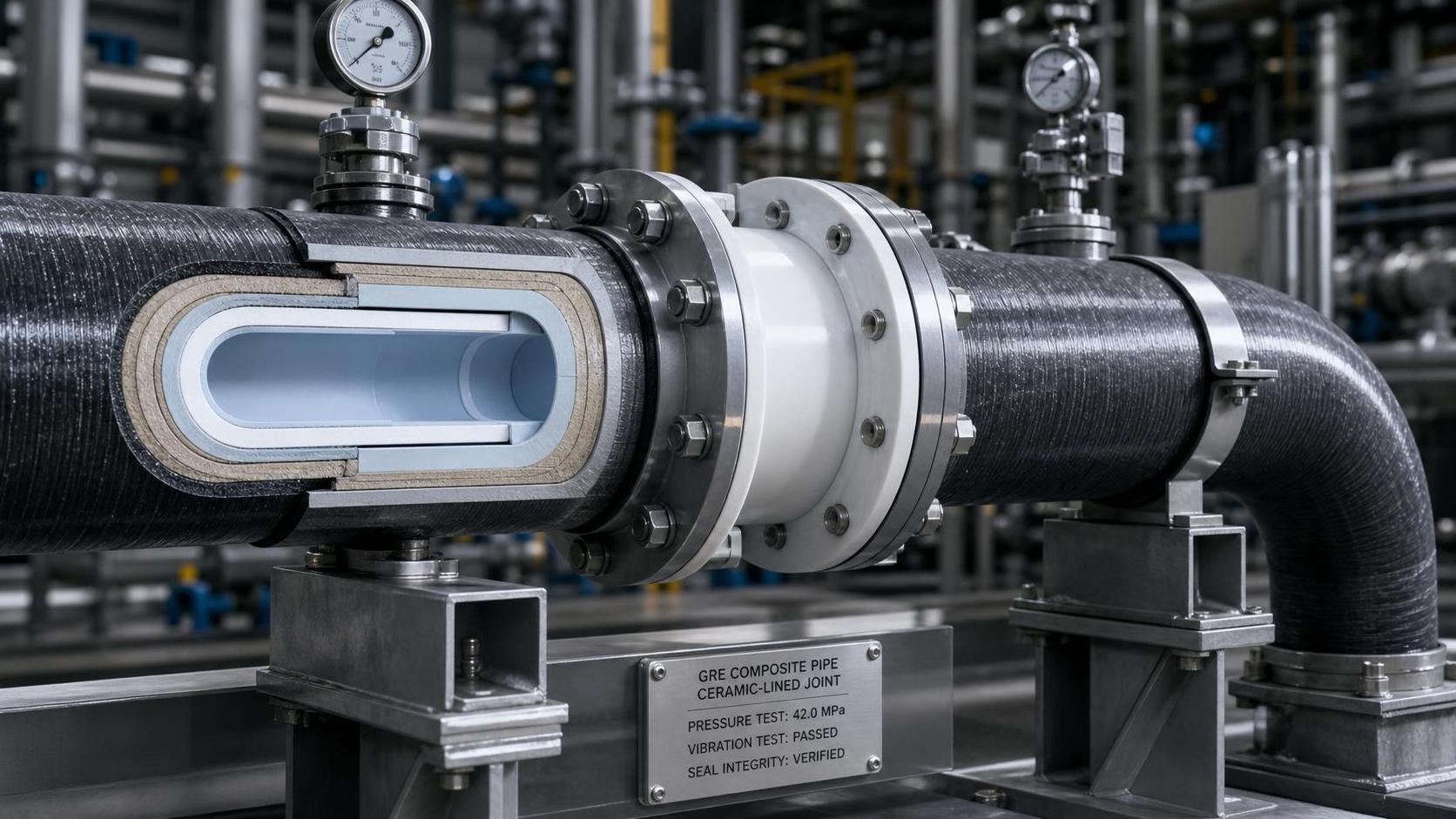
GRE Tubing Failure Causes in High-Pressure Service
In high-pressure systems, GRE Tubing can deliver excellent corrosion resistance and long service life, but failures still occur when design, installation, or operating conditions are not properly controlled.
Understanding the real failure causes helps reduce shutdowns, improve safety, and protect long-term system reliability.
In practice, most GRE Tubing problems are not caused by one issue alone. They usually come from a chain of small mistakes.
Why GRE Tubing Fails Under High Pressure
GRE Tubing performs well in corrosive service, but pressure adds another level of stress. Internal load, temperature change, vibration, and pressure cycling all work together.
If the system design ignores any of these factors, the tubing may weaken faster than expected. The visible crack often appears late in the failure process.
That is why inspections should focus on root causes, not only on damaged sections. Replacing a failed spool without correcting the source rarely solves the problem.
Common failure modes
- Axial cracking from pressure overload or poor restraint.
- Delamination caused by cyclic stress and weak bonding.
- Joint leakage from misalignment, uneven torque, or seal damage.
- Surface wear from vibration, rubbing, or poor support spacing.
- Softening or chemical attack when media exceeds design limits.
Design Errors That Trigger Early GRE Tubing Failure
A large share of GRE Tubing failure starts before installation. It begins with wrong assumptions during system design.
Incorrect pressure rating selection
Some systems use nominal pressure data without considering surge pressure. High-pressure service often includes spikes far above normal operating values.
If water hammer or pump start-up loads are ignored, GRE Tubing may experience repeated overstress. Over time, structural strength drops.
Poor support and anchor layout
GRE Tubing needs proper support spacing to control deflection. Long unsupported runs increase bending stress, especially near joints and fittings.
Missing anchors or badly placed guides allow movement that should not happen. This movement creates extra load at elbows, tees, and reducers.
Ignoring thermal expansion
Temperature variation changes pipe length and stiffness. In hot process lines, restrained expansion can force GRE Tubing into stress concentrations.
This becomes more serious when pressure and temperature rise at the same time. Small installation errors then turn into major service failures.
Installation Mistakes Seen in Field Service
From field cases, installation quality is one of the strongest predictors of GRE Tubing life. Even a well-designed system can fail early after poor assembly.
Joint misalignment and forced fit-up
When installers pull two sections together by force, the joint stores hidden stress. Under pressure, that stress shifts into leakage or cracking.
This is common around pumps, skids, and tight pipe racks. The pipe may look straight, but the load path is already wrong.
Incorrect tightening and sealing practice
Uneven bolt torque damages flange performance. Over-tightening can crush sealing surfaces, while under-tightening can create early seepage.
A leaking joint is not always a gasket issue. In many cases, the real problem is uneven compression or flange face distortion.
Damage during handling
GRE Tubing can be strong in service and still be vulnerable to impact during transport or lifting. Small surface damage may later grow under pressure.
Scratches, crushed ends, or improper storage often become overlooked starting points for failure analysis.
Operating Conditions That Accelerate Failure
Even correctly installed GRE Tubing can fail if process conditions change over time. This is a common pattern in expanding plants.
Pressure cycling and surge events
Frequent starts, stops, and valve actions produce stress cycles. These cycles slowly damage the laminate structure and bonded joints.
More obvious warning signs include repeated leaks at the same location, growing support wear, and unusual noise after flow changes.
Chemical incompatibility
Media changes can quietly reduce resin performance. A process upgrade may introduce chemicals that were never included in the original material review.
This also matters in mixed-service systems linked with filtration or production equipment such as Sand Control Screens.
Vibration and mechanical interaction
Nearby rotating equipment can transmit vibration into GRE Tubing. Repeated movement at clamps or supports causes abrasion and local heating.
Where metal piping connects to composite lines, stiffness mismatch can increase local stress. These transition points need careful inspection.
How to Inspect GRE Tubing After a Failure
A useful inspection starts with the failure pattern, then moves outward. Do not focus only on the rupture point.
- Record pressure, temperature, media, and recent operating changes.
- Check supports, anchors, and nearby equipment for movement.
- Inspect joints for offset, uneven gaps, and bolt pattern issues.
- Look for whitening, blistering, delamination, or external wear.
- Compare failed sections with original design limits and test records.
This step-by-step method prevents guesswork. It also helps separate material failure from installation or operating failure.
Practical Actions to Prevent Repeat GRE Tubing Problems
The best prevention plan is simple, consistent, and tied to actual operating data. It should not rely on visual checks alone.
- Review surge pressure, not just rated pressure.
- Verify support spacing after equipment modifications.
- Use alignment checks before final joint assembly.
- Track media and temperature changes through maintenance records.
- Schedule inspections around high-cycle operating events.
- Replace damaged sections only after cause confirmation.
When systems support oil, gas, ballast, LNG, chemical, or hot brine service, failure prevention needs both material knowledge and field discipline.
Manufacturing quality also matters. Shandong Ocean Pipe Technology Co., Ltd., established in 2012 in Shandong, China, is among the major GRE pipe manufacturers in the country.
With 16 winding production lines, 174 fitting winding machines, and hydrostatic testing capability, the company supports demanding applications across domestic and overseas markets.
In real projects, reliable GRE Tubing performance comes from matching product quality with proper design, careful installation, and disciplined maintenance.
Final Takeaway
Most GRE Tubing failures in high-pressure service are preventable. The biggest risks usually come from pressure spikes, poor support, misalignment, vibration, and unreviewed process changes.
If each failure is investigated with a structured method, future outages become easier to avoid. That also means safer systems and longer service life.
Start with the operating history, confirm the design limits, inspect the installation details, and fix the root cause before restarting the line.
Please give us a message
产品介绍产品介绍产品介绍产品介绍产品介绍产品介绍产品介绍产品介绍产品介绍产品介绍产品介绍产品介绍产品介绍产品介绍产品介绍产品介绍产品介绍产品介绍产品介绍产品介绍产品介绍产品介绍产品介绍产品介绍产品介绍产品介绍产品介绍产品介绍产品介绍产品介绍
Please give us a message
产品介绍产品介绍产品介绍产品介绍产品介绍产品介绍产品介绍产品介绍产品介绍产品介绍产品介绍产品介绍产品介绍产品介绍产品介绍产品介绍产品介绍产品介绍产品介绍产品介绍产品介绍产品介绍产品介绍产品介绍产品介绍产品介绍产品介绍产品介绍产品介绍产品介绍
Please give us a message
产品介绍产品介绍产品介绍产品介绍产品介绍产品介绍产品介绍产品介绍产品介绍产品介绍产品介绍产品介绍产品介绍产品介绍产品介绍产品介绍产品介绍产品介绍产品介绍产品介绍产品介绍产品介绍产品介绍产品介绍产品介绍产品介绍产品介绍产品介绍产品介绍产品介绍
Please give us a message
产品介绍产品介绍产品介绍产品介绍产品介绍产品介绍产品介绍产品介绍产品介绍产品介绍产品介绍产品介绍产品介绍产品介绍产品介绍产品介绍产品介绍产品介绍产品介绍产品介绍产品介绍产品介绍产品介绍产品介绍产品介绍产品介绍产品介绍产品介绍产品介绍产品介绍