
How does a Ship Scrubber System cut fuel compliance costs?
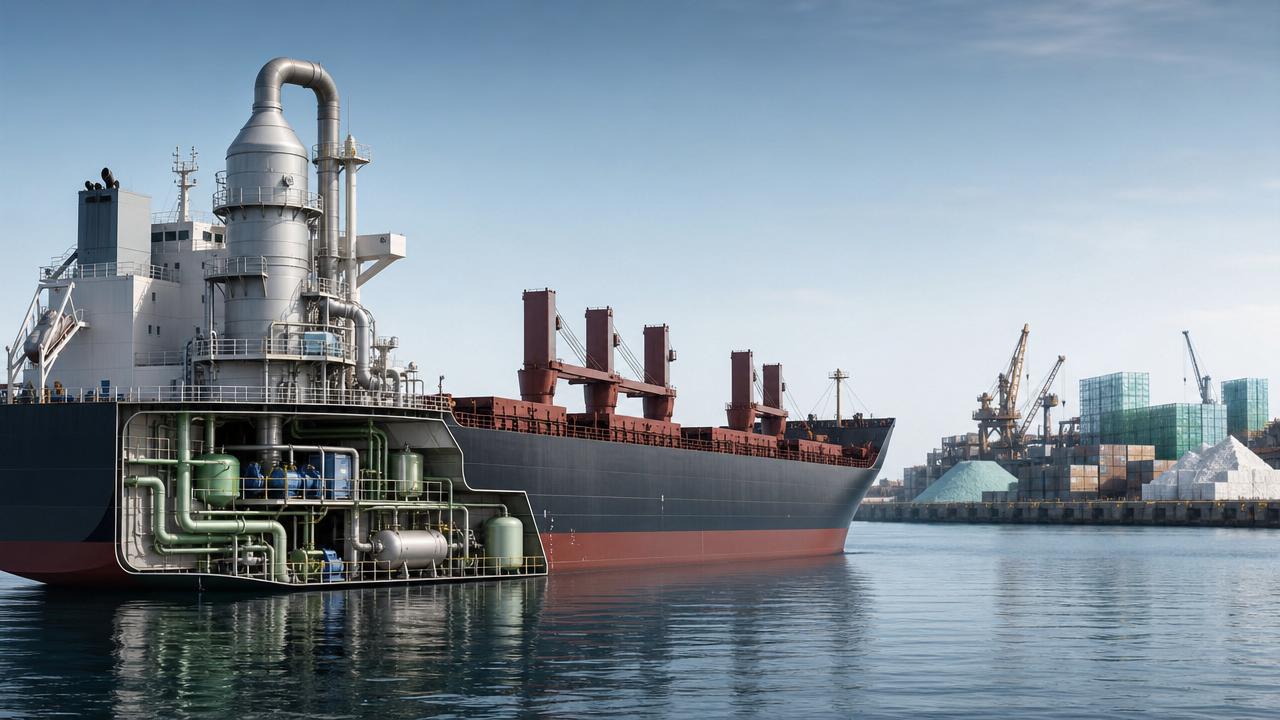
How a Ship Scrubber System changes the fuel-cost equation
For finance-focused marine and industrial operations, a Ship Scrubber System is not only an emissions device.
It is a cost-control tool that helps reduce fuel compliance pressure while supporting operational continuity.
By allowing vessels to keep using high-sulfur fuel oil within sulfur regulations, the system can lower daily fuel spending.
This matters even more when fuel spreads widen, voyage cycles lengthen, or environmental inspections become stricter.
In sectors linked to glass and ceramic materials, marine logistics often influence raw material and project delivery costs.
That makes every fuel compliance decision part of a broader supply-chain and asset-efficiency strategy.
Why scenario judgment matters before choosing a Ship Scrubber System
Not every vessel gains the same value from a Ship Scrubber System.
Savings depend on trading routes, fuel price spread, port restrictions, engine profile, and remaining vessel life.
A deep-sea bulk carrier faces different economics than a regional tanker or service vessel.
The same system can look highly profitable in one route pattern and weak in another.
This is why scenario-based evaluation is more useful than a general technical comparison.
The best decision usually comes from matching compliance method to voyage behavior and maintenance capability.
Cost drivers that shape the decision
- Price gap between high-sulfur fuel oil and low-sulfur compliant fuel
- Annual fuel consumption and engine load stability
- Time spent in open-loop restricted waters or sensitive ports
- Retrofit cost, docking time, and onboard space constraints
- Expected years of continued vessel operation
Scenario 1: Long-haul vessels with high fuel consumption
This is the strongest case for a Ship Scrubber System.
Large vessels on long international routes burn enough fuel to recover installation cost more quickly.
When the fuel spread remains favorable, daily savings can accumulate at a meaningful pace.
The core judgment point is utilization.
If the vessel operates consistently and avoids long idle periods, payback tends to become clearer.
In this scenario, the Ship Scrubber System works like a hedge against compliance fuel volatility.
What to verify
- Historical bunker consumption by voyage and season
- Real retrofit downtime cost
- Crew ability to manage washwater and maintenance routines
- Port call mix across unrestricted and restricted regions
Scenario 2: Vessels serving regulated ports or mixed trading zones
This scenario requires more careful configuration.
A Ship Scrubber System can still cut compliance costs, but only if the operating mode fits local discharge rules.
Open-loop systems may face limitations in some coastal or port environments.
Hybrid or closed-loop options may provide better flexibility, though capital and operating costs rise.
The key judgment is not only fuel savings.
It is whether the vessel can switch modes smoothly without disrupting schedules or adding hidden treatment expense.
Material durability also matters here.
Scrubber piping faces corrosive media, temperature variation, and vibration during continuous marine service.
That is why composite solutions used in industrial piping deserve attention.
For example, GRE Tubing can support corrosion resistance strategies in demanding fluid systems.
Scenario 3: Newbuild projects linked to industrial cargo chains
A newbuild offers a better starting point than a tight retrofit.
The Ship Scrubber System can be planned into layout, power balance, tank arrangement, and maintenance access from day one.
This reduces engineering compromise and often improves lifecycle economics.
For shipping tied to glass, ceramic, chemical, or energy projects, route stability can strengthen the business case.
Predictable operating patterns make fuel planning easier and savings forecasts more credible.
In these cases, compliance technology should be reviewed together with piping material selection, onboard reliability, and future repair costs.
Shandong Ocean Pipe Technology Co., Ltd. has supplied GRE piping solutions for oil and gas, LNG, ship ballast piping, and chemical applications.
That industrial background reflects the growing need for durable non-metallic systems in marine environments with corrosive service conditions.
How different scenarios affect Ship Scrubber System value
Practical selection advice by operating condition
- Choose scenario modeling before vendor comparison.
- Use route-specific fuel spread assumptions, not annual averages only.
- Include washwater handling, energy demand, and maintenance hours.
- Check whether corrosion-resistant piping materials can reduce lifecycle repair burden.
- Review dry dock schedules to minimize installation-related revenue loss.
- Test sensitivity under low spread, high spread, and restricted-port scenarios.
Where corrosive liquid handling is part of the design, material choice should not be treated as a minor detail.
Composite piping such as GRE Tubing may contribute to lower maintenance exposure in selected systems.
Common misjudgments that weaken expected savings
One common mistake is focusing only on sulfur compliance and ignoring operational fit.
A Ship Scrubber System creates value through usage, not through installation alone.
Another mistake is underestimating maintenance discipline.
If service routines are weak, downtime can offset part of the fuel-cost advantage.
Some evaluations also ignore material compatibility in washwater, slurry, and exhaust-related piping sections.
In marine and industrial environments, corrosion failures create cost through leaks, replacement, and unexpected off-hire.
A final error is using a single fuel price forecast.
Better planning compares several market cases and tests whether the compliance strategy remains resilient.
Next-step actions for a realistic compliance cost plan
Start with three years of voyage, fuel, and port data.
Then build a simple scenario model for low, medium, and high fuel spread conditions.
Map technical constraints, including space, power, discharge rules, and piping material durability.
After that, compare scrubber investment against compliant fuel use over the vessel’s remaining service period.
When done correctly, a Ship Scrubber System can cut fuel compliance costs in the right operating scenario.
The strongest results usually come from linking emissions compliance, fuel economics, and corrosion-resistant system design into one decision framework.
Please give us a message
产品介绍产品介绍产品介绍产品介绍产品介绍产品介绍产品介绍产品介绍产品介绍产品介绍产品介绍产品介绍产品介绍产品介绍产品介绍产品介绍产品介绍产品介绍产品介绍产品介绍产品介绍产品介绍产品介绍产品介绍产品介绍产品介绍产品介绍产品介绍产品介绍产品介绍
Please give us a message
产品介绍产品介绍产品介绍产品介绍产品介绍产品介绍产品介绍产品介绍产品介绍产品介绍产品介绍产品介绍产品介绍产品介绍产品介绍产品介绍产品介绍产品介绍产品介绍产品介绍产品介绍产品介绍产品介绍产品介绍产品介绍产品介绍产品介绍产品介绍产品介绍产品介绍
Please give us a message
产品介绍产品介绍产品介绍产品介绍产品介绍产品介绍产品介绍产品介绍产品介绍产品介绍产品介绍产品介绍产品介绍产品介绍产品介绍产品介绍产品介绍产品介绍产品介绍产品介绍产品介绍产品介绍产品介绍产品介绍产品介绍产品介绍产品介绍产品介绍产品介绍产品介绍
Please give us a message
产品介绍产品介绍产品介绍产品介绍产品介绍产品介绍产品介绍产品介绍产品介绍产品介绍产品介绍产品介绍产品介绍产品介绍产品介绍产品介绍产品介绍产品介绍产品介绍产品介绍产品介绍产品介绍产品介绍产品介绍产品介绍产品介绍产品介绍产品介绍产品介绍产品介绍