
How do you compare corrosion resistant FRP pipe suppliers?
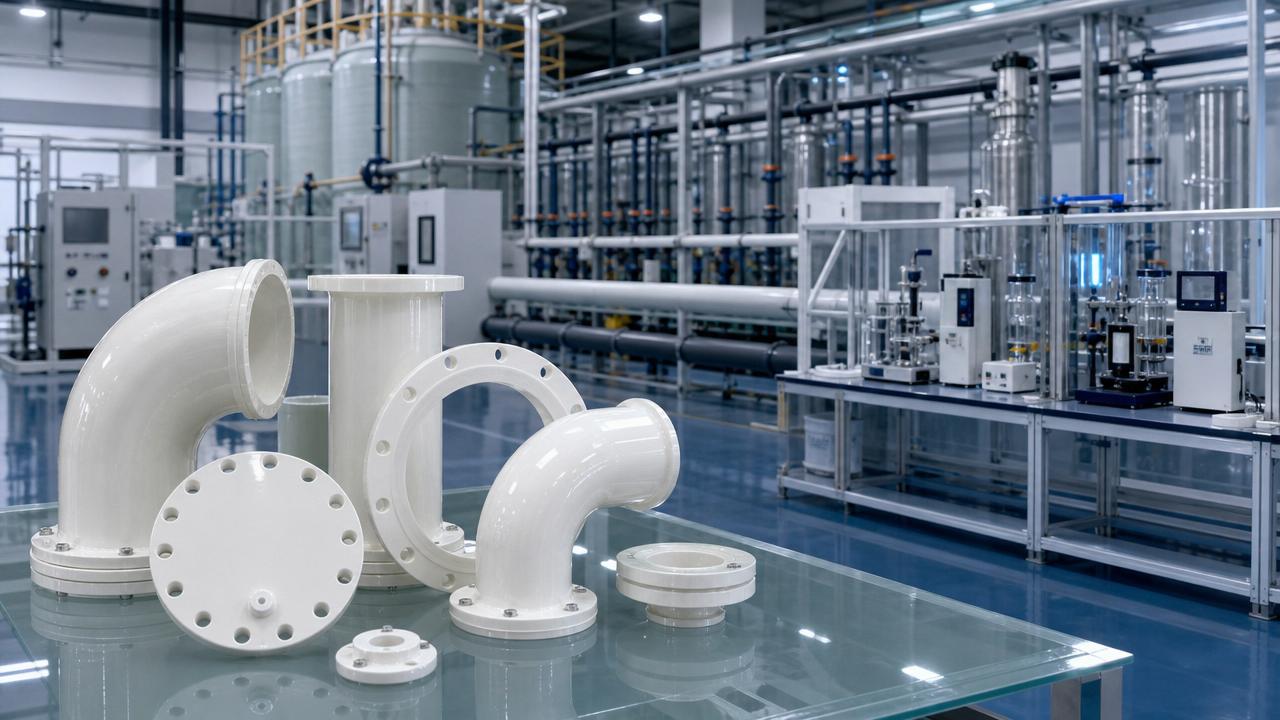
Choosing among corrosion resistant FRP pipe suppliers requires more than comparing prices. Procurement teams should evaluate manufacturing capacity, quality testing, industry experience, and proven project performance. For demanding applications in oil and gas, chemical plants, LNG, and marine systems, a reliable supplier can reduce long-term risk, improve service life, and ensure consistent product quality.
For buyers in the glass and ceramic materials supply chain, this decision is especially important because pipeline failure can interrupt aggressive media transport, utility circulation, wastewater handling, and plant expansion schedules. A practical supplier comparison should examine not only the pipe itself, but also production consistency, engineering support, lead time control, and traceable testing.
When evaluating corrosion resistant FRP pipe options, procurement teams often face 4 common questions: Can the supplier deliver stable quality at scale? Do they understand demanding industrial fluids? Are testing and documentation complete? Can they support fittings, customization, and after-sales response within a realistic project timeline of 2 to 8 weeks or more?
Key Criteria for Comparing Corrosion Resistant FRP Pipe Suppliers
A strong comparison starts with a structured scorecard. In most B2B projects, 5 dimensions matter most: manufacturing capability, material system, quality verification, project references, and delivery support. If one area is weak, the apparent unit-price advantage may disappear through delays, rework, or shortened service life.
1. Manufacturing Capacity and Process Stability
A supplier of corrosion resistant FRP pipe should have enough production capacity to support repeat orders, mixed diameters, and fitting requirements without disrupting lead times. Buyers should ask how many production lines are available, how many fitting machines are in operation, and whether hydrostatic testing equipment can keep pace with shipment plans.
For example, Shandong Ocean Pipe Technology Co., Ltd., established in 2012 in Dezhou, Shandong, operates 16 winding production lines and 174 sets of pipe fitting winding machines and micro control systems. The factory also has 5 static water pressure testing machines and an annual GRE pipe production and testing capacity of 25,000 tons. These figures help buyers judge whether a supplier can handle both standard and project-based demand.
What procurement teams should verify
- Number of winding lines and actual monthly output range
- Availability of elbows, tees, flanges, reducers, and custom fittings
- Testing equipment capacity versus planned shipment volume
- Production scheduling flexibility for urgent orders within 7 to 15 days
2. Resin System and Corrosion Resistance Fit
Not all FRP pipe performs the same in corrosive service. Buyers should confirm whether the supplier offers GRE or other resin systems suitable for the actual media, temperature range, and pressure class. In chemical transport or brine service, mismatch between resin selection and operating conditions can shorten service life significantly.
For corrosion resistant FRP pipe used in oil and gas, LNG, ballast piping, hot spring systems, or salt-making facilities, the supplier should explain the liner structure, reinforcement layers, curing control, and chemical compatibility limits. Even a 10°C to 20°C increase in operating temperature may affect long-term resistance if the design basis is not confirmed early.
The comparison table below helps procurement teams separate surface-level quotations from technically reliable supplier offers.
The key takeaway is that supplier comparison should be evidence-based. If a vendor cannot clearly explain capacity, materials, and testing in measurable terms, procurement risk rises quickly, especially on projects with shutdown penalties or corrosive media exposure.
How to Assess Quality, Testing, and Long-Term Reliability
Quality assurance is one of the most practical ways to compare corrosion resistant FRP pipe suppliers. In many industrial plants, the pipe may remain in service for 10 to 25 years depending on media, pressure cycling, installation quality, and operating temperature. Procurement decisions should therefore focus on reliability over the full lifecycle, not just on ex-works price.
Testing discipline matters more than brochure claims
Buyers should request a clear list of routine inspections. At minimum, this usually includes dimensional checks, visual surface inspection, hydrostatic pressure testing, and documentation for each batch or order lot. On more critical projects, extra checks may include joint verification, stiffness confirmation, or media-specific review according to project requirements.
A supplier with dedicated testing capacity is usually better positioned to maintain dispatch schedules. If testing becomes a bottleneck, a 3-week production plan can easily extend to 5 weeks. That is why it is useful to ask how many pressure test units are available and whether testing is integrated into normal production flow.
Documentation procurement teams should request
- Product data sheets with pressure and temperature scope
- Inspection and test records for each shipment batch
- Packing list and fitting breakdown by size and quantity
- Installation or handling guidance for storage and transport
- Lead time confirmation with production and test milestones
Common warning signs
- Quotation is detailed on price but vague on test scope
- Supplier cannot explain resin selection for specific media
- Fittings are outsourced with limited traceability
- No realistic answer on replacement lead time for urgent spares
Some projects also connect process piping with broader utility infrastructure such as neutralization, drainage, or Wastewater Treatment Plant systems. In those cases, buyers should confirm whether the supplier can coordinate corrosion resistant FRP pipe specifications across different service environments instead of quoting each line in isolation.
Industry Experience, Application Fit, and Export Readiness
The best corrosion resistant FRP pipe supplier for one project may not be the best for another. A vendor serving low-pressure utility lines is different from one supporting offshore, LNG, or chemically aggressive installations. Procurement teams should compare where the supplier has already delivered and whether those applications resemble the current specification.
Why application history matters
A supplier familiar with oil and gas, marine ballast piping, and chemical process lines usually understands tighter inspection expectations, schedule pressure, and fitting complexity. This reduces communication gaps during drawing confirmation, packing control, and installation support. Experience also helps when multiple pipe diameters and fittings must be shipped in coordinated batches.
Shandong Ocean Pipe Technology Co., Ltd. supplies GRE products for oil and gas, ship ballast piping, LNG, chemical plants, hot spring pipelines, and salt-making companies. Its customer base includes major industrial groups such as CNOOC, CNPC, Sinopec, and large Chinese shipyards, while export markets include Australia, Iraq, Kazakhstan, and Turkey. For procurement teams, this kind of multi-sector and multi-country exposure is useful because it suggests familiarity with different project demands and shipping requirements.
The table below shows how application fit can be used as a practical supplier comparison method during vendor shortlisting.
A supplier with proven range across 4 or more industrial scenarios may offer stronger problem-solving ability, but buyers should still verify whether the reference type truly matches the current operating conditions, not just the general industry label.
Export and communication readiness
If your project involves international delivery, compare suppliers on export packaging, document accuracy, and response speed. A technically acceptable corrosion resistant FRP pipe supplier can still create procurement friction if packing lists, marking, or commercial documents require repeated correction. Even a 48-hour delay in final document approval may affect vessel booking or customs timing.
It is also useful to ask how drawing revisions are managed, how quickly technical questions are answered, and whether one team handles both production follow-up and commercial coordination. In B2B purchasing, communication efficiency often determines whether a supplier is easy to work with after the purchase order is issued.
A Practical Procurement Checklist Before You Place the Order
Before final selection, procurement teams can reduce risk by using a 6-point internal review. This is especially helpful when comparing 2 to 4 shortlisted corrosion resistant FRP pipe suppliers with similar pricing. A disciplined checklist makes technical and commercial differences easier to see.
Six-point buyer checklist
- Confirm pipe material and corrosion resistance against actual media and temperature range.
- Verify production capacity against required shipment volume and delivery date.
- Request testing scope, pressure test records, and dimensional inspection evidence.
- Review fitting capability for bends, tees, flanges, reducers, and project specials.
- Check application references in oil and gas, marine, chemical, or related utility projects.
- Clarify response time for drawing confirmation, spare parts, and after-sales issues.
Where buyers often make mistakes
One common mistake is treating all FRP quotations as directly comparable, even when resin systems, fittings, or testing scope differ. Another is selecting on pipe price alone while ignoring the cost of schedule impact, fitting mismatch, or replacement logistics. In corrosive applications, one missed technical detail can become far more expensive than a 3% to 8% upfront price difference.
Buyers should also avoid underestimating support needs for connected process units such as drainage headers or a Wastewater Treatment Plant. When several systems interface, specification consistency across pressure, chemical resistance, and fittings becomes part of procurement quality control.
Comparing corrosion resistant FRP pipe suppliers is ultimately a lifecycle decision. The best supplier is usually the one that combines stable manufacturing resources, suitable material design, reliable testing, industry-specific project experience, and responsive delivery coordination. For procurement teams sourcing for oil and gas, LNG, marine, chemical, hot spring, or salt-related applications, those factors reduce operational risk and improve long-term value.
If you are evaluating suppliers for a current project, Shandong Ocean Pipe Technology Co., Ltd. offers substantial production capacity, broad industrial application experience, and export market exposure that can support more informed sourcing decisions. Contact us now to discuss your specifications, request technical details, or get a customized solution for corrosion resistant FRP pipe procurement.
Please give us a message
产品介绍产品介绍产品介绍产品介绍产品介绍产品介绍产品介绍产品介绍产品介绍产品介绍产品介绍产品介绍产品介绍产品介绍产品介绍产品介绍产品介绍产品介绍产品介绍产品介绍产品介绍产品介绍产品介绍产品介绍产品介绍产品介绍产品介绍产品介绍产品介绍产品介绍
Please give us a message
产品介绍产品介绍产品介绍产品介绍产品介绍产品介绍产品介绍产品介绍产品介绍产品介绍产品介绍产品介绍产品介绍产品介绍产品介绍产品介绍产品介绍产品介绍产品介绍产品介绍产品介绍产品介绍产品介绍产品介绍产品介绍产品介绍产品介绍产品介绍产品介绍产品介绍
Please give us a message
产品介绍产品介绍产品介绍产品介绍产品介绍产品介绍产品介绍产品介绍产品介绍产品介绍产品介绍产品介绍产品介绍产品介绍产品介绍产品介绍产品介绍产品介绍产品介绍产品介绍产品介绍产品介绍产品介绍产品介绍产品介绍产品介绍产品介绍产品介绍产品介绍产品介绍
Please give us a message
产品介绍产品介绍产品介绍产品介绍产品介绍产品介绍产品介绍产品介绍产品介绍产品介绍产品介绍产品介绍产品介绍产品介绍产品介绍产品介绍产品介绍产品介绍产品介绍产品介绍产品介绍产品介绍产品介绍产品介绍产品介绍产品介绍产品介绍产品介绍产品介绍产品介绍