
GRP Pipe can fail early if pressure ratings are misunderstood
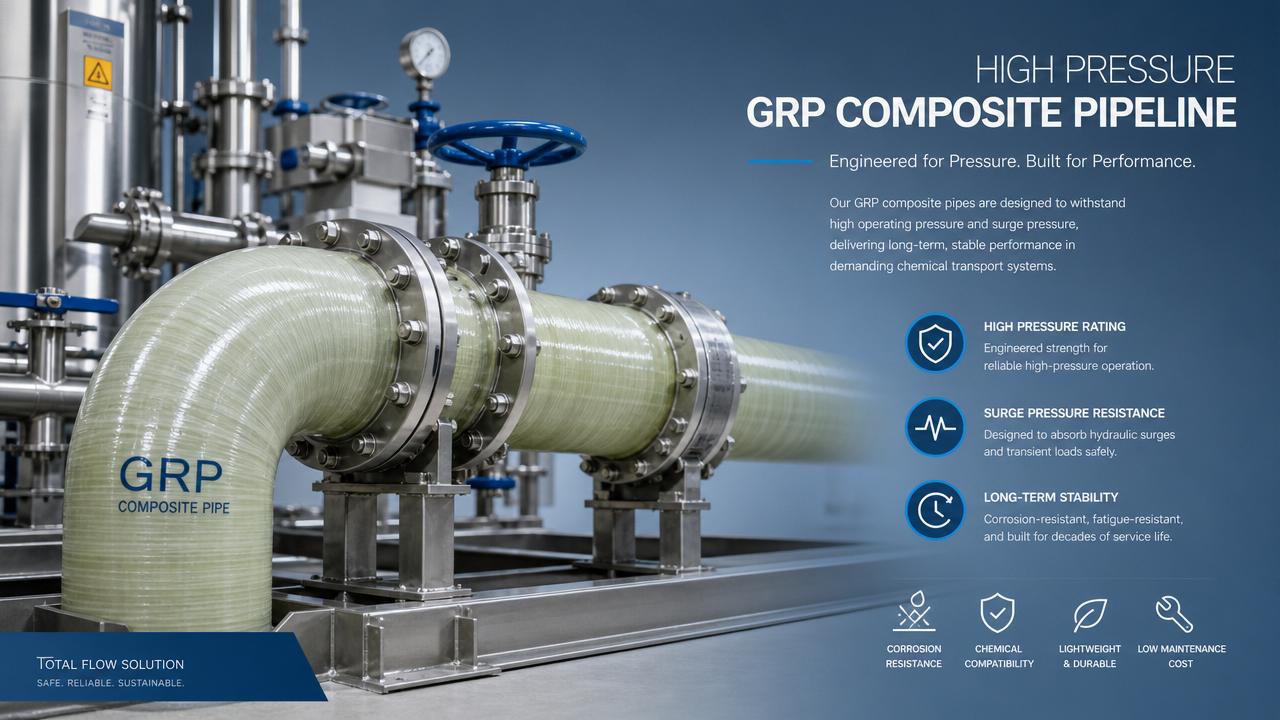
GRP Pipe systems can deliver excellent corrosion resistance and long service life, but early failure often starts with one avoidable mistake: misreading pressure ratings.
When design pressure, surge pressure, vacuum conditions, and real operating loads are confused, GRP Pipe may leak, crack, delaminate, or lose stiffness far earlier than expected.
In glass and ceramic related material applications, correct interpretation matters because composite pipe performance depends on structure, resin system, temperature, and installation quality.
This guide explains the most common questions about GRP Pipe pressure ratings, failure risks, selection logic, and practical steps for safer service life.
What does a pressure rating really mean for GRP Pipe?
A pressure rating is not a promise that the GRP Pipe can safely handle every pressure event under every condition.
It usually refers to a defined internal pressure under specified temperature, support conditions, and long-term design assumptions.
Many users assume the marked rating equals the maximum pressure the line will ever see. That is often incorrect.
For GRP Pipe, pressure capability is linked to laminate design, winding angle, wall thickness, resin chemistry, and manufacturing control.
A pipe rated for one medium at one temperature may not perform identically with another fluid or under thermal cycling.
The safest interpretation is this: pressure rating is a design reference, not a substitute for full system review.
Key terms that are often mixed up
- Nominal pressure: the classified pressure level of the pipe.
- Design pressure: the pressure used for engineering selection.
- Operating pressure: the normal pressure during service.
- Surge pressure: short, sharp pressure increases from flow changes.
- Test pressure: temporary pressure used during hydrostatic testing.
If these values are not separated clearly, a GRP Pipe system may be technically compliant on paper but unsafe in practice.
Why does GRP Pipe fail early when pressure ratings are misunderstood?
Early failure usually does not come from one dramatic overload. It often results from repeated stress beyond the intended operating envelope.
Composite structures behave differently from metal. GRP Pipe can resist corrosion extremely well, but cyclic loading still affects long-term integrity.
When actual service pressure keeps approaching or exceeding the true design limit, microcracks may grow in the resin-rich areas.
Over time, this may lead to weeping, joint damage, local buckling, laminate separation, or burst failure.
The risk becomes higher when pressure misunderstanding combines with poor support spacing, thermal expansion, or aggressive chemicals.
Common failure triggers
- Water hammer after fast valve closure
- Pump start and stop cycles
- Pressure spikes during commissioning
- Confusing hydrotest pressure with continuous service pressure
- Ignoring temperature derating
- Vacuum conditions not considered during draining
In process systems such as Chemical Plant lines, transient events can be more damaging than stable operating pressure.
How should operating pressure, surge pressure, and test pressure be judged together?
A reliable GRP Pipe selection never looks at one pressure number alone. The full pressure profile must be reviewed as a system.
Start with normal operating pressure. Then add expected surge events, startup behavior, shutdown behavior, and occasional upset conditions.
Next, compare those values with the pipe design basis, fitting limitations, joining method, and support arrangement.
Hydrostatic test pressure deserves special attention. It is temporary and controlled, not the allowable long-term service pressure.
Another mistake is checking the straight pipe only. In many failures, elbows, tees, reducers, and joints are the first weak points.
A practical review sequence
- Define fluid, temperature, and operating range.
- Identify maximum steady pressure.
- Estimate surge magnitude and frequency.
- Check vacuum or negative pressure possibilities.
- Review fittings, joints, and supports.
- Confirm safety factors and derating rules.
This approach gives a more realistic picture of whether a GRP Pipe system will survive real plant conditions.
Which application conditions make pressure misunderstanding more dangerous?
Some services are especially sensitive because pressure is only one part of the mechanical load on the composite wall.
High-temperature fluid can reduce allowable pressure. External loads from soil, clamps, or misalignment can further narrow the safety margin.
Abrupt directional changes also raise local stress. In these cases, pressure rating should never be read without the layout context.
GRP Pipe in buried networks faces ring deflection and backfill effects. Above-ground lines face thermal movement and support design issues.
Media with rapid temperature shifts may also accelerate resin fatigue or joint movement.
High-risk situations
- Pumping stations with frequent starts
- Long pipelines without surge control
- Hot process lines with thermal expansion
- Corrosive services requiring specific resin compatibility
- Marine and ballast systems with pressure fluctuations
In sectors served by Shandong Ocean Pipe Technology Co., Ltd., such as oil and gas, LNG, ship ballast piping, and salt-making systems, these conditions are common.
That is why manufacturing capability, testing discipline, and correct engineering interpretation matter as much as material selection.
How can GRP Pipe be selected and installed more safely?
Safe use begins before purchase. The right GRP Pipe must match pressure, temperature, chemical exposure, and installation method together.
A supplier with strong production and testing capability helps reduce uncertainty. Ocean Pipe, established in 2012 in Shandong, operates 16 winding lines.
The company also has 174 fitting winding machines, micro control systems, and five static water pressure testing machines.
That testing capacity supports more consistent GRE pipe quality for demanding applications across China and overseas markets.
Selection and installation checkpoints
- Request pressure data with temperature limits.
- Verify resin suitability for the conveyed medium.
- Review surge analysis, not only steady pressure.
- Check joint type and field assembly requirements.
- Confirm support spacing and anchor locations.
- Use controlled hydrotesting procedures.
- Train installation teams on composite handling.
For complex process routing, solutions related to Chemical Plant service should be checked against both chemical resistance and transient pressure behavior.
What warning signs suggest the GRP Pipe system is being overstressed?
Not every problem appears as a sudden rupture. Many GRP Pipe failures give early clues if inspections are structured.
Recurring leaks near fittings often indicate movement, pressure cycling, or installation strain rather than random defects.
Surface whitening, audible cracking, distortion near supports, and repeated seal problems also deserve immediate review.
A pattern of failures after pump trips or valve changes strongly suggests surge pressure is being underestimated.
Ignoring these signals can turn a manageable maintenance issue into major downtime and expensive replacement work.
Quick response actions
- Record pressure trends during normal and upset conditions.
- Inspect failed areas for support, alignment, and joint issues.
- Compare field conditions with original design assumptions.
- Add surge mitigation if spikes are confirmed.
- Replace damaged sections only after root cause review.
FAQ summary table: how to judge GRP Pipe pressure issues faster?
GRP Pipe is a strong and efficient composite solution, but only when pressure ratings are interpreted correctly within real operating conditions.
Understanding the difference between design pressure, operating pressure, surge pressure, and test pressure helps prevent premature failure.
The best next step is to review actual pressure history, installation details, and material compatibility before expanding or replacing any GRP Pipe system.
With careful engineering, proper testing, and disciplined selection, GRP Pipe can provide the long service life it is known for.
Please give us a message
产品介绍产品介绍产品介绍产品介绍产品介绍产品介绍产品介绍产品介绍产品介绍产品介绍产品介绍产品介绍产品介绍产品介绍产品介绍产品介绍产品介绍产品介绍产品介绍产品介绍产品介绍产品介绍产品介绍产品介绍产品介绍产品介绍产品介绍产品介绍产品介绍产品介绍
Please give us a message
产品介绍产品介绍产品介绍产品介绍产品介绍产品介绍产品介绍产品介绍产品介绍产品介绍产品介绍产品介绍产品介绍产品介绍产品介绍产品介绍产品介绍产品介绍产品介绍产品介绍产品介绍产品介绍产品介绍产品介绍产品介绍产品介绍产品介绍产品介绍产品介绍产品介绍
Please give us a message
产品介绍产品介绍产品介绍产品介绍产品介绍产品介绍产品介绍产品介绍产品介绍产品介绍产品介绍产品介绍产品介绍产品介绍产品介绍产品介绍产品介绍产品介绍产品介绍产品介绍产品介绍产品介绍产品介绍产品介绍产品介绍产品介绍产品介绍产品介绍产品介绍产品介绍
Please give us a message
产品介绍产品介绍产品介绍产品介绍产品介绍产品介绍产品介绍产品介绍产品介绍产品介绍产品介绍产品介绍产品介绍产品介绍产品介绍产品介绍产品介绍产品介绍产品介绍产品介绍产品介绍产品介绍产品介绍产品介绍产品介绍产品介绍产品介绍产品介绍产品介绍产品介绍