
FRP pipe for oil and gas is changing pipeline risk planning
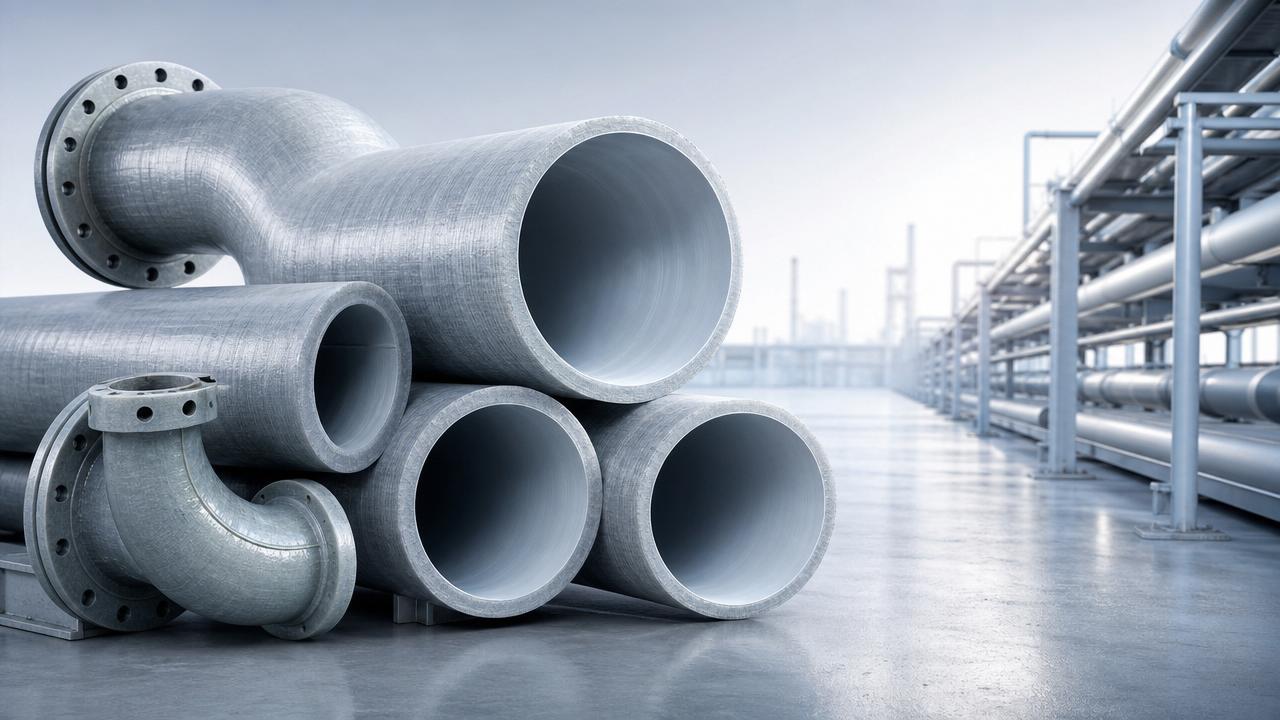
For quality control and safety managers, FRP pipe for oil and gas is no longer just a material upgrade—it is becoming a smarter way to reduce corrosion, leakage, and lifecycle risk. As pipeline standards tighten, understanding how GRE and FRP systems improve reliability, inspection efficiency, and long-term operational safety is essential for better risk planning.
Why is FRP pipe for oil and gas changing pipeline risk planning?
In oil and gas facilities, pipeline risk rarely comes from one dramatic failure. It usually builds through small, repeated problems: internal corrosion, scale buildup, coating damage, seepage at joints, unstable pressure cycles, and difficult inspection access.
That is why FRP pipe for oil and gas has gained attention among quality control teams and safety managers. It addresses material-related failure mechanisms early, which helps reduce incident probability instead of only reacting during maintenance shutdowns.
Within the glass and ceramic materials sector, composite piping such as GRE belongs to a broader family of engineered non-metallic solutions. These systems are designed to combine chemical resistance, structural performance, and lower maintenance demand in aggressive service conditions.
- Corrosion resistance reduces the need for frequent internal repair programs and coating restoration.
- Smooth inner surfaces help maintain flow efficiency and lower the risk of deposit-related restriction.
- Lower weight can simplify installation planning, especially in elevated racks, offshore modules, and retrofit projects.
- Predictable lifecycle behavior supports better inspection intervals and more stable total risk management.
What safety managers are really evaluating
The key question is not whether composite pipe is “advanced.” The real question is whether it can reduce leak pathways, support compliance, and fit actual operating conditions such as produced water, injection lines, process chemicals, or marine exposure.
For that reason, FRP pipe for oil and gas should be evaluated as a risk control tool. Material selection becomes part of HSE planning, inspection strategy, shutdown optimization, and long-term asset integrity management.
Which pipeline risks does GRE solve better than traditional materials?
Quality and safety teams usually compare materials against concrete failure modes. The table below summarizes how FRP pipe for oil and gas performs when common pipeline risks are reviewed from a practical inspection and safety perspective.
This comparison does not mean composite pipe is suitable for every line. Instead, it shows why FRP pipe for oil and gas can shift risk planning from repeated corrosion control toward more stable condition management when the service envelope is properly defined.
Where the value becomes most visible
The strongest benefits appear in corrosion-prone utility and process systems, produced water handling, fire water networks, seawater service, ballast-related piping, and other media where metal degradation creates ongoing inspection pressure.
A useful cross-industry reference is The application of GRE piping in marine ballast water systems, where resistance to corrosive water exposure and long service stability also matter for safety and maintenance planning.
How should QC teams assess FRP pipe for oil and gas before approval?
Approval should not begin with price. It should begin with service validation. Quality control personnel need a disciplined review path to determine whether a GRE system matches pressure, temperature, chemical exposure, joining method, and site installation conditions.
- Confirm the process medium, including water chemistry, hydrocarbons, salts, treatment chemicals, and solids that may affect wear or compatibility.
- Review operating pressure and temperature, plus upset conditions, cycling frequency, and pressure surge scenarios.
- Check jointing and fitting consistency, because system reliability depends on the entire piping package, not only straight pipe.
- Evaluate the manufacturer’s production control, hydrostatic testing capability, traceability practice, and delivery stability.
- Make sure installation, handling, support spacing, and inspection procedures are aligned with the selected composite design.
Selection factors that often decide project success
The following table can help a safety or QC team structure an internal approval review for FRP pipe for oil and gas, especially during tender comparison and vendor clarification.
For projects with strict delivery and documentation requirements, production scale matters. Shandong Ocean Pipe Technology Co., Ltd., established in 2012 in Dezhou, Shandong, operates 16 winding production lines, 174 pipe fitting winding machines and winding micro control systems, plus 5 static water pressure testing machines, supporting annual GRE pipe production and testing capacity of 25,000 tons.
For QC teams, this matters because large projects rarely buy straight pipe alone. They need consistent fittings, repeatable manufacturing, test documentation, and coordinated shipment. Those are practical risk factors, not just commercial details.
Which applications are most suitable for FRP pipe for oil and gas?
Not every service line has the same failure mechanism. The best use of FRP pipe for oil and gas is in systems where corrosion, maintenance burden, and access difficulty create recurring safety exposure or production uncertainty.
Typical high-value applications
- Produced water and injection water lines, where internal corrosion management in metallic pipe can become expensive and inspection-intensive.
- Seawater and marine-related systems, where salinity and moisture exposure increase external and internal degradation risk.
- Chemical dosing and auxiliary process networks, especially where media compatibility is more decisive than high structural mass.
- LNG, ballast, ship service, and coastal industrial piping where corrosion control and lower maintenance intervention are key planning targets.
Ocean Pipe’s supply experience includes oil and gas, ship ballast piping, LNG, chemical plants, hot spring piping, and salt-making companies. This range is useful because quality teams often want suppliers familiar with more than one corrosive service environment.
Where caution is still required
Composite piping should never be selected through general assumptions alone. Pressure class, fluid composition, vacuum conditions, thermal cycling, fire exposure requirements, and mechanical loads all need case-by-case engineering review.
This is where experienced manufacturer support becomes important. A supplier that understands both product manufacturing and field use can help buyers define realistic service boundaries instead of making broad claims that create later compliance risk.
What standards, testing, and inspection points should safety managers review?
When reviewing FRP pipe for oil and gas, safety managers should focus on standard-based design logic, incoming inspection, pressure testing, and installation control. Composite reliability depends heavily on matching design assumptions with actual field execution.
Core review areas
- Material compatibility with intended media, including expected upset conditions rather than only normal operation.
- Dimensional consistency of pipe, elbows, tees, flanges, and transition fittings.
- Hydrostatic testing arrangements and documentation availability before site acceptance.
- Handling, storage, and installation procedures to prevent impact damage or support misalignment.
- Joint assembly control, because workmanship can directly affect leak performance.
In practice, many operators also refer to common industry specifications or project standards for GRE and FRP systems. The important point is not to treat composite pipe like coated steel with a simple material substitution mindset. Inspection and acceptance criteria must reflect composite characteristics.
This requirement is especially relevant for facilities with strict permit-to-work systems, shutdown windows, or offshore safety restrictions, where rework after installation carries a higher operational penalty.
How does lifecycle cost compare with steel in risk-sensitive projects?
Upfront purchase cost is only one part of the decision. For many oil and gas users, the more relevant comparison is between total lifecycle burden: inspection frequency, corrosion mitigation measures, line replacement timing, shutdown labor, and leak consequence management.
FRP pipe for oil and gas may provide value when a line suffers repeated metallic degradation or when access for repair is costly. Lower routine corrosion intervention can improve budget predictability for asset integrity teams.
The exact economic outcome depends on service conditions and project scope. Still, for corrosion-heavy systems, lifecycle cost analysis often shows that material choice should be reviewed together with integrity risk, not as an isolated procurement line item.
Common mistakes when approving FRP pipe for oil and gas
Mistake 1: evaluating only pipe, not the system
A reliable line depends on fittings, joints, supports, installation quality, and testing discipline. Straight pipe performance alone does not guarantee field success.
Mistake 2: assuming all corrosive service is automatically suitable
Media compatibility must be checked carefully. FRP pipe for oil and gas performs well in many corrosive environments, but engineering limits still apply.
Mistake 3: overlooking delivery and manufacturing capacity
If a project requires mixed diameters, multiple fittings, and tight shutdown timing, vendor capacity becomes a safety issue because late delivery can push rushed installation and compressed inspection schedules.
Mistake 4: treating acceptance like metal piping acceptance
Composite systems require dedicated handling, inspection, and assembly attention. Safety teams should align their ITP and site checks with the composite nature of the product.
FAQ: what do buyers and safety teams ask most?
Is FRP pipe for oil and gas suitable for all oilfield services?
No. Suitability depends on pressure, temperature, chemical composition, surge conditions, mechanical loading, and project standards. It is highly effective in many corrosion-driven services, but selection must remain application-specific.
What should QC personnel request from suppliers first?
Start with service boundary confirmation, manufacturing scope for pipe and fittings, testing capability, traceability records, and realistic delivery planning. If the supplier cannot clearly support these points, risk increases later in the project.
How important is hydrostatic testing capability?
It is very important because it supports product verification before shipment or acceptance. A manufacturer with established static pressure testing equipment can better support documented quality control requirements.
Can composite pipe help with marine or ballast-related risk planning too?
Yes, in many cases the same corrosion-control logic applies. That is why sectors beyond upstream and downstream plants also study solutions such as The application of GRE piping in marine ballast water systems when saltwater durability and maintenance reduction are important.
Why choose us for GRE and FRP pipeline evaluation?
For quality control and safety managers, supplier choice should support risk reduction from specification to delivery. Shandong Ocean Pipe Technology Co., Ltd. has focused on GRE pipe manufacturing since 2012 and serves oil and gas, ship ballast piping, LNG, chemical plants, hot spring systems, and salt-making applications.
Its manufacturing base in Wucheng Industrial Park, Dezhou City, Shandong Province includes 16 winding production lines, 174 sets of pipe fitting winding machines and winding micro control systems, and 5 static water pressure testing machines. This combination is relevant for buyers who need both supply scale and testing support.
- You can consult on parameter confirmation for pressure, media, temperature, and application boundaries.
- You can request product selection support for straight pipe, fittings, and complete GRE system matching.
- You can discuss delivery schedules for project shutdown windows or export shipment planning.
- You can ask about sample support, testing arrangements, and documentation expectations for internal approval review.
- You can communicate custom solution needs for oil and gas, marine, LNG, and chemical service conditions.
If your team is reviewing FRP pipe for oil and gas for a new project or replacement program, the most effective next step is a technical discussion around operating conditions, fitting scope, inspection expectations, and lead time. That approach helps turn material selection into measurable pipeline risk control.
Please give us a message
产品介绍产品介绍产品介绍产品介绍产品介绍产品介绍产品介绍产品介绍产品介绍产品介绍产品介绍产品介绍产品介绍产品介绍产品介绍产品介绍产品介绍产品介绍产品介绍产品介绍产品介绍产品介绍产品介绍产品介绍产品介绍产品介绍产品介绍产品介绍产品介绍产品介绍
Please give us a message
产品介绍产品介绍产品介绍产品介绍产品介绍产品介绍产品介绍产品介绍产品介绍产品介绍产品介绍产品介绍产品介绍产品介绍产品介绍产品介绍产品介绍产品介绍产品介绍产品介绍产品介绍产品介绍产品介绍产品介绍产品介绍产品介绍产品介绍产品介绍产品介绍产品介绍
Please give us a message
产品介绍产品介绍产品介绍产品介绍产品介绍产品介绍产品介绍产品介绍产品介绍产品介绍产品介绍产品介绍产品介绍产品介绍产品介绍产品介绍产品介绍产品介绍产品介绍产品介绍产品介绍产品介绍产品介绍产品介绍产品介绍产品介绍产品介绍产品介绍产品介绍产品介绍
Please give us a message
产品介绍产品介绍产品介绍产品介绍产品介绍产品介绍产品介绍产品介绍产品介绍产品介绍产品介绍产品介绍产品介绍产品介绍产品介绍产品介绍产品介绍产品介绍产品介绍产品介绍产品介绍产品介绍产品介绍产品介绍产品介绍产品介绍产品介绍产品介绍产品介绍产品介绍