
FRP Pipe price is only one part of the real decision
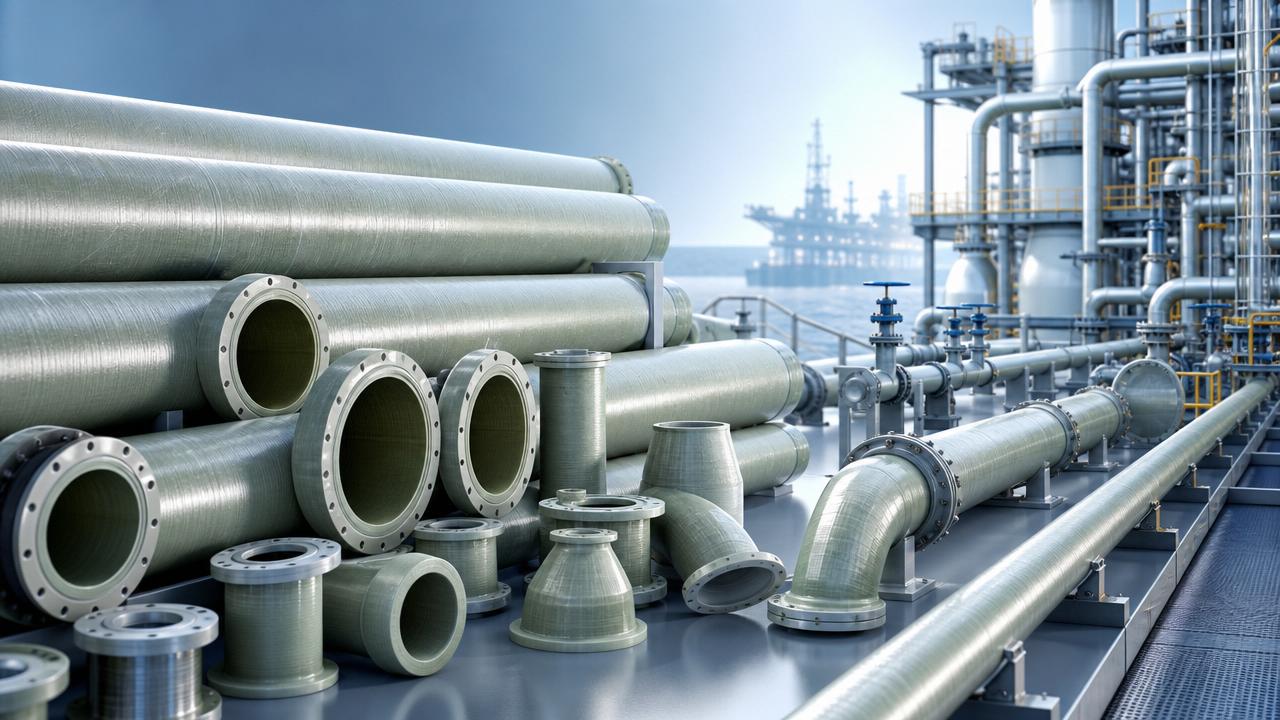
FRP Pipe price may catch the eye first, but the smarter decision goes far beyond the initial quote. In glass and ceramic-related industrial material systems, FRP Pipe performance affects maintenance budgets, shutdown frequency, safety margins, and long-term asset value.
Across oil, gas, marine, LNG, chemical, hot spring, and salt-making projects, FRP Pipe is often chosen for corrosion resistance and weight advantages. Yet not every FRP Pipe delivers the same lifecycle outcome, even when prices look close.
A sound comparison should include material design, pressure rating, quality consistency, testing, standards compliance, lead time, and after-sales support. That is why FRP Pipe price is only one part of the real decision.
What does FRP Pipe price really include?
Many quotations cover only pipe supply. They may not reflect fittings, testing documents, packaging, transport protection, or field support. A lower FRP Pipe price can hide costs that appear later.
The true cost base usually includes raw materials, winding process control, curing quality, dimensional accuracy, and hydrostatic testing. These factors directly influence leak risk and service life.
In industrial systems, joints often decide reliability. If pipe fittings are poorly matched, installation delays and maintenance events can erase any early savings from a low FRP Pipe price.
- Base pipe material and resin system
- Pressure class and temperature suitability
- Fittings, flanges, and joining accessories
- Testing records and compliance documents
- Packing, logistics, and delivery schedule
- Technical response during installation
When comparing offers, request a line-by-line scope sheet. It helps reveal whether the FRP Pipe price reflects complete project value or only a narrow supply number.
Why is lifecycle cost more important than the initial FRP Pipe price?
Lifecycle cost measures what happens after procurement. It includes installation efficiency, corrosion performance, repair frequency, energy use, and downtime exposure over years of service.
A higher FRP Pipe price may still deliver lower total ownership cost. If the pipe lasts longer and needs fewer interventions, the project saves labor, spare parts, and production loss.
This matters especially in aggressive media environments. Chemical plants, salt-making systems, and marine ballast lines face conditions where inferior materials degrade quickly.
FRP Pipe is valued because it resists corrosion better than many metal options. That benefit supports stable flow systems and reduces the need for coatings or frequent replacement.
In many cases, the best-value FRP Pipe is not the cheapest option. It is the one that protects operations for the longest practical period.
How do quality, standards, and testing change the decision?
FRP Pipe is a composite product. Its performance depends on resin quality, glass fiber structure, winding control, curing discipline, and inspection methods. Small process differences can create large operational differences.
Reliable suppliers invest in production lines, fitting equipment, and pressure testing. That investment often raises the visible FRP Pipe price, but it lowers uncertainty in the field.
Shandong Ocean Pipe Technology Co., Ltd. was established in 2012 in Shandong, China. It has become one of China’s top large manufacturers for Fiberglass Reinforced Epoxy pipe systems.
With 16 winding production lines and 174 pipe fitting winding machines, the company supports consistent production scale. It also operates static water pressure testing equipment for annual output and testing capacity of 25,000 tons.
That production depth matters when projects need both pipes and compatible fittings. Consistency across the system can reduce mismatch issues during installation.
Standards review should include pressure capability, dimensional control, traceability, and testing records. A quote without adequate documentation may expose the project to approval delays.
- Ask for hydrostatic test evidence
- Confirm resin and reinforcement details
- Check fitting compatibility and tolerances
- Review previous project references
- Verify export and delivery experience
Which applications make FRP Pipe value clearer than price alone?
The more demanding the environment, the more important long-term performance becomes. In corrosive service, a low FRP Pipe price may be less meaningful than resistance stability.
Oil and gas systems require dependable flow under pressure. Marine ballast piping needs corrosion resistance and manageable weight. LNG and chemical plants demand stable material behavior and system reliability.
Hot spring piping and salt-making operations also benefit from composite pipe performance. These applications often involve water chemistry that challenges conventional materials.
Ocean Pipe products are used across these sectors and supplied to major groups such as CNOOC, CNPC, Sinopec, and leading shipyards. Overseas deliveries also extend to Australia, Iraq, Kazakhstan, and Turkey.
In membrane and water-treatment related systems, associated composite components can also support durability goals. One example is FRP/GRE Membrane Housing, which aligns with corrosion-resistant system design.
The wider lesson is simple. When the operating environment is harsh, material suitability should carry more weight than the lowest FRP Pipe price.
What common mistakes lead to poor FRP Pipe purchasing decisions?
The first mistake is treating all FRP Pipe as identical. Composite pipes vary in resin systems, structural design, manufacturing precision, and testing discipline.
The second mistake is comparing only unit price per meter. That ignores fittings, freight, installation complexity, and field failure risk.
A third mistake is overlooking supply continuity. If replacement parts or technical answers arrive late, project delays can cost far more than any earlier savings.
Another issue is weak specification matching. Pipe selected for unsuitable pressure, media, or temperature conditions may underperform long before expected service life.
How should FRP Pipe be evaluated before final approval?
Start with service conditions. Define fluid type, pressure class, temperature range, installation method, and expected operating life. Without that, no FRP Pipe comparison is complete.
Next, compare suppliers on manufacturing capability and project history. Production scale can support stable quality and shorter response times for large or urgent orders.
Then evaluate documentation. Technical data sheets, test reports, and quality control records help confirm whether the FRP Pipe matches real engineering requirements.
Also review the full accessory ecosystem. A dependable supplier should support bends, tees, reducers, flanges, and related system components.
Where water-treatment or related process systems overlap, integrated composite options such as FRP/GRE Membrane Housing may strengthen material consistency across the project.
- Define technical duty before requesting price
- Compare total supply scope, not only pipe length
- Check production, testing, and export capability
- Review references in similar industries
- Estimate maintenance and downtime exposure
This approach turns FRP Pipe selection into a risk-controlled engineering decision rather than a simple price comparison exercise.
FAQ summary: what should be checked first?
In the end, FRP Pipe price is only one data point. The stronger decision considers service life, corrosion resistance, manufacturing consistency, documentation quality, and dependable delivery.
For projects in demanding industrial environments, comparing total value leads to better long-term results. A careful review today can reduce failures, delays, and replacement costs tomorrow.
If a project requires durable composite piping, the next step is clear. Define operating conditions, request full technical scope, and evaluate each FRP Pipe offer on performance as well as price.
Please give us a message
产品介绍产品介绍产品介绍产品介绍产品介绍产品介绍产品介绍产品介绍产品介绍产品介绍产品介绍产品介绍产品介绍产品介绍产品介绍产品介绍产品介绍产品介绍产品介绍产品介绍产品介绍产品介绍产品介绍产品介绍产品介绍产品介绍产品介绍产品介绍产品介绍产品介绍
Please give us a message
产品介绍产品介绍产品介绍产品介绍产品介绍产品介绍产品介绍产品介绍产品介绍产品介绍产品介绍产品介绍产品介绍产品介绍产品介绍产品介绍产品介绍产品介绍产品介绍产品介绍产品介绍产品介绍产品介绍产品介绍产品介绍产品介绍产品介绍产品介绍产品介绍产品介绍
Please give us a message
产品介绍产品介绍产品介绍产品介绍产品介绍产品介绍产品介绍产品介绍产品介绍产品介绍产品介绍产品介绍产品介绍产品介绍产品介绍产品介绍产品介绍产品介绍产品介绍产品介绍产品介绍产品介绍产品介绍产品介绍产品介绍产品介绍产品介绍产品介绍产品介绍产品介绍
Please give us a message
产品介绍产品介绍产品介绍产品介绍产品介绍产品介绍产品介绍产品介绍产品介绍产品介绍产品介绍产品介绍产品介绍产品介绍产品介绍产品介绍产品介绍产品介绍产品介绍产品介绍产品介绍产品介绍产品介绍产品介绍产品介绍产品介绍产品介绍产品介绍产品介绍产品介绍