
Glass Reinforced Epoxy offers clear gains in chemical service
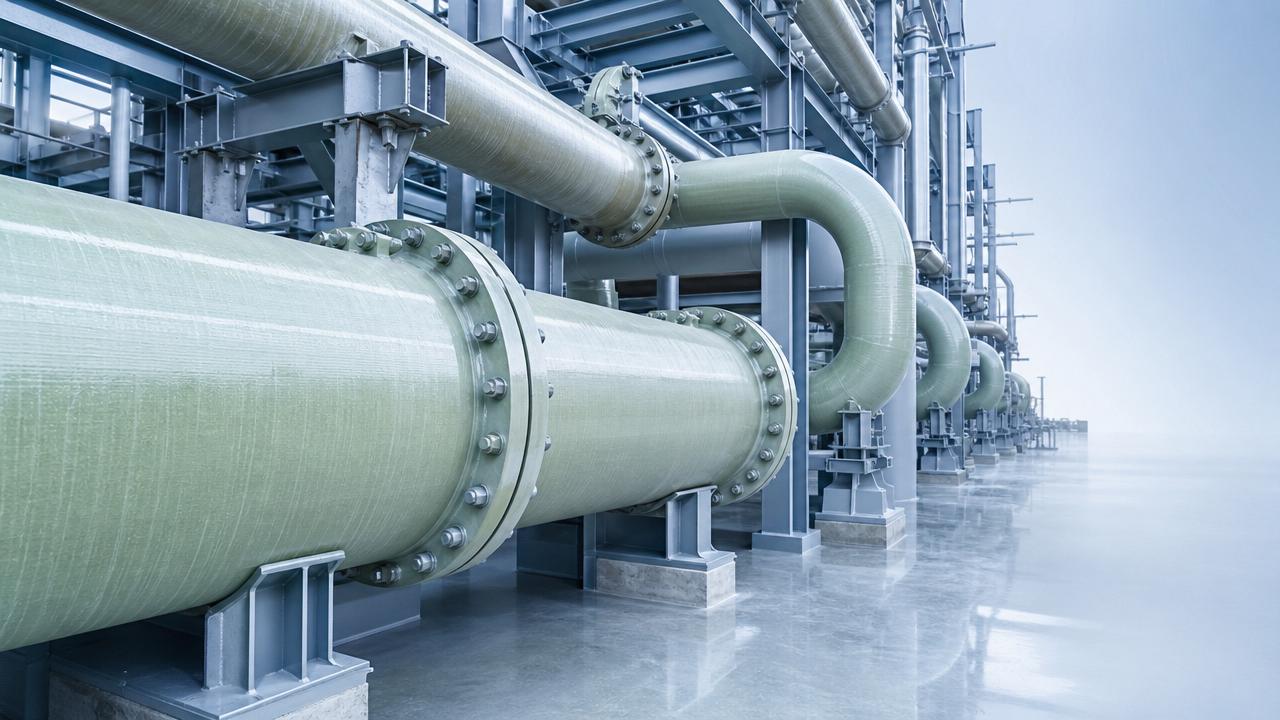
For technical evaluators comparing piping materials for aggressive media, Glass Reinforced Epoxy stands out for its corrosion resistance, high strength-to-weight ratio, and long-term reliability. In chemical service, GRE piping can reduce maintenance demands, support stable operation, and deliver measurable lifecycle value where conventional metal systems often face faster degradation.
When process fluids include chlorides, acids, alkalis, brine, solvent mixtures, or humid gas streams, material selection quickly becomes a performance and risk issue rather than a simple procurement exercise. Technical evaluators must balance corrosion behavior, pressure capacity, installation conditions, inspection needs, and total lifecycle cost over 10 to 25 years.
In this context, Glass Reinforced Epoxy is increasingly specified for chemical plants, LNG support systems, ballast lines, salt-making facilities, and selected utility networks. For teams reviewing alternatives to carbon steel, stainless steel, rubber-lined pipe, or thermoplastic systems, GRE offers a practical middle ground between mechanical strength and corrosion resistance.
Shandong Ocean Pipe Technology Co., Ltd., established in 2012 in Dezhou, Shandong Province, has developed into one of China’s larger Fiberglass Reinforced Epoxy pipe manufacturers. With 16 winding production lines, 174 sets of pipe fitting winding machines and micro control systems, 5 static water pressure testing machines, and an annual production and testing capacity of 25,000 tons, the company supports industrial users that require repeatable manufacturing and stable delivery for GRE piping projects.
Why Glass Reinforced Epoxy Performs Well in Chemical Service
The technical advantage of Glass Reinforced Epoxy begins with its material structure. Continuous glass reinforcement provides hoop and axial strength, while the epoxy resin system contributes chemical resistance, dimensional stability, and adhesion between layers. This combination helps GRE maintain performance in demanding environments where metal systems often require coatings, cathodic protection, or frequent replacement.
Corrosion resistance across aggressive media
For evaluators, corrosion is usually the first screening factor. In chemical service, external humidity, internal condensate, saline exposure, and process chemistry can attack metal piping from more than one direction. Glass Reinforced Epoxy avoids electrochemical corrosion and can be suitable for many media in temperature bands such as 0°C to 80°C, with exact limits depending on resin formulation, concentration, and operating pressure.
This matters in plants where shutdowns are expensive. If a line segment requires inspection every 6 months, coating repair every 12 to 24 months, and major replacement in less than 8 years, the maintenance burden quickly exceeds the initial material saving. GRE can help extend service intervals when the media profile fits the laminate design.
High strength-to-weight ratio and easier installation
Compared with many metallic systems, Glass Reinforced Epoxy offers lower installed weight for the same hydraulic duty. Reduced weight can simplify support design, lower lifting requirements, and shorten installation time on pipe racks, skids, marine systems, and utility corridors. In retrofit work, this can be especially useful where crane access, structure load, or shutdown windows are limited to 3 to 7 days.
A lower weight profile also affects safety and labor planning. Teams may need fewer heavy lifts, fewer large support reinforcements, and less welding-related hot work. For technical evaluators, these are not minor details; they directly influence project risk, installation schedule, and commissioning readiness.
Typical decision benefits for plant engineers
- Reduced corrosion-related intervention in wet, saline, or chemically active areas
- Lower dead weight on racks, modules, and marine structures
- Faster field assembly compared with some lined or alloy systems
- Smoother internal surface, which can support hydraulic efficiency over time
- Lower dependence on repainting or corrosion control programs
The following comparison helps technical evaluators understand where Glass Reinforced Epoxy typically fits among common piping options used in chemical service.
The key conclusion is that Glass Reinforced Epoxy is not a universal substitute for every piping material, but it is often a strong choice where corrosion, maintenance frequency, and installation weight are major decision drivers. For chemical service, this makes GRE especially relevant during front-end technical evaluation.
How Technical Evaluators Should Assess GRE Pipe
A reliable evaluation process should move beyond brochure claims and focus on application fit. At minimum, technical teams should review 4 areas: media compatibility, pressure-temperature envelope, joining method, and manufacturing consistency. If any one of these is overlooked, project risk rises during commissioning or long-term service.
1. Confirm media and temperature compatibility
The phrase “chemical resistant” is too broad for final selection. Evaluators should define concentration, operating temperature, upset condition, cleaning cycle, and possible mixed-media exposure. A line carrying brine at 25°C is a different case from one seeing intermittent caustic wash at 60°C or solvent traces during weekly cleaning. A proper review should include both continuous and short-duration excursions.
2. Check pressure class and mechanical loading
GRE pipe selection must consider nominal pressure, surge events, support spacing, nozzle loads, and thermal movement. In many systems, the design challenge is not only static pressure but cyclic pressure and displacement. Evaluators should request hoop design basis, stiffness category, and guidance for anchors, guides, and expansion control before final approval.
3. Review joining and installation quality control
Joint reliability is a decisive factor for Glass Reinforced Epoxy systems. Adhesive-bonded, laminated, flanged, or mechanical connections each have different field demands. Ambient temperature, surface preparation, cure time, and installer qualification can affect final performance. For many projects, a 24 to 48 hour cure window may need to be built into the shutdown schedule.
4. Verify manufacturer capability and test discipline
For B2B buyers, consistent production is as important as resin chemistry. Ocean Pipe’s manufacturing setup includes 16 winding lines, 174 fitting winding machines with micro control systems, and 5 static water pressure testing machines. This level of equipment matters because dimensional repeatability, pressure verification, and fitting consistency reduce downstream installation problems and rework.
The company serves sectors such as oil and gas, ship ballast piping, LNG, chemical plants, hot spring transport, and salt-making operations. These application environments are relevant because they often involve saline water, aggressive fluids, or moisture-rich service conditions where Glass Reinforced Epoxy can provide meaningful operating advantages.
To make supplier comparison more practical, the table below outlines common technical checkpoints used during GRE pipe evaluation.
For technical evaluators, these four checkpoints create a workable screening model. They also help distinguish a material that is merely acceptable on paper from one that is robust in actual plant service over multi-year operation.
Typical Applications and Project Fit
Glass Reinforced Epoxy is most effective when the service profile combines corrosive exposure with moderate-to-high structural demands. This includes utility and process lines where internal corrosion, external weathering, or saline contact can shorten the life of conventional materials. The best fit usually appears in systems that must stay stable for 5 to 20 years with controlled maintenance resources.
Chemical plants and salt-related operations
In chemical plants, GRE can be used in selected transfer lines, utility loops, drainage services, and corrosive support systems. In salt-making and brine handling environments, the low susceptibility to electrochemical corrosion is particularly valuable. These services often expose piping to chlorides, humidity, and solids carryover, which can accelerate damage in coated carbon steel.
Marine, LNG, and ballast piping
Ship ballast systems and marine-adjacent projects present a combination of saltwater exposure, variable temperature, and limited maintenance access. GRE’s weight advantage can simplify routing and support on vessels or offshore-related structures. For LNG support systems, material choice still depends on exact service conditions, but GRE remains relevant in associated corrosive utility services rather than only in direct hydrocarbon process duty.
Municipal and industrial utility crossover
Although the focus here is chemical service, technical evaluators should also note crossover applications in utility infrastructure. In projects where water quality, buried conditions, or corrosion risk shape material selection, solutions such as GRE Pipe for Municipal Project can provide a useful reference for how GRE technology scales into broader network environments.
That crossover matters because many industrial sites operate both process and municipal-style utility systems. Standardizing part of the material strategy around Glass Reinforced Epoxy may reduce spare complexity, maintenance training requirements, and support design variation across multiple line classes.
Three common project triggers for GRE review
- Corrosion failures appear within 2 to 5 years in coated metal lines.
- Shutdown windows are short and lightweight installation is preferred.
- Lifecycle maintenance cost is higher than expected despite low initial pipe cost.
Common Risks, Misunderstandings, and Control Measures
A sound technical decision requires a balanced view. Glass Reinforced Epoxy offers clear gains in chemical service, but those gains depend on proper application boundaries. Most failures linked to GRE are not caused by the concept of the material itself. They are more often traced to resin mismatch, inadequate support design, poor joint preparation, or unrealistic service assumptions.
Misunderstanding 1: All GRE is the same
Different laminate structures, reinforcement patterns, and resin systems can produce very different performance outcomes. Evaluators should compare not only nominal diameter and pressure class, but also the intended chemical envelope, stiffness, and fabrication quality. A 1-line specification note is rarely enough for demanding service.
Misunderstanding 2: Low weight means low engineering need
Because Glass Reinforced Epoxy is lighter than steel, some projects underestimate the importance of support layout, anchor position, and thermal movement review. In reality, proper support spacing and load control are essential. Small design shortcuts can lead to deflection, flange stress, or joint movement during startup cycles.
Misunderstanding 3: Installation is always faster without planning
GRE can shorten installation time, but only when field procedures are organized. Joint preparation, adhesive control, environmental conditions, and inspection hold points should be defined in advance. For shutdown work, even a 12-hour delay in curing or fit-up can affect the entire critical path if sequencing is tight.
The following table summarizes practical risk controls that technical evaluators can build into project specifications and supplier discussions.
These controls are straightforward, but they are often what separates a stable 10-year piping solution from an underperforming installation. For evaluation teams, disciplined specification work is where much of the final value is created.
Supplier Selection and Next-Step Procurement Guidance
For industrial buyers, the right GRE supplier should be judged on more than unit price. A practical review usually includes 5 decision dimensions: manufacturing capacity, fitting range, testing routine, application experience, and communication speed during technical clarification. These factors directly affect project schedule, documentation quality, and field execution confidence.
What to request during technical review
- Pipe and fitting manufacturing scope for the required diameter range
- Pressure testing or inspection routines used before shipment
- Recommended support and installation guidance for the application
- Clarification of the intended media and service temperature range
- Delivery planning based on project quantity and fitting complexity
Ocean Pipe supplies GRE products into sectors including chemical plants, oil and gas, ship ballast piping, LNG-related applications, hot spring pipe systems, and salt-making companies. Its customer base includes large industrial groups and shipyards, while export supply has expanded to markets such as Australia, Iraq, Kazakhstan, and Turkey. For technical evaluators, this indicates familiarity with varied project environments and documentation needs across domestic and overseas orders.
Where utility and industrial corrosion requirements overlap, buyers may also compare broader application options such as GRE Pipe for Municipal Project as part of an integrated sourcing review. This is particularly relevant for sites managing both process piping and utility distribution under one procurement framework.
Glass Reinforced Epoxy offers clear gains in chemical service when the evaluation process is based on real operating conditions, realistic engineering checks, and supplier capability review. For technical teams seeking lower corrosion exposure, lower maintenance frequency, and more predictable lifecycle performance, GRE deserves serious consideration in both new-build and replacement projects. To discuss application fit, request technical details, or obtain a tailored solution for your chemical or utility system, contact us today and explore the most suitable GRE piping options for your project.
Please give us a message
产品介绍产品介绍产品介绍产品介绍产品介绍产品介绍产品介绍产品介绍产品介绍产品介绍产品介绍产品介绍产品介绍产品介绍产品介绍产品介绍产品介绍产品介绍产品介绍产品介绍产品介绍产品介绍产品介绍产品介绍产品介绍产品介绍产品介绍产品介绍产品介绍产品介绍
Please give us a message
产品介绍产品介绍产品介绍产品介绍产品介绍产品介绍产品介绍产品介绍产品介绍产品介绍产品介绍产品介绍产品介绍产品介绍产品介绍产品介绍产品介绍产品介绍产品介绍产品介绍产品介绍产品介绍产品介绍产品介绍产品介绍产品介绍产品介绍产品介绍产品介绍产品介绍
Please give us a message
产品介绍产品介绍产品介绍产品介绍产品介绍产品介绍产品介绍产品介绍产品介绍产品介绍产品介绍产品介绍产品介绍产品介绍产品介绍产品介绍产品介绍产品介绍产品介绍产品介绍产品介绍产品介绍产品介绍产品介绍产品介绍产品介绍产品介绍产品介绍产品介绍产品介绍
Please give us a message
产品介绍产品介绍产品介绍产品介绍产品介绍产品介绍产品介绍产品介绍产品介绍产品介绍产品介绍产品介绍产品介绍产品介绍产品介绍产品介绍产品介绍产品介绍产品介绍产品介绍产品介绍产品介绍产品介绍产品介绍产品介绍产品介绍产品介绍产品介绍产品介绍产品介绍