
How do you know when Fiberglass Pipe needs replacement?
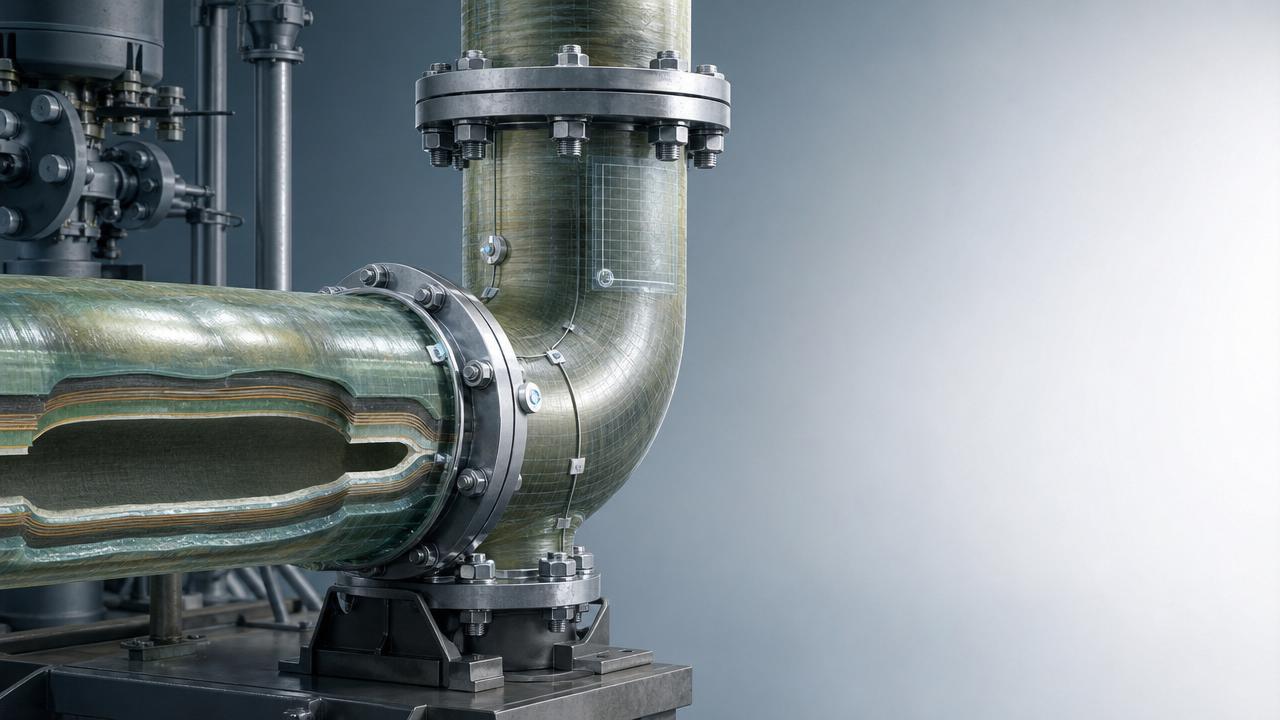
Fiberglass Pipe is valued for corrosion resistance and long service life, but even durable systems show warning signs over time.
For after-sales maintenance work, timely replacement prevents leaks, pressure loss, safety hazards, and expensive shutdowns.
In glass and ceramic material applications, service conditions often include chemicals, heat, abrasion, and pressure cycling.
These factors gradually weaken Fiberglass Pipe, even when the outer appearance still seems acceptable.
Understanding replacement indicators helps extend asset reliability while avoiding unnecessary emergency repairs.
Basic understanding of Fiberglass Pipe service life
Fiberglass Pipe is a composite system made from glass fiber reinforcement and resin, often epoxy, polyester, or vinyl ester.
Its strength comes from fiber structure, while chemical resistance depends heavily on the resin-rich liner.
Compared with metal piping, Fiberglass Pipe resists corrosion well and usually needs less surface protection.
However, no composite pipeline lasts forever under harsh industrial conditions.
Service life depends on design pressure, temperature, fluid chemistry, installation quality, and maintenance history.
Mechanical loads also matter.
Poor support spacing, vibration, impact, or repeated thermal expansion can shorten expected performance.
Aging often begins inside the wall structure before visible failure appears outside.
That is why inspection records are as important as visual checks.
Current industry focus on replacement timing
Across oil and gas, marine ballast, LNG, chemical plants, hot spring systems, and salt production, replacement timing is a critical issue.
Operators do not want to replace Fiberglass Pipe too early or too late.
Replacing too early wastes capital.
Replacing too late increases shutdown risk and safety exposure.
The most common concern is how to separate repairable damage from end-of-life deterioration.
Key signs that Fiberglass Pipe needs replacement
Persistent leakage after multiple repairs
One isolated leak does not always mean the full Fiberglass Pipe line has failed.
But recurring leaks in different locations often show broader material fatigue or chemical attack.
If repairs become frequent, replacement is usually more practical than continuous patching.
Visible cracking, delamination, or fiber exposure
Surface cracks can begin as cosmetic defects, yet deep cracks may reduce structural strength.
Delamination means the composite layers are separating.
When glass fibers become exposed, the protective resin barrier has already been compromised.
At that stage, Fiberglass Pipe often moves from repairable damage to replacement territory.
Blistering, softening, or wall deformation
Blisters may form when chemicals or moisture penetrate the laminate.
Soft sections can indicate resin breakdown.
Ovality, sagging, or bulging may point to pressure damage or loss of stiffness.
These are strong warnings that the load-bearing capability of the Fiberglass Pipe has changed.
Declining hydraulic performance
A drop in flow efficiency may be caused by internal scaling, roughened surfaces, or hidden structural changes.
If operating pressure rises while throughput falls, the piping should be inspected immediately.
When the root cause is embedded in the wall system, replacement is often the safest choice.
Joint and fitting deterioration
Many pipeline problems start at joints, elbows, reducers, or branch connections.
Chemical stress, poor alignment, or repeated vibration can accelerate local failure.
If damage extends beyond one fitting and affects nearby spool sections, replacing the assembly is often wiser.
Why timely replacement matters in industrial systems
The value of timely replacement goes beyond preventing one leak.
It protects process continuity, environmental compliance, and worker safety.
In corrosive services, a failed Fiberglass Pipe can release aggressive fluids unexpectedly.
In marine systems, pipe failure can interrupt ballast control.
In oil, gas, or refinery use, pressure events may damage connected equipment.
Planned replacement also improves maintenance scheduling.
It allows material selection to be reviewed against actual service conditions.
Where higher thermal or chemical resistance is needed, selecting a more suitable specification can reduce future failures.
For example, systems exposed to demanding process media may require engineered options such as GRE Pipe for Refinery.
Typical replacement scenarios by service condition
- Chemical processing: liner attack, blistering, and softening appear first.
- Hot water or geothermal lines: temperature cycling causes matrix aging and joint stress.
- Salt production: abrasion and crystallization increase internal wear.
- Marine ballast piping: vibration and movement weaken supports and fittings.
- Oil and gas facilities: pressure fluctuation and chemical exposure accelerate fatigue.
Practical inspection and decision points
A reliable replacement decision should combine visual findings, operating data, and maintenance history.
Relying on appearance alone can be misleading.
- Record leak frequency and repair intervals.
- Check for cracks, blistering, discoloration, and exposed fibers.
- Compare current pressure and flow data with baseline values.
- Inspect supports, anchors, and expansion areas for overload signs.
- Review fluid chemistry and temperature against original design limits.
- Determine whether damage is local or repeated across the line.
If multiple indicators appear together, replacement should move from consideration to planning.
This is especially true when critical process lines have low tolerance for downtime.
Material support and next-step planning
Choosing the right replacement solution is as important as deciding when to replace Fiberglass Pipe.
The new pipe should match real operating pressure, thermal range, media composition, and installation loads.
Shandong Ocean Pipe Technology Co., Ltd., established in 2012 in Dezhou, Shandong, is a leading Chinese GRE pipe manufacturer.
With 16 winding production lines and extensive testing capacity, the company supports demanding industrial pipeline applications.
Its products serve oil and gas, ship ballast piping, LNG, chemical plants, hot spring pipelines, and salt making operations.
When evaluating replacement options, technical consistency, production capability, and pressure testing standards all matter.
For severe refinery conditions, a reviewed specification such as GRE Pipe for Refinery may offer a stronger lifecycle fit.
The best next step is to inspect the affected line, classify damage severity, and build a scheduled replacement plan before failure escalates.
When Fiberglass Pipe shows recurring leaks, cracking, blistering, hydraulic decline, or joint failure, repair alone may no longer be enough.
A timely decision protects reliability, safety, and long-term operating cost.
Please give us a message
产品介绍产品介绍产品介绍产品介绍产品介绍产品介绍产品介绍产品介绍产品介绍产品介绍产品介绍产品介绍产品介绍产品介绍产品介绍产品介绍产品介绍产品介绍产品介绍产品介绍产品介绍产品介绍产品介绍产品介绍产品介绍产品介绍产品介绍产品介绍产品介绍产品介绍
Please give us a message
产品介绍产品介绍产品介绍产品介绍产品介绍产品介绍产品介绍产品介绍产品介绍产品介绍产品介绍产品介绍产品介绍产品介绍产品介绍产品介绍产品介绍产品介绍产品介绍产品介绍产品介绍产品介绍产品介绍产品介绍产品介绍产品介绍产品介绍产品介绍产品介绍产品介绍
Please give us a message
产品介绍产品介绍产品介绍产品介绍产品介绍产品介绍产品介绍产品介绍产品介绍产品介绍产品介绍产品介绍产品介绍产品介绍产品介绍产品介绍产品介绍产品介绍产品介绍产品介绍产品介绍产品介绍产品介绍产品介绍产品介绍产品介绍产品介绍产品介绍产品介绍产品介绍
Please give us a message
产品介绍产品介绍产品介绍产品介绍产品介绍产品介绍产品介绍产品介绍产品介绍产品介绍产品介绍产品介绍产品介绍产品介绍产品介绍产品介绍产品介绍产品介绍产品介绍产品介绍产品介绍产品介绍产品介绍产品介绍产品介绍产品介绍产品介绍产品介绍产品介绍产品介绍