
FPSO upgrades can fail when maintenance needs are ignored
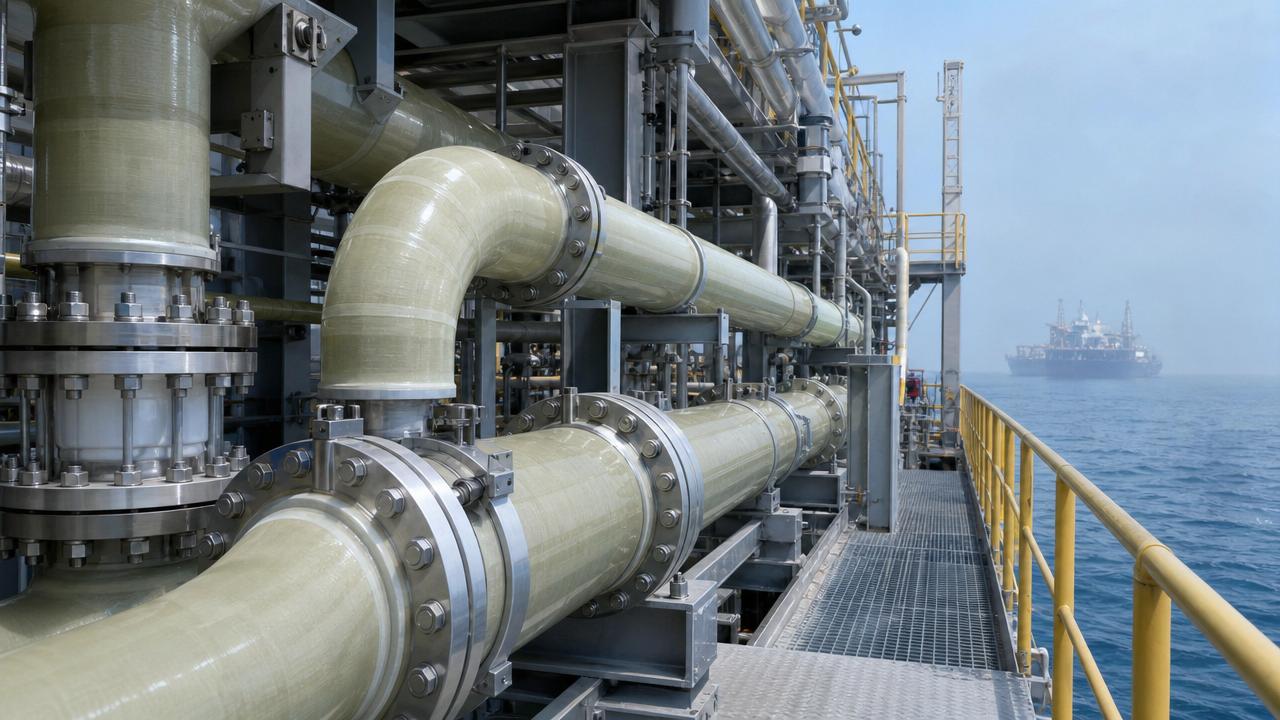
In FPSO upgrade projects, overlooked maintenance needs can quickly turn technical improvements into costly failures. For after-sales maintenance teams, understanding how material performance, inspection timing, and piping reliability interact is essential to keeping operations safe and efficient. This article explores why ignoring maintenance during FPSO upgrades creates hidden risks, and how durable GRE piping solutions can support long-term offshore performance.
Why FPSO upgrades need a maintenance checklist
An FPSO upgrade often focuses on capacity, safety systems, and process efficiency. Yet maintenance access, inspection intervals, and piping condition are frequently pushed behind commissioning targets.
This gap is dangerous in offshore service. Salt exposure, vibration, temperature cycling, and chemical media can weaken overlooked systems long before the upgraded module delivers expected value.
For glass and ceramic material applications, the discussion is highly relevant. Composite systems such as fiberglass reinforced epoxy piping depend on proper design support, controlled installation, and planned maintenance.
A checklist keeps the FPSO team aligned. It turns maintenance from an afterthought into a defined engineering requirement that protects uptime, safety, and lifecycle cost.
Core FPSO maintenance checklist during upgrades
Use the following checklist before design freeze, during installation, and again before handover. Each point helps reduce hidden maintenance failure in an FPSO environment.
- Review all upgraded piping routes and confirm enough space for inspection, clamp replacement, joint access, and safe removal of damaged sections during future FPSO maintenance work.
- Check material compatibility with produced water, seawater, chemicals, and cleaning agents, especially where composite pipe systems interface with steel valves, pumps, and metallic supports.
- Verify support spacing, anchor points, and vibration control details so the upgraded FPSO piping system does not transfer repeated stress into joints, bends, or flange connections.
- Inspect fire protection, UV shielding, and insulation interfaces because protective layers can hide early damage, trapped moisture, or maintenance restrictions after the FPSO restart.
- Define inspection timing before commissioning, including hydrotest review, torque checks, visual acceptance, and baseline records for future trend comparison in offshore operation.
- Confirm spare parts strategy for couplings, gaskets, fittings, adhesives, and repair kits, since delayed supply offshore can extend downtime far beyond the original FPSO upgrade window.
- Document repair procedures for composite piping and train onboard crews so field responses follow approved limits instead of temporary fixes that create long-term FPSO reliability risks.
- Assess lifecycle economics, not only installation cost, because corrosion resistance and lower maintenance demand may justify replacing traditional materials in selected FPSO utility services.
Where FPSO upgrades commonly go wrong
Inspection access is designed too late
Many FPSO modifications add new skids, cable trays, or structural members near existing lines. The result is simple: technicians cannot reach supports, joints, or test points without extra shutdown work.
When access becomes difficult, inspection frequency drops. Small defects then remain unnoticed until leakage, pressure loss, or support failure forces corrective action under emergency conditions.
Material selection ignores long-term service reality
An FPSO upgrade may specify materials based on immediate pressure and temperature requirements. That is not enough. Offshore service also demands resistance to salinity, internal corrosion, and frequent washdown exposure.
This is where composite technology matters. GRE pipe combines glass reinforcement and epoxy resin to deliver corrosion resistance, low weight, and useful durability in aggressive fluid handling systems.
Maintenance planning stops at commissioning
A successful startup does not prove long-term FPSO reliability. Without baseline records, future teams cannot tell whether movement, discoloration, joint creep, or support wear is normal or accelerating.
Commissioning packages should include maintenance drawings, inspection points, and acceptable condition examples. That documentation is as important as the hardware itself.
Application notes for different offshore service scenarios
Ballast and seawater systems
Ballast and seawater lines in an FPSO face continuous corrosion pressure. Steel systems can require repeated coating repair, thickness checks, and local replacement in difficult operating areas.
GRE piping offers a strong advantage here because the glass-reinforced structure resists many corrosion mechanisms that shorten metallic pipe life. Maintenance planning still matters, especially around supports and mechanical connections.
Produced water and chemical service
Produced water service during an FPSO upgrade requires careful chemical compatibility review. Cleaning fluids, treatment chemicals, and temperature changes can challenge poor material choices over time.
Composite pipe systems should be selected with resin performance, pressure class, and joining method in mind. Proper specification prevents premature degradation and reduces intervention frequency offshore.
Water treatment and utility integration
Some FPSO upgrade scopes include water handling modules linked to treatment or desalination functions. In such systems, corrosion-resistant composite piping can improve reliability and simplify maintenance planning.
For related utility applications, GRE Pipe Desalination Plants show how GRE materials fit demanding water service where long-term corrosion control is critical.
Commonly ignored maintenance items in FPSO projects
- Support wear is often missed, even though damaged saddles or clamps can create concentrated stress that shortens composite pipe life in a vibrating FPSO environment.
- Mixed-material connections are underestimated, yet flange transitions between GRE and metal components often become the first places where alignment or torque problems appear.
- Drainage around insulated sections is neglected, allowing trapped moisture or hidden contamination to remain unseen until maintenance crews remove coverings during later shutdowns.
- Unauthorized field modification can create major FPSO risk because extra loads, unsupported instruments, or altered routing may invalidate the original composite pipe design basis.
- Repair readiness is overlooked, leaving crews without approved materials or procedures when a minor defect appears and immediate offshore response becomes necessary.
Practical execution advice for stronger FPSO reliability
Start with a materials map. Identify every upgraded line by fluid, temperature, pressure, exposure condition, and inspection difficulty. This reveals where maintenance risks cluster in the FPSO layout.
Next, build a maintenance hold-point process. No piping package should close before access, support condition, baseline records, and spare strategy are confirmed and signed off.
Use installation quality data as future maintenance input. Torque records, hydrotest results, support photos, and as-built routing details make later FPSO troubleshooting faster and more accurate.
Where corrosion risk is high, evaluate GRE alternatives early. Companies with strong production and testing capacity, such as Shandong Ocean Pipe Technology Co., Ltd., support offshore, ship ballast, LNG, and chemical plant applications with GRE pipe solutions developed for demanding service environments.
If water handling or utility upgrades are involved, compare lifecycle maintenance demands across candidate materials. In many cases, GRE Pipe Desalination Plants related solutions illustrate how corrosion-resistant piping supports stable long-term operation.
Conclusion and next action
An FPSO upgrade fails quietly before it fails visibly. The first warning is usually not a major incident, but a maintenance compromise accepted during design, installation, or handover.
Treat maintenance as part of the upgrade scope, not a later responsibility. Review access, material performance, support integrity, inspection timing, and repair readiness with a checklist approach.
For offshore systems exposed to corrosion and fluid complexity, well-specified GRE piping can reduce lifecycle burden and improve FPSO reliability. The next practical step is to audit one active upgrade package against the checklist above and correct hidden maintenance gaps before startup.
Please give us a message
产品介绍产品介绍产品介绍产品介绍产品介绍产品介绍产品介绍产品介绍产品介绍产品介绍产品介绍产品介绍产品介绍产品介绍产品介绍产品介绍产品介绍产品介绍产品介绍产品介绍产品介绍产品介绍产品介绍产品介绍产品介绍产品介绍产品介绍产品介绍产品介绍产品介绍
Please give us a message
产品介绍产品介绍产品介绍产品介绍产品介绍产品介绍产品介绍产品介绍产品介绍产品介绍产品介绍产品介绍产品介绍产品介绍产品介绍产品介绍产品介绍产品介绍产品介绍产品介绍产品介绍产品介绍产品介绍产品介绍产品介绍产品介绍产品介绍产品介绍产品介绍产品介绍
Please give us a message
产品介绍产品介绍产品介绍产品介绍产品介绍产品介绍产品介绍产品介绍产品介绍产品介绍产品介绍产品介绍产品介绍产品介绍产品介绍产品介绍产品介绍产品介绍产品介绍产品介绍产品介绍产品介绍产品介绍产品介绍产品介绍产品介绍产品介绍产品介绍产品介绍产品介绍
Please give us a message
产品介绍产品介绍产品介绍产品介绍产品介绍产品介绍产品介绍产品介绍产品介绍产品介绍产品介绍产品介绍产品介绍产品介绍产品介绍产品介绍产品介绍产品介绍产品介绍产品介绍产品介绍产品介绍产品介绍产品介绍产品介绍产品介绍产品介绍产品介绍产品介绍产品介绍