
GRP Pipe Pressure Classes Explained for Industrial Buyers
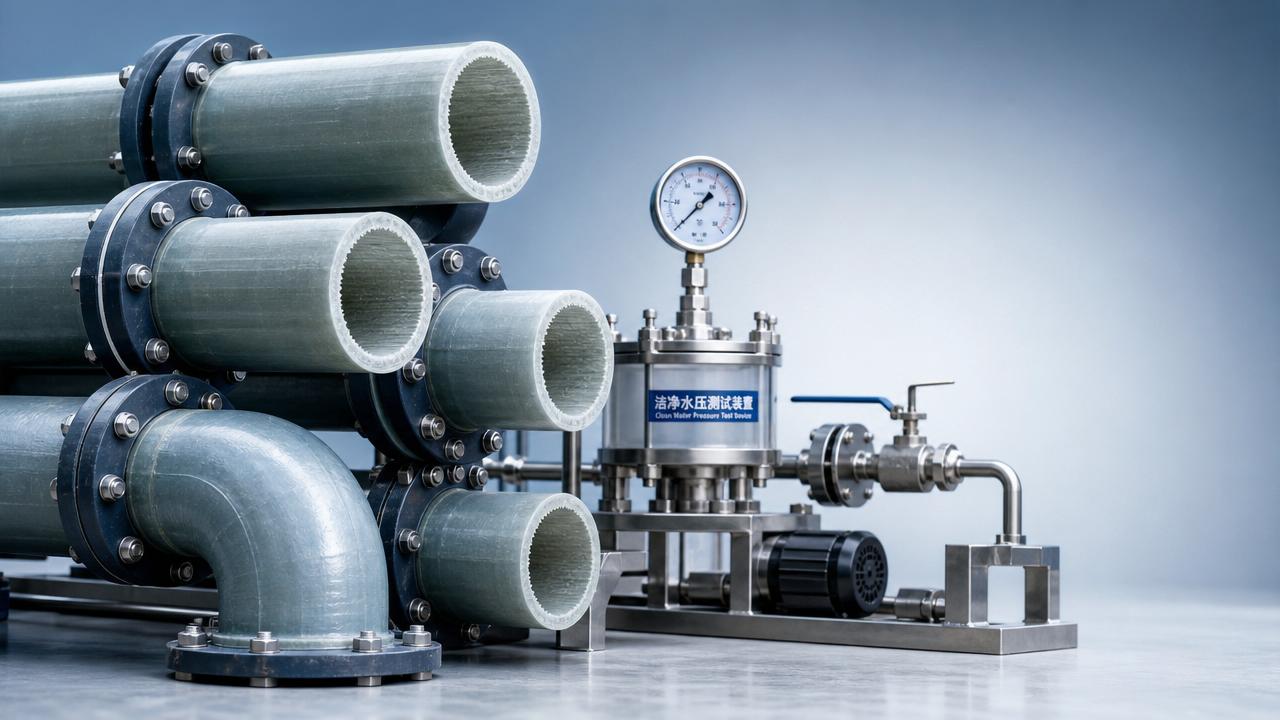
GRP Pipe Pressure Classes Explained for Industrial Buyers
Choosing the right GRP Pipe pressure class is essential for reliable performance, cost control, and long-term system safety.
Whether used in oil and gas, chemical plants, ship ballast systems, LNG facilities, or salt-making operations, pressure rating affects every decision.
This guide explains GRP Pipe pressure classes, practical selection checks, and specification points for fiberglass-reinforced piping systems.
Why GRP Pipe Pressure Class Needs a Checklist
A GRP Pipe is not selected only by diameter and length. Pressure class defines how the pipe handles internal force.
In industrial service, pressure can change because of pumps, valves, temperature, elevation, and sudden shutdowns.
A checklist prevents under-specification, over-spending, and mismatched fittings. It also supports clearer communication with suppliers.
For fiberglass and ceramic-related material systems, composite behavior matters. Strength depends on resin, glass fiber angle, wall design, and curing quality.
A pressure class should be checked with operating data, not chosen from a catalogue line alone.
What GRP Pipe Pressure Classes Mean
GRP Pipe pressure class usually refers to the nominal internal pressure the pipe can withstand under defined conditions.
Common classes may include PN6, PN10, PN16, PN20, PN25, or higher project-specific ratings.
PN10 means the GRP Pipe is designed for 10 bar nominal pressure, subject to standard rules and design assumptions.
However, the same rating does not always mean the same performance across suppliers, materials, joints, and standards.
Core Checklist for Selecting GRP Pipe Pressure Class
Use the following checklist before confirming a GRP Pipe order or comparing quotations from different suppliers.
- Confirm normal operating pressure, maximum working pressure, test pressure, and possible surge pressure before selecting any GRP Pipe class.
- Check fluid type, salinity, acidity, temperature, and solid content because chemical exposure can influence resin selection and wall design.
- Match pressure class with joint type, flange rating, gasket material, and fitting design to avoid weak points in the system.
- Review the installation environment, including buried depth, support spacing, traffic load, soil stiffness, and thermal movement.
- Compare applicable standards, such as ISO, ASTM, API, or project specifications, instead of relying only on nominal PN marks.
- Request hydrostatic test data, batch traceability, resin system details, and mechanical performance records for the selected GRP Pipe.
- Verify the supplier’s production capacity, quality control equipment, and fitting capability for complete pressure-rated pipe networks.
Check Operating Pressure and Surge
Normal operating pressure is only the starting point. Pump start-up, valve closure, and emergency stops may create pressure surge.
A GRP Pipe pressure class must include enough allowance for these transient conditions.
For long pipelines, water hammer analysis is recommended. It helps prevent overstressing joints, elbows, reducers, and anchored sections.
Check Fluid Compatibility
GRP Pipe systems are valued for corrosion resistance. Still, resin selection must match the transported medium.
Epoxy, vinyl ester, and polyester systems behave differently under acids, alkalis, hydrocarbons, seawater, and high-temperature fluids.
Chemical service should be reviewed together with pressure class, because corrosion allowance is not the same as steel pipe practice.
Check Stiffness and External Load
Pressure class covers internal pressure. Pipe stiffness addresses external load, deflection, and installation stress.
A buried GRP Pipe may need a higher stiffness class even when internal pressure is moderate.
Soil compaction, trench geometry, bedding material, and backfill quality all affect long-term pipe shape and performance.
Application Notes by Industrial Scenario
Oil and Gas Support Lines
Oil and gas projects often require corrosion-resistant piping for produced water, seawater injection support, and utility systems.
A GRP Pipe in these services should be checked against pressure cycling, hydrocarbon contact, and project safety factors.
GRE pipe is often preferred when epoxy resin performance is required. It offers strong chemical resistance and stable mechanical behavior.
Marine Ballast Water Systems
Marine ballast piping faces seawater corrosion, confined installation space, vibration, and weight control requirements.
For deeper reference, see The application of GRE piping in marine ballast water systems when evaluating marine composite piping.
In ship ballast service, GRP Pipe pressure class must match pump capacity, class society expectations, and flange connection details.
Chemical Plants and Salt-Making Facilities
Chemical plants often combine pressure, temperature, and aggressive media. A low-cost GRP Pipe may fail if resin selection is wrong.
Salt-making systems expose pipes to brine, crystallization risk, and cleaning operations. Pressure class should be reviewed with process cycles.
For brine and chemical transfer, request compatibility confirmation and design calculations before approving final GRP Pipe specifications.
LNG and Low-Temperature Auxiliary Systems
LNG facilities may use composite piping in auxiliary networks where corrosion resistance and weight reduction are important.
Temperature range must be checked carefully. Resin behavior, sealing materials, and support design can change under thermal variation.
A GRP Pipe pressure rating should never be separated from temperature limits and installation movement allowances.
Commonly Overlooked Risks
Ignoring Fittings and Flanges
A pipeline is only as strong as its weakest connection. Elbows, tees, reducers, and flanges need matching pressure capability.
When GRP Pipe is selected correctly but fittings are underspecified, leakage or premature failure can occur at connection points.
Treating Test Pressure as Operating Pressure
Hydrostatic test pressure confirms integrity under controlled conditions. It is not the normal long-term service pressure.
Specify both working pressure and test pressure clearly. This avoids confusion during GRP Pipe production and site acceptance.
Missing Installation Quality
Even a high pressure class cannot compensate for poor trenching, incorrect supports, or excessive tightening at flanges.
Installation instructions should include lifting methods, support spacing, bolt torque, joint assembly, and field testing requirements.
Overlooking Long-Term Design Life
Composite piping performance is evaluated over time. Creep, fatigue, pressure cycling, and temperature exposure should be considered.
A GRP Pipe specification should include design life assumptions, safety factors, and relevant standard requirements.
How to Evaluate a GRP Pipe Supplier
Supplier capability affects pressure class reliability. Production consistency is as important as material selection.
Shandong Ocean Pipe Technology Co., Ltd. was established in 2012 in Wucheng Industrial Park, Dezhou, Shandong, China.
The company is among China’s large GRE pipe manufacturers, with a registered capital of USD 4,200,000.
Ocean Pipe operates 16 winding production lines and 174 pipe fitting winding machines with micro-control systems.
Its factory also has five static water pressure testing machines and annual GRE pipe capacity of 25,000 tons.
These capabilities support pressure-rated GRP Pipe and GRE systems for oil and gas, shipyards, LNG, chemicals, hot springs, and salt operations.
Experience with CNOOC, CNPC, Sinopec, and major shipyards indicates practical exposure to demanding industrial pipe requirements.
Practical Execution Steps Before Ordering
- Prepare a service data sheet covering pressure, temperature, fluid, flow rate, layout, burial conditions, supports, and design life.
- Ask for a pressure class recommendation based on calculations, not only on previous project experience or standard catalogue tables.
- Review pipe, fittings, joints, flanges, gaskets, and field installation requirements as one complete GRP Pipe system.
- Confirm inspection documents, hydrostatic test procedures, dimensional tolerances, and marking rules before production begins.
- Plan site acceptance tests with clear pressure limits, holding time, leakage criteria, and repair responsibilities.
When comparing quotations, avoid selecting only by the lowest unit price. A lower pressure class may increase lifecycle risk.
Also compare fitting costs, installation time, inspection support, documentation quality, and delivery reliability.
A well-specified GRP Pipe can reduce corrosion maintenance, improve system reliability, and simplify long-term operation.
Summary and Next Action
GRP Pipe pressure class is a design decision, not a simple catalogue choice.
Internal pressure, surge, chemical exposure, stiffness, fittings, joints, standards, and installation quality must be reviewed together.
For industrial fiberglass-reinforced systems, the safest approach is to build a complete specification before requesting final pricing.
Define service conditions, request technical confirmation, verify testing capacity, and approve matching fittings with the same care as the pipe itself.
With the right checklist, GRP Pipe selection becomes clearer, safer, and more cost-effective across demanding industrial applications.
Please give us a message
产品介绍产品介绍产品介绍产品介绍产品介绍产品介绍产品介绍产品介绍产品介绍产品介绍产品介绍产品介绍产品介绍产品介绍产品介绍产品介绍产品介绍产品介绍产品介绍产品介绍产品介绍产品介绍产品介绍产品介绍产品介绍产品介绍产品介绍产品介绍产品介绍产品介绍
Please give us a message
产品介绍产品介绍产品介绍产品介绍产品介绍产品介绍产品介绍产品介绍产品介绍产品介绍产品介绍产品介绍产品介绍产品介绍产品介绍产品介绍产品介绍产品介绍产品介绍产品介绍产品介绍产品介绍产品介绍产品介绍产品介绍产品介绍产品介绍产品介绍产品介绍产品介绍
Please give us a message
产品介绍产品介绍产品介绍产品介绍产品介绍产品介绍产品介绍产品介绍产品介绍产品介绍产品介绍产品介绍产品介绍产品介绍产品介绍产品介绍产品介绍产品介绍产品介绍产品介绍产品介绍产品介绍产品介绍产品介绍产品介绍产品介绍产品介绍产品介绍产品介绍产品介绍
Please give us a message
产品介绍产品介绍产品介绍产品介绍产品介绍产品介绍产品介绍产品介绍产品介绍产品介绍产品介绍产品介绍产品介绍产品介绍产品介绍产品介绍产品介绍产品介绍产品介绍产品介绍产品介绍产品介绍产品介绍产品介绍产品介绍产品介绍产品介绍产品介绍产品介绍产品介绍