
GRP Pipe Applications in Desalination, Cooling Water and Wastewater Lines
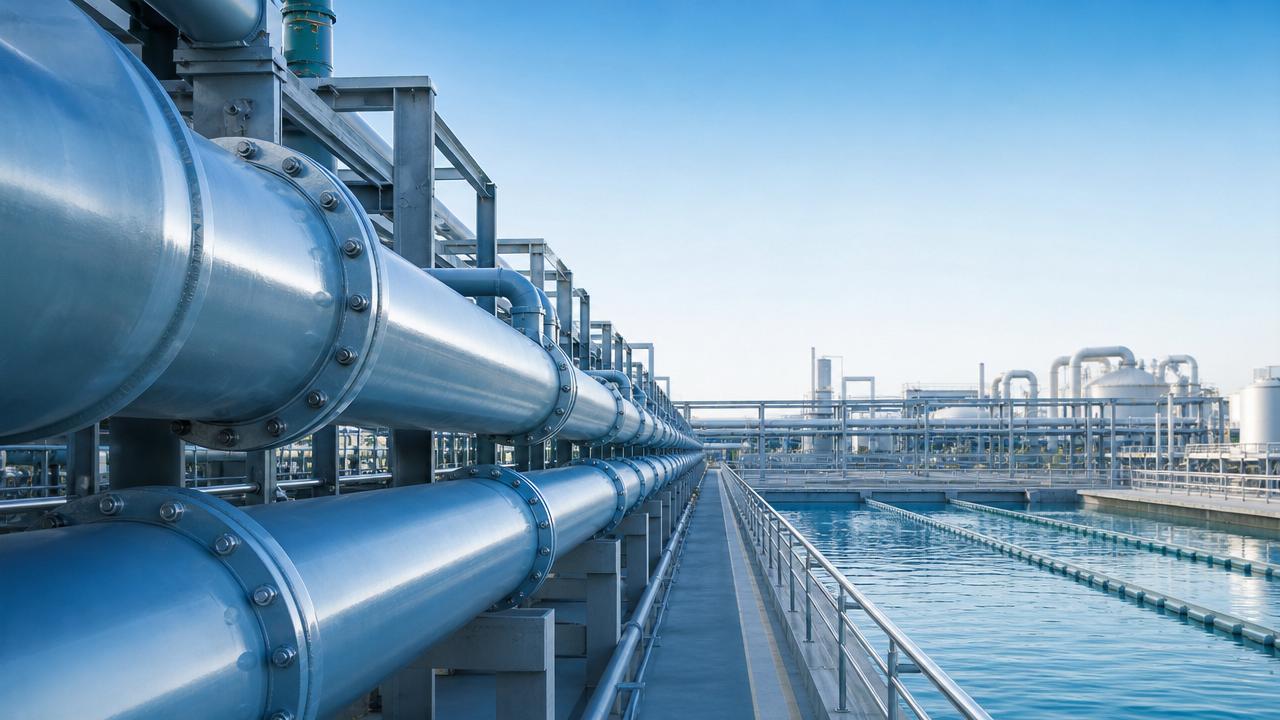
As water infrastructure faces rising demands for corrosion resistance, long service life and lower maintenance costs, GRP Pipe has become a practical choice for desalination plants, cooling water systems and wastewater lines. Made from glass fiber reinforced materials, it offers high strength-to-weight performance and reliable resistance to saline, chemical and abrasive environments. This article explores how GRP piping supports key industrial water applications, why it is increasingly specified in challenging projects, and what factors information researchers should consider when evaluating suitable pipe solutions.
For engineers, EPC researchers and procurement teams, the key question is not only whether GRP Pipe can replace metallic piping. It is how the material behaves across 3 demanding water systems: high-salinity desalination, continuous cooling water circulation and chemically variable wastewater networks.
Why GRP Pipe Fits Modern Industrial Water Infrastructure
GRP Pipe, commonly manufactured from glass fiber reinforcement and resin matrix, belongs to the wider family of composite materials. Compared with carbon steel, it is typically lighter, corrosion resistant and easier to install in long pipeline corridors.
In water infrastructure, corrosion often becomes visible after only a few years when coatings fail, joints leak or scaling reduces hydraulic efficiency. GRP Pipe addresses these risks by using a non-metallic structure that does not rust in seawater or many industrial effluents.
Material structure and performance logic
A typical GRP Pipe wall combines glass fibers for mechanical strength, resin for chemical resistance and, in some designs, a liner layer for fluid compatibility. This layered structure allows pressure rating, stiffness class and chemical resistance to be adjusted for each project.
Many industrial water lines operate under moderate pressure but difficult environmental conditions. For example, cooling water intake lines may run 24 hours a day, while desalination brine discharge may expose pipe surfaces to concentrated chloride levels.
Researchers comparing pipe materials should evaluate more than initial purchase price. A 20-year service view often includes installation labor, shutdown frequency, support spacing, joint reliability, hydraulic loss and the cost of corrosion protection.
The following comparison highlights practical differences often reviewed during early-stage pipe selection for industrial water projects.
The main conclusion is that GRP Pipe is not simply a lighter substitute. Its value is strongest where corrosion, hydraulic stability and maintenance access affect total operating cost over 10 to 30 years.
GRP and GRE in project terminology
In many project documents, GRP refers broadly to glass reinforced plastic, while GRE usually indicates glass reinforced epoxy. Both use glass fiber reinforcement, but resin selection can change chemical resistance, temperature suitability and pressure performance.
Shandong Ocean Pipe Technology Co., Ltd. focuses on fiberglass reinforced epoxy pipe manufacturing. Established in 2012 in Wucheng Industrial Park, Dezhou City, Shandong Province, the company has developed production capabilities for demanding industrial applications.
Desalination Applications: Intake, Process and Brine Discharge Lines
Desalination plants expose piping to some of the most aggressive water conditions in infrastructure engineering. Seawater intake, high-pressure pretreatment, permeate transfer and brine discharge lines each create different requirements for GRP Pipe selection.
Chloride-rich seawater can rapidly attack unprotected steel. In contrast, properly specified GRP Pipe can operate without external anti-corrosion coating, making it useful for buried lines, coastal plants and above-ground pipe racks near marine atmospheres.
Where GRP Pipe is used in desalination systems
In the intake section, GRP Pipe is commonly evaluated for large-diameter seawater conveyance, especially when flow volume is high and pressure is moderate. Lower pipe weight can simplify transport from storage yard to trench or pipe bridge.
For pretreatment lines, chemical compatibility becomes important because dosing may include coagulants, antiscalants, chlorine or dechlorination agents. The liner resin and operating temperature should be reviewed against expected concentration ranges.
Reverse osmosis facilities also require compatible pressure vessels and auxiliary composite components. For membrane-related equipment research, FRP/GRE Membrane Housing may be reviewed alongside piping to understand integrated composite material options.
Brine discharge lines require special attention because salinity may be significantly higher than intake seawater. Designers usually check resin compatibility, joint sealing, velocity control and abrasion risk from suspended solids before final specification.
Key desalination specification checks
- Confirm design pressure, surge pressure and vacuum conditions for at least 3 operating modes: startup, normal flow and shutdown.
- Review chloride concentration, chemical dosing schedule and temperature range, especially for brine and cleaning lines.
- Check pipe stiffness class for burial depth, traffic load and soil conditions before trench design is finalized.
- Specify joint type, gasket material and field test pressure to reduce leakage risk during commissioning.
For desalination projects, a practical shortlist should include pressure class, diameter range, resin system, joint design and installation method. These 5 items usually determine whether GRP Pipe can meet both hydraulic and environmental requirements.
Cooling Water Systems: Continuous Flow with Lower Maintenance Demand
Industrial cooling water systems in power plants, LNG facilities, chemical plants and shipyards often operate continuously. A shutdown lasting only 24 to 48 hours can affect production, so piping reliability is closely linked to operational availability.
GRP Pipe is valuable in these systems because it resists corrosion from seawater, river water or chemically treated circulation water. Its smooth bore also helps maintain stable flow, which is important for heat exchanger performance.
Typical cooling water line conditions
Cooling water pipelines may include intake lines, pump discharge headers, condenser circulation lines and outfall pipes. Diameters can vary widely, from smaller branch connections to large mains serving multiple cooling units.
Temperature is usually moderate compared with steam or process lines, but flow velocity, biological fouling and external exposure can create design challenges. GRP Pipe selection should consider UV protection for above-ground service and support spacing for long spans.
The table below summarizes common evaluation points for cooling water applications where composite pipe competes with coated steel or concrete pipe.
The table shows that cooling water design is not only about corrosion resistance. Pressure transients, foundation conditions and maintenance access must be included before a GRP Pipe specification is considered complete.
Installation and commissioning priorities
During installation, pipe handling should avoid sharp impact, uncontrolled dragging and point loading. Field teams normally follow 4 basic steps: alignment, joint assembly, support verification and hydrostatic pressure testing.
Commissioning should include gradual filling, air release and controlled pressurization. Sudden valve closure can create surge pressure, so the piping design should match pump curves and operating procedures.
Wastewater Lines: Chemical Variability and Abrasion Control
Wastewater lines may carry municipal effluent, industrial process water, acidic drainage, alkaline discharge or mixed streams. Because composition can change daily, GRP Pipe evaluation must focus on chemical profile, temperature and solids content.
In many facilities, wastewater networks combine buried sections, above-ground pipe racks, manholes and pumping stations. Each part has different risks, including soil settlement, odor control, abrasion and joint leakage.
Common wastewater pain points
- Corrosive gases or liquids may attack concrete, ductile iron or coated steel over repeated wet-dry cycles.
- Suspended sand and grit can cause abrasion, especially at elbows, reducers and high-velocity sections.
- Buried pipelines may face external loading from traffic, groundwater pressure or uneven bedding.
- Chemical concentration may shift during cleaning, production peaks or emergency discharge events.
GRP Pipe can reduce corrosion-related repairs when the resin system and liner are selected according to the actual effluent profile. For high-solids service, designers should also check velocity limits and abrasion-resistant liner options.
Design details that protect service life
For buried wastewater pipelines, stiffness class and trench installation quality are as important as material strength. Bedding compaction, backfill material and cover depth directly influence deformation control over years of service.
For above-ground wastewater lines, supports should prevent localized stress at saddles. Expansion, thermal movement and vibration from pumps should be considered, particularly when line length exceeds several dozen meters.
Information researchers should ask suppliers for chemical resistance guidance, installation recommendations and field pressure testing procedures. These documents help compare GRP Pipe offers on technical suitability rather than price alone.
How to Evaluate a GRP Pipe Supplier for Water Projects
A capable supplier should demonstrate manufacturing stability, testing capacity and experience with industrial water conditions. For B2B buyers, supplier evaluation often includes 6 dimensions: capacity, quality control, engineering support, delivery, documentation and after-sales response.
Shandong Ocean Pipe Technology Co., Ltd. has 16 winding production lines, 174 sets of pipe fitting winding machines and winding micro-control systems. The factory is also equipped with 5 static water pressure testing machines.
With an annual GRE pipe production and testing capacity of 25,000 tons, Ocean Pipe supports applications in oil and gas, ship ballast piping, LNG, chemical plants, hot spring piping and salt making companies.
Procurement checkpoints for researchers
Before requesting a quotation, researchers should prepare a technical datasheet. This should include pipe diameter, design pressure, operating temperature, fluid composition, installation method, required fittings and inspection expectations.
The following checklist helps structure early supplier communication and reduces the risk of unclear assumptions during the quotation stage.
The strongest quotations are usually based on complete operating information, not only nominal diameter and length. A reliable GRP Pipe supplier should help clarify technical uncertainties before production begins.
Questions to ask before shortlisting
- What pressure testing method is used for the pipe or fitting scope before shipment?
- Can the supplier support fittings and customized spools for complex plant layouts?
- What installation guidance is available for buried and above-ground GRP Pipe systems?
- How are dimensional tolerances, joint preparation and inspection records handled?
Ocean Pipe’s customer base includes major groups and shipyards such as CNOOC, CNPC, Sinopec, Shanghai Waigaoqiao Shipyard, Ningbo Xinle Shipyard and Wuhan Qingshan Shipyard, with market expansion to Australia, Iraq, Kazakhstan and Turkey.
Practical Selection Guidance for Long-Term Performance
Selecting GRP Pipe is a technical decision that should be linked to operating life, installation risk and maintenance strategy. A low initial price can become expensive if chemical resistance, pressure class or joint design is mismatched.
A practical approach is to divide evaluation into 3 phases: process verification, mechanical design review and field implementation planning. Each phase should be completed before purchase orders are finalized.
Phase 1: Process verification
Identify the actual fluid, including normal concentration, cleaning chemicals, suspended solids and maximum operating temperature. This information determines whether standard GRP Pipe construction is sufficient or whether enhanced liner selection is needed.
Phase 2: Mechanical design review
Confirm pressure class, stiffness, pipe support spacing and surge conditions. For pump systems, transient analysis may be necessary when rapid valve operation or sudden power loss can create pressure peaks.
Phase 3: Field implementation planning
Plan storage, lifting, jointing, alignment and hydrostatic testing procedures. Good installation practice can reduce leakage risk and helps the designed service life translate into real operating performance.
Common mistakes to avoid
One common mistake is treating all composite pipes as identical. Resin type, reinforcement angle, liner thickness and fitting manufacturing method can all influence performance under pressure and chemical exposure.
Another mistake is ignoring field loads. A GRP Pipe suitable for internal pressure may still require correct bedding, thrust restraint or pipe supports to handle external forces safely.
Documentation also matters. Drawings, inspection records, pressure test reports and installation instructions provide the technical basis for acceptance, maintenance and future expansion planning.
Conclusion: Where GRP Pipe Delivers the Most Value
GRP Pipe is especially relevant for desalination, cooling water and wastewater lines because these systems combine corrosion, continuous operation and lifecycle cost pressure. Its composite structure provides a strong option where metallic corrosion control becomes costly.
For information researchers, the best evaluation starts with real operating data and ends with a supplier capable of matching pipe design, fittings, testing and installation guidance to project conditions.
Shandong Ocean Pipe Technology Co., Ltd. offers manufacturing capacity, testing resources and industrial application experience for fiberglass reinforced epoxy pipe solutions. The company’s capabilities support demanding projects across water, energy, marine and chemical sectors.
If you are comparing GRP Pipe solutions for desalination plants, cooling water circulation or wastewater networks, contact Ocean Pipe to discuss technical requirements, request project-specific guidance and obtain a customized solution for your application.
Please give us a message
产品介绍产品介绍产品介绍产品介绍产品介绍产品介绍产品介绍产品介绍产品介绍产品介绍产品介绍产品介绍产品介绍产品介绍产品介绍产品介绍产品介绍产品介绍产品介绍产品介绍产品介绍产品介绍产品介绍产品介绍产品介绍产品介绍产品介绍产品介绍产品介绍产品介绍
Please give us a message
产品介绍产品介绍产品介绍产品介绍产品介绍产品介绍产品介绍产品介绍产品介绍产品介绍产品介绍产品介绍产品介绍产品介绍产品介绍产品介绍产品介绍产品介绍产品介绍产品介绍产品介绍产品介绍产品介绍产品介绍产品介绍产品介绍产品介绍产品介绍产品介绍产品介绍
Please give us a message
产品介绍产品介绍产品介绍产品介绍产品介绍产品介绍产品介绍产品介绍产品介绍产品介绍产品介绍产品介绍产品介绍产品介绍产品介绍产品介绍产品介绍产品介绍产品介绍产品介绍产品介绍产品介绍产品介绍产品介绍产品介绍产品介绍产品介绍产品介绍产品介绍产品介绍
Please give us a message
产品介绍产品介绍产品介绍产品介绍产品介绍产品介绍产品介绍产品介绍产品介绍产品介绍产品介绍产品介绍产品介绍产品介绍产品介绍产品介绍产品介绍产品介绍产品介绍产品介绍产品介绍产品介绍产品介绍产品介绍产品介绍产品介绍产品介绍产品介绍产品介绍产品介绍