
GRE pipe for offshore may lower weight without losing strength
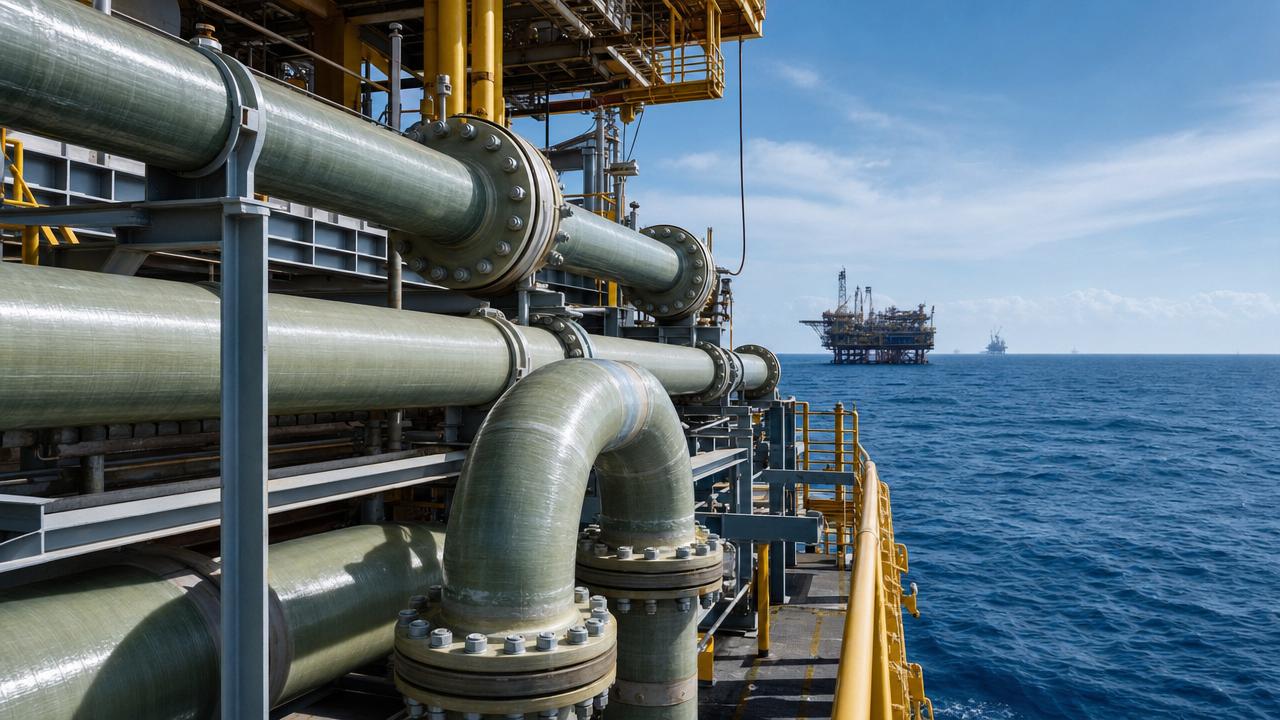
GRE pipe for offshore may lower weight without losing strength
For offshore projects where weight, corrosion resistance, and long-term reliability directly affect cost and safety, GRE pipe for offshore offers a practical alternative to traditional metal systems.
With high strength-to-weight performance and proven marine use, it supports efficient installation, durable service, and better lifecycle value from design through operation.
In glass and ceramic materials applications, composite pipe systems matter because performance depends on engineered mineral-based reinforcement, resin chemistry, and controlled winding quality.
This article answers common questions about GRE pipe for offshore, including strength, weight, selection, risks, and implementation in marine and energy systems.
What is GRE pipe for offshore, and why is it different?
GRE pipe for offshore means fiberglass reinforced epoxy piping designed for aggressive marine environments and platform service conditions.
Its wall structure combines glass fiber reinforcement with epoxy resin. That creates a corrosion-resistant composite with favorable mechanical strength and lower mass than steel.
The glass reinforcement is the key connection to the glass and ceramic materials sector. It provides stiffness, tensile support, and stable behavior under wet conditions.
Compared with metal pipe, GRE pipe for offshore avoids many corrosion mechanisms linked to saltwater, humid air, and chemical exposure.
It is commonly used in seawater lines, ballast systems, firewater networks, produced water handling, and utility services on offshore structures.
Shandong Ocean Pipe Technology Co., Ltd. has focused on this field since 2012, with 16 winding lines and annual GRE pipe production capacity of 25,000 tons.
Its products serve oil and gas, LNG, ship ballast piping, hot spring transport, and process systems for global customers in Asia and overseas markets.
Can GRE pipe for offshore reduce weight without sacrificing strength?
Yes, that is one of the main reasons GRE pipe for offshore is selected in marine construction and retrofit projects.
Lower weight comes from the composite structure. Glass fiber carries load efficiently, while epoxy binds the structure and protects it from moisture and chemicals.
This balance can deliver strong pressure performance while reducing handling loads, support demands, and installation effort on crowded decks or modules.
Strength should not be viewed only as burst pressure. Offshore pipe also needs stiffness, impact tolerance, joint reliability, and resistance to cyclic service conditions.
A well-made GRE pipe for offshore depends on winding angle control, fiber content, resin quality, curing consistency, and hydrostatic testing.
Ocean Pipe operates 174 pipe fitting winding machines and micro control systems, plus static water pressure testing machines for production verification.
That matters because lightweight pipe only creates value when mechanical integrity is confirmed through repeatable manufacturing and traceable testing.
- Less structural load on platforms and ships
- Simpler transport and lifting operations
- Reduced corrosion maintenance over time
- Good strength retention in harsh environments
Where is GRE pipe for offshore most suitable?
GRE pipe for offshore performs best where corrosion, weight, and service life are critical design concerns.
Typical applications include seawater cooling lines, ballast water piping, utility systems, drainage, and process support services in marine facilities.
It is also relevant where chemical exposure is present. Composite materials can support demanding process transport when the resin system matches the medium.
In some integrated projects, offshore support systems connect with onshore process units such as Chemical Plant environments.
That crossover increases the need for careful media review, temperature limits, and proper joining design.
For shipbuilding and offshore energy, Ocean Pipe products have been supplied to major shipyards and energy groups, showing practical use in real installations.
Not every line should automatically use composite pipe. Very high temperatures, unusual solvents, or severe mechanical abuse may require separate evaluation.
How do you compare GRE pipe for offshore with steel or other piping materials?
The right comparison should include more than initial pipe price. Offshore systems succeed or fail on lifecycle cost, downtime risk, and installation complexity.
Steel remains strong and familiar, but it needs corrosion control, coating management, and sometimes more support due to weight.
GRE pipe for offshore usually brings an advantage in corrosion resistance and mass reduction, especially in seawater service.
The table below helps compare common decision factors.
The best choice depends on fluid chemistry, pressure class, layout, code requirements, and expected service duration.
What should be checked before selecting GRE pipe for offshore?
Selection should begin with operating conditions, not assumptions. GRE pipe for offshore must match pressure, temperature, fluid composition, and external exposure.
Then review structural needs. Pipe routing, supports, vibration points, impact zones, and flange connections all affect long-term performance.
Ask for manufacturing and testing evidence. Hydrostatic pressure tests, dimensional consistency, curing quality, and fitting compatibility are essential.
A practical checklist can reduce selection errors:
- Confirm service medium and chemical compatibility.
- Verify pressure rating and design safety factors.
- Check temperature range during normal and upset conditions.
- Review joining method, fittings, and installation access.
- Request test records and quality control details.
- Evaluate delivery capacity for project schedule stability.
When process units interface with offshore systems, compatibility thinking should include utility and transfer areas, including some Chemical Plant related service conditions.
What are the common risks or misunderstandings?
One common mistake is assuming all GRE pipe for offshore products perform the same. Composite quality can vary greatly with raw materials and process control.
Another misunderstanding is treating lightweight pipe as weak pipe. In reality, engineered composites can meet demanding pressure and service requirements.
Problems usually come from poor design matching, incorrect supports, improper joint preparation, or ignoring chemical and temperature limits.
Training also matters. Installation teams should follow approved procedures for cutting, bonding, alignment, and inspection.
How can implementation be planned for better lifecycle value?
The value of GRE pipe for offshore improves when design, procurement, testing, and installation are connected from the start.
Early coordination reduces field modification, avoids mismatched fittings, and supports faster commissioning.
Lifecycle value often comes from reduced corrosion maintenance, less replacement downtime, and easier handling during upgrades or expansion.
A reliable supplier should offer stable capacity, test capability, marine application experience, and practical documentation support.
Ocean Pipe has supplied major energy and shipbuilding groups, supported by winding production resources and pressure testing infrastructure.
That combination helps offshore projects evaluate not only the pipe itself, but also schedule confidence and consistency across fittings and pipe sections.
Conclusion: Is GRE pipe for offshore the right choice?
GRE pipe for offshore can lower system weight without losing strength when the design basis, resin selection, and manufacturing quality are properly controlled.
Its biggest advantages are corrosion resistance, lower mass, and strong lifecycle economics in marine and energy environments.
The best next step is to compare service conditions, review testing standards, and confirm application fit before final material selection.
A careful technical review will show whether GRE pipe for offshore can improve durability, reduce maintenance, and support safer long-term operation.
Please give us a message
产品介绍产品介绍产品介绍产品介绍产品介绍产品介绍产品介绍产品介绍产品介绍产品介绍产品介绍产品介绍产品介绍产品介绍产品介绍产品介绍产品介绍产品介绍产品介绍产品介绍产品介绍产品介绍产品介绍产品介绍产品介绍产品介绍产品介绍产品介绍产品介绍产品介绍
Please give us a message
产品介绍产品介绍产品介绍产品介绍产品介绍产品介绍产品介绍产品介绍产品介绍产品介绍产品介绍产品介绍产品介绍产品介绍产品介绍产品介绍产品介绍产品介绍产品介绍产品介绍产品介绍产品介绍产品介绍产品介绍产品介绍产品介绍产品介绍产品介绍产品介绍产品介绍
Please give us a message
产品介绍产品介绍产品介绍产品介绍产品介绍产品介绍产品介绍产品介绍产品介绍产品介绍产品介绍产品介绍产品介绍产品介绍产品介绍产品介绍产品介绍产品介绍产品介绍产品介绍产品介绍产品介绍产品介绍产品介绍产品介绍产品介绍产品介绍产品介绍产品介绍产品介绍
Please give us a message
产品介绍产品介绍产品介绍产品介绍产品介绍产品介绍产品介绍产品介绍产品介绍产品介绍产品介绍产品介绍产品介绍产品介绍产品介绍产品介绍产品介绍产品介绍产品介绍产品介绍产品介绍产品介绍产品介绍产品介绍产品介绍产品介绍产品介绍产品介绍产品介绍产品介绍