
FRP Pipe demand is rising as lifecycle costs get closer
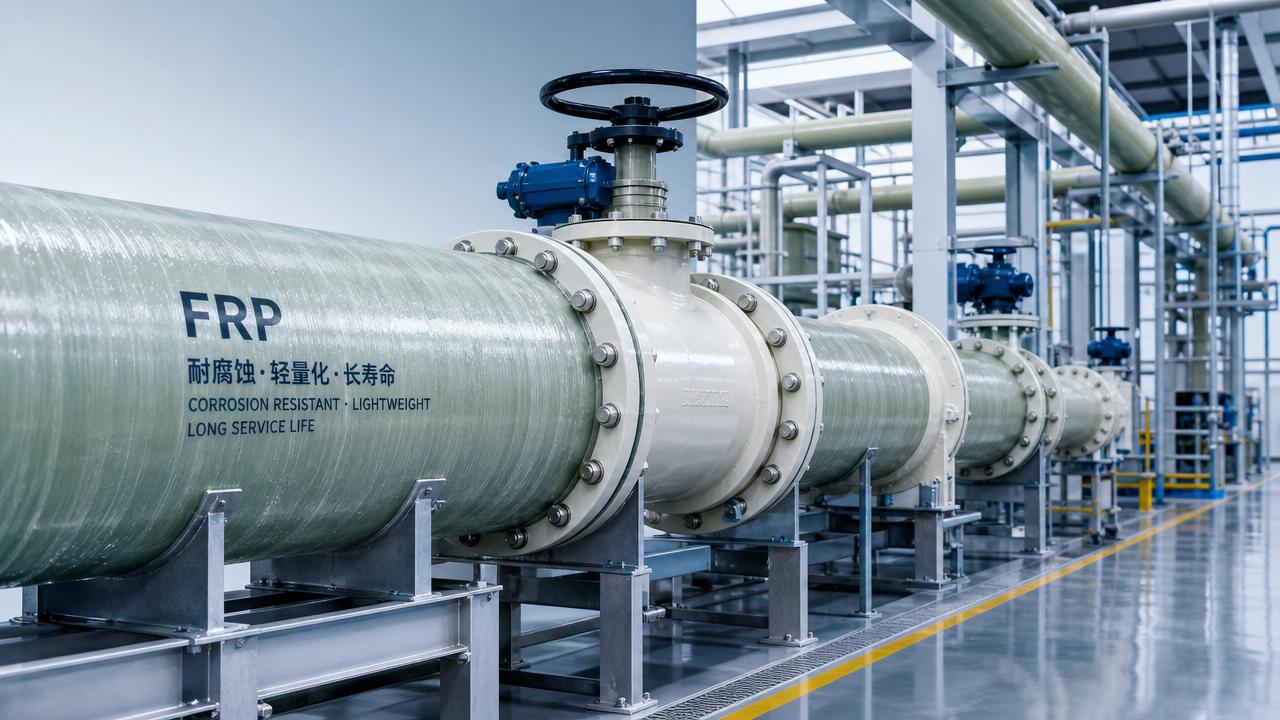
As lifecycle costs move closer to steel, ductile iron, and other traditional options, FRP Pipe is no longer a niche material in industrial piping. For distributors, agents, and channel partners, this matters because buyer conversations are changing. More project owners now evaluate total installed cost, maintenance reduction, corrosion resistance, and service life together rather than comparing material prices alone.
That shift is creating practical new opportunities. In sectors such as oil and gas, marine systems, LNG, chemical processing, hot spring transport, and salt production, FRP Pipe is increasingly seen as a commercially sound choice. Partners who understand where demand is coming from, how to explain lifecycle value, and how to qualify real applications will be better positioned to win business.
What Is the Real Search Intent Behind Rising FRP Pipe Demand?
The core intent behind this topic is not simply to learn that demand is increasing. Most readers want to know why the market is changing now, whether the trend is sustainable, and how they can benefit from it commercially. For distributors especially, the key question is whether FRP Pipe can be sold more competitively than before.
Another strong intent is comparison. Buyers and intermediaries want to understand how FRP Pipe performs against steel, HDPE, PVC, and concrete in real operating conditions. They are looking for evidence tied to maintenance cycles, corrosion exposure, installation efficiency, and project risk rather than broad material claims.
There is also a decision-making intent. Channel partners want guidance on where FRP Pipe fits best, which industries are expanding demand, and what objections they are likely to face from engineers, EPC contractors, and end users. Content that helps them answer those questions has the highest practical value.
Why Lifecycle Cost Is Changing the FRP Pipe Conversation
For many years, the biggest barrier to FRP Pipe adoption was the perception of a higher upfront price. In some projects that concern still exists. However, industrial buyers are increasingly shifting from initial material cost to lifecycle cost because corrosion, downtime, repair frequency, and replacement expense often have a larger impact on total ownership cost.
In corrosive systems, traditional metallic piping may require coatings, linings, cathodic protection, frequent inspection, and periodic replacement. Those hidden costs accumulate over time. When procurement teams include those long-term expenses in their analysis, FRP Pipe starts to look far more competitive, especially in demanding operating environments.
Installation economics also affect lifecycle calculations. FRP Pipe is lighter than many conventional materials, which can reduce transport costs, simplify handling, and lower installation labor in appropriate projects. In large industrial plants or shipboard applications, those savings can materially narrow the cost gap before the system even enters service.
Once operating performance is added to the equation, the value case often becomes clearer. FRP Pipe offers corrosion resistance, long service life, and stable hydraulic performance in many chemical and saline environments. That means fewer shutdowns, fewer emergency interventions, and more predictable maintenance planning for end users.
What Distributors, Agents, and Partners Care About Most
For channel partners, market demand alone is not enough. They need to know whether the product is commercially viable, technically supportable, and suitable for repeat business. Their concerns are practical: Can this product be positioned clearly? Can the supply chain support orders? Will after-sales demands be manageable? Can it open doors in multiple industries?
Margin potential is one major concern. FRP Pipe often performs best in specialized, performance-driven applications rather than highly commoditized low-end markets. That can be an advantage for distributors because technical value tends to protect pricing better than products sold only on the lowest bid.
Reliability of manufacturing is another critical issue. Partners want confidence that a supplier can deliver consistent quality, stable lead times, and sufficient production capacity. Shandong Ocean Pipe Technology Co., Ltd., established in 2012 in Shandong, China, has developed into one of China’s top ten larger GRE pipe manufacturers, with 16 winding production lines and strong annual capacity.
Technical breadth matters too. Ocean Pipe operates 174 sets of pipe fitting winding machines and winding micro control systems, plus 5 static water pressure testing machines. For distributors, that combination signals a supplier able to support not only straight pipe demand but also system-level requirements that often determine whether a project can be won smoothly.
Which End-Use Markets Are Driving FRP Pipe Demand?
The strongest demand growth for FRP Pipe usually comes from environments where corrosion is persistent and costly. Oil and gas remains a major driver because water handling, produced water systems, and corrosive service lines create clear conditions where non-metallic performance can offer measurable value.
Marine and ship ballast piping is another important market. In shipbuilding and offshore-related applications, operators care deeply about weight, corrosion behavior, maintenance accessibility, and service reliability. A lighter, corrosion-resistant piping solution can translate into practical operational benefits over the vessel lifecycle.
LNG and chemical plant applications also continue to support demand. In these sectors, process reliability and resistance to chemically aggressive media are often more important than the lowest initial procurement cost. This creates room for FRP Pipe when the application is correctly specified and the design conditions are well understood.
Hot spring pipeline systems and salt-making operations are similarly relevant. These are environments where corrosive water chemistry or saline exposure can shorten the service life of traditional materials. Ocean Pipe’s existing customer exposure in such industries suggests the market is not theoretical; it is already active and commercially proven.
Wastewater infrastructure is another area worth watching. Facilities that handle corrosive fluids, treatment chemicals, and long operating cycles often need durable piping systems with low maintenance demands. That is why project partners evaluating solutions for a Wastewater Treatment Plant may increasingly include FRP-based options in their material review.
How to Explain FRP Pipe Value to Industrial Buyers
Distributors who succeed with FRP Pipe usually avoid generic sales language. Instead, they translate technical performance into business outcomes. Rather than saying the material is “advanced” or “high quality,” they explain what that means in reduced corrosion failures, longer replacement intervals, lower shutdown risk, and easier lifecycle budgeting.
One useful sales approach is to frame the discussion around total system cost. Ask the buyer how often their current material needs repair, whether internal corrosion reduces flow performance, what their coating maintenance cycle looks like, and how expensive plant stoppages are. Those questions naturally shift the discussion away from unit price alone.
Another effective method is application filtering. FRP Pipe is not the answer to every project, and experienced buyers know that. Credibility increases when a distributor clearly identifies where FRP Pipe delivers the best return, such as corrosive liquid transport, marine piping, brine handling, or industrial utility systems requiring stable long-term performance.
It also helps to discuss risk reduction. In many industrial settings, leakage, scaling, corrosion-related degradation, and unplanned maintenance are larger concerns than the initial material purchase. When the buyer sees FRP Pipe as a way to lower operational uncertainty, the sales conversation becomes far more strategic.
Common Objections You Should Be Ready to Answer
The first objection is still price. Some buyers will compare only purchase price per meter and stop there. The best response is not defensive. Instead, guide them toward installed cost, corrosion control expenses, service life, maintenance access, and replacement timing. A structured total-cost comparison is often more persuasive than technical data alone.
A second objection concerns familiarity. Engineers and procurement teams may have more historical experience with steel or thermoplastics. In those cases, reference matters. A supplier serving major groups such as CNOOC, CNPC, Sinopec, and well-known shipyards brings reassurance that the product has already been accepted in demanding environments.
Third, buyers may ask about quality consistency and testing. This is where manufacturing transparency becomes valuable. Production scale, testing equipment, and project history help reduce uncertainty. Ocean Pipe’s annual GRE pipe production and testing capacity of 25,000 tons can support confidence for partners pursuing larger or recurring industrial orders.
Finally, some buyers worry about application limits. That is a valid concern and should be answered with technical discipline. Temperature, pressure, media compatibility, joining methods, and installation conditions all matter. Serious channel partners should position FRP Pipe where it fits well, not force it into unsuitable use cases.
What Makes a Strong FRP Pipe Supply Partner?
For distributors and agents, choosing the right manufacturer affects more than product quality. It influences quoting speed, technical support, customer trust, and your ability to compete on larger projects. A strong FRP Pipe partner should offer capacity, quality systems, application knowledge, and export experience that aligns with your market needs.
Manufacturing depth matters because projects often require more than standard pipe lengths. Fittings, customized dimensions, pressure requirements, and documentation support can decide whether a supplier is practical for industrial channel development. Ocean Pipe’s winding resources and fitting production capabilities are useful advantages in this regard.
Industry coverage is another sign of strength. A supplier serving oil and gas, marine ballast systems, LNG, chemical plants, hot spring pipelines, and salt-making companies is likely to understand a wider range of operating conditions. That diversity can help distributors move beyond a single niche and build a broader account portfolio.
International experience also supports channel confidence. Ocean Pipe has expanded into markets including Australia, Iraq, Kazakhstan, and Turkey. For agents and resellers, export familiarity often means smoother coordination on documentation, packaging, logistics expectations, and communication across project stakeholders.
How Distributors Can Capture the Current Demand Upswing
The first step is market segmentation. Do not target every possible buyer at once. Focus on industries where corrosion costs are visible and where downtime carries financial consequences. Oilfield water systems, marine projects, chemical utilities, brine transfer, and industrial wastewater are often stronger entry points than general commodity piping.
The second step is to build a simple lifecycle cost narrative. Your sales team should be able to explain, in a few minutes, why FRP Pipe can be financially competitive over time. That story should include maintenance reduction, corrosion resistance, installation benefits, and service life, all translated into commercial terms the buyer understands.
Third, support the buyer’s specification process. Many projects are won before the final purchase stage, when material selection is still open. If you can provide relevant technical input early, you are more likely to shape the preferred solution instead of reacting to a locked specification based on older material habits.
Fourth, use reference scenarios. Buyers gain confidence when they can connect your proposal to recognizable applications. For example, if a prospect is planning upgrades around a Wastewater Treatment Plant, showing where FRP Pipe reduces corrosion exposure and maintenance burden can make the value proposition tangible.
Where FRP Pipe Demand Is Likely Headed Next
The long-term outlook for FRP Pipe appears favorable where infrastructure owners are under pressure to reduce maintenance costs and improve asset reliability. As industrial buyers become more disciplined about total cost of ownership, the old disadvantage of a higher upfront price becomes less decisive than it once was.
At the same time, material selection is becoming more application-driven. Buyers are less interested in one material for every system and more focused on matching service conditions to performance needs. That trend supports FRP Pipe because its strengths are highly relevant in specific corrosive, saline, or maintenance-sensitive environments.
For channel partners, this does not mean automatic sales growth. It means the market is more receptive than before, provided you bring a credible product, clear technical positioning, and a supplier capable of supporting industrial project requirements. Those who adapt their sales strategy to lifecycle-based decision-making are likely to gain the most.
Conclusion
FRP Pipe demand is rising because the buying logic is changing. As lifecycle costs come closer to traditional materials, corrosion resistance, service life, and maintenance savings are becoming stronger purchasing drivers. That shift is especially important for distributors, agents, and partners looking for products with real technical value and market expansion potential.
The opportunity is strongest in sectors where failure, corrosion, or maintenance creates measurable cost pressure. Success will depend on targeting the right applications, answering objections with lifecycle logic, and working with a capable manufacturing partner. For channel businesses that do this well, FRP Pipe is not just a growing product category. It is a meaningful route to stronger industrial market growth.
Please give us a message
产品介绍产品介绍产品介绍产品介绍产品介绍产品介绍产品介绍产品介绍产品介绍产品介绍产品介绍产品介绍产品介绍产品介绍产品介绍产品介绍产品介绍产品介绍产品介绍产品介绍产品介绍产品介绍产品介绍产品介绍产品介绍产品介绍产品介绍产品介绍产品介绍产品介绍
Please give us a message
产品介绍产品介绍产品介绍产品介绍产品介绍产品介绍产品介绍产品介绍产品介绍产品介绍产品介绍产品介绍产品介绍产品介绍产品介绍产品介绍产品介绍产品介绍产品介绍产品介绍产品介绍产品介绍产品介绍产品介绍产品介绍产品介绍产品介绍产品介绍产品介绍产品介绍
Please give us a message
产品介绍产品介绍产品介绍产品介绍产品介绍产品介绍产品介绍产品介绍产品介绍产品介绍产品介绍产品介绍产品介绍产品介绍产品介绍产品介绍产品介绍产品介绍产品介绍产品介绍产品介绍产品介绍产品介绍产品介绍产品介绍产品介绍产品介绍产品介绍产品介绍产品介绍
Please give us a message
产品介绍产品介绍产品介绍产品介绍产品介绍产品介绍产品介绍产品介绍产品介绍产品介绍产品介绍产品介绍产品介绍产品介绍产品介绍产品介绍产品介绍产品介绍产品介绍产品介绍产品介绍产品介绍产品介绍产品介绍产品介绍产品介绍产品介绍产品介绍产品介绍产品介绍