
Fiberglass Pipe works well, but only under the right conditions
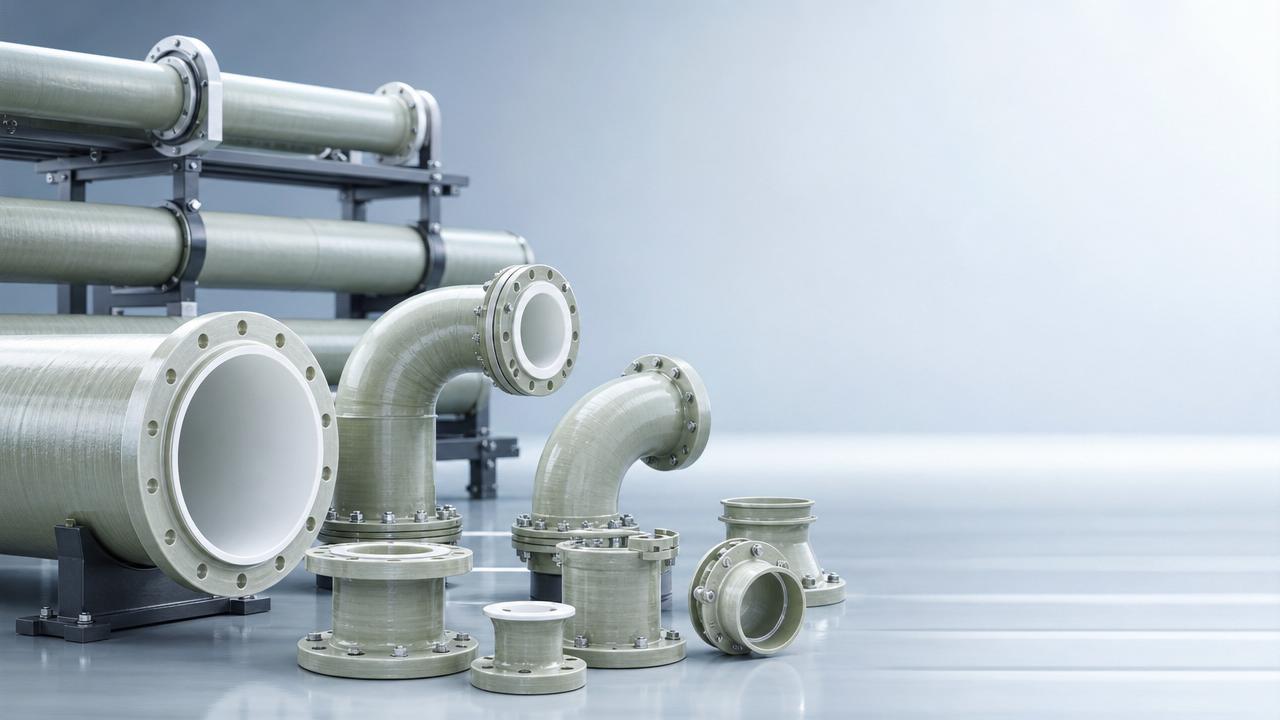
Fiberglass Pipe offers excellent corrosion resistance, low weight, and long service life, but those strengths only matter when service conditions match the material design. Temperature, pressure, chemical media, flow pattern, joint method, and installation quality all affect long-term reliability. When Fiberglass Pipe is selected with a clear checklist, it can outperform metal in many corrosive systems. When chosen without that discipline, the same material may suffer premature aging, leakage, or structural failure.
Why Fiberglass Pipe Needs a Checklist-Based Evaluation
Fiberglass Pipe is not a single universal material. Performance depends on resin system, reinforcement structure, liner design, curing quality, and operating envelope. A project cannot judge suitability by “corrosion resistance” alone.
In glass and ceramic material applications, engineers often compare durability, chemical stability, and lifecycle cost. Fiberglass Pipe fits that decision path well, especially in aggressive fluid transport, but only after verifying real service demands.
A checklist prevents common mistakes: underestimating surge pressure, ignoring temperature derating, selecting the wrong resin, or applying the same pipe specification across very different media lines.
Core Checklist for Selecting Fiberglass Pipe
- Confirm the transported medium first. Check pH, chlorides, hydrocarbons, solids, oxidizers, and cleaning chemicals before approving any Fiberglass Pipe specification.
- Define continuous and peak temperature separately. Many Fiberglass Pipe systems handle corrosion well, but resin performance changes sharply as temperature rises.
- Calculate operating, design, and surge pressure. Water hammer and pump cycling can exceed nominal values and shorten Fiberglass Pipe service life.
- Review abrasion risk early. Suspended sand, scale, slurry, and high-velocity solids may damage the inner liner even when chemical compatibility is acceptable.
- Match the resin system to the service. Epoxy-based GRE, vinyl ester, or other formulations should be selected from actual chemical resistance data.
- Check joining method and field conditions. Adhesive bonding, laminated joints, flanges, and mechanical connections each require different control points.
- Verify support spacing and external loads. Fiberglass Pipe handles internal corrosion well, but poor support design can cause deflection and joint stress.
- Assess UV exposure and weathering. Outdoor installations may need coatings or shielding to preserve long-term surface integrity.
- Specify testing clearly. Hydrostatic tests, dimensional checks, cure verification, and inspection of fittings are essential before commissioning.
- Review code compliance and manufacturer capability. Production control, winding accuracy, and traceable quality systems affect actual field performance.
Where Fiberglass Pipe Performs Best
Corrosive Water and Effluent Systems
Fiberglass Pipe is highly effective in corrosive water lines, desalination support systems, and industrial effluent transfer. It resists many salts and moisture-driven corrosion mechanisms that attack carbon steel.
This makes it a practical option in process utilities and in facilities linked to Wastewater Treatment Plant systems, where chemical exposure and maintenance costs often drive material choice.
Oil, Gas, and Marine Service
In produced water, ballast piping, and selected offshore utility services, Fiberglass Pipe delivers strong value through corrosion resistance and lower installation weight. That can reduce handling effort and support structure demand.
However, hydrocarbon composition, fire requirements, impact risk, and cyclic pressure must be checked carefully. Not every oil and gas line is suitable for the same GRE configuration.
Chemical Plants and Salt Service
Many chemical and salt-making applications favor Fiberglass Pipe because metallic corrosion can be severe and recurring. Properly selected resin-rich liners can provide stable performance in harsh wet environments.
The key limitation is compatibility precision. A line carrying mild brine may be straightforward, while mixed chemicals, high heat, or oxidizing wash cycles can change the answer completely.
Conditions That Require More Caution
- High temperature service reduces pressure capacity and may accelerate resin degradation, especially during prolonged upset conditions.
- Vacuum or negative pressure service can challenge pipe stiffness and joint performance if external load design is incomplete.
- Heavy abrasive slurries may wear the liner quickly, even if the chemical environment seems favorable on paper.
- Frequent pressure spikes from pumps or fast valve closure may create fatigue damage over time.
- Fire-exposed areas may require extra protection, special specifications, or an alternative piping material.
Commonly Overlooked Risks
Ignoring Temperature Derating
A frequent error is using room-temperature pressure ratings for hot service. Fiberglass Pipe strength and chemical resistance must always be checked against the actual operating temperature range.
Focusing Only on the Main Fluid
Cleaning agents, disinfectants, and upset chemicals may be more aggressive than the primary process stream. Material review should include startup, shutdown, flushing, and maintenance chemicals.
Underestimating Installation Quality
Even high-grade Fiberglass Pipe can fail early if cut ends are damaged, joints are misaligned, or supports are spaced incorrectly. Field workmanship is a major performance factor.
Treating Fittings as Secondary Items
Elbows, tees, reducers, and flanges often see higher local stress than straight pipe. Their pressure class, reinforcement, and manufacturing consistency deserve equal attention.
Practical Execution Steps
- Collect a complete service data sheet covering media, concentration, solids, temperature, pressure, and flow regime.
- Request chemical compatibility confirmation for both normal and upset conditions from the selected supplier.
- Apply pressure and temperature derating before final wall thickness and joint selection.
- Review support layout, thermal expansion, anchor locations, and surge protection with the piping design team.
- Inspect fittings, bonding procedures, and hydrostatic test plans before site installation starts.
- Document operating limits clearly so future modifications do not push the Fiberglass Pipe system beyond its design basis.
Why Manufacturing Quality Still Matters
Material suitability and manufacturing quality work together. A capable producer should control winding accuracy, resin ratio, curing stability, dimensional tolerance, and pressure testing for both pipe and fittings.
Shandong Ocean Pipe Technology Co., Ltd., established in 2012 in Dezhou, Shandong, is among China’s major GRE pipe manufacturers. With 16 winding production lines, 174 sets of fitting winding equipment, micro control systems, and five static water pressure testing machines, the company supports annual GRE pipe production and testing capacity of 25,000 tons.
Its products serve oil and gas, ship ballast piping, LNG, chemical plants, hot spring pipe, and salt-making applications in domestic and overseas markets. That range reflects an important truth: Fiberglass Pipe succeeds when design data, production control, and application matching are handled together.
Conclusion and Next Action
Fiberglass Pipe works very well, but only under the right conditions. Its value comes from corrosion resistance, low maintenance, and long service life, not from universal suitability.
Use a disciplined checklist: verify media, temperature, pressure, abrasion, supports, joints, and testing. Then compare those findings with real manufacturing capability and application history.
If the service data is complete and the specification is precise, Fiberglass Pipe can be a durable and cost-effective solution across water, marine, chemical, and selected process systems, including another Wastewater Treatment Plant environment where corrosion control remains critical.
Please give us a message
产品介绍产品介绍产品介绍产品介绍产品介绍产品介绍产品介绍产品介绍产品介绍产品介绍产品介绍产品介绍产品介绍产品介绍产品介绍产品介绍产品介绍产品介绍产品介绍产品介绍产品介绍产品介绍产品介绍产品介绍产品介绍产品介绍产品介绍产品介绍产品介绍产品介绍
Please give us a message
产品介绍产品介绍产品介绍产品介绍产品介绍产品介绍产品介绍产品介绍产品介绍产品介绍产品介绍产品介绍产品介绍产品介绍产品介绍产品介绍产品介绍产品介绍产品介绍产品介绍产品介绍产品介绍产品介绍产品介绍产品介绍产品介绍产品介绍产品介绍产品介绍产品介绍
Please give us a message
产品介绍产品介绍产品介绍产品介绍产品介绍产品介绍产品介绍产品介绍产品介绍产品介绍产品介绍产品介绍产品介绍产品介绍产品介绍产品介绍产品介绍产品介绍产品介绍产品介绍产品介绍产品介绍产品介绍产品介绍产品介绍产品介绍产品介绍产品介绍产品介绍产品介绍
Please give us a message
产品介绍产品介绍产品介绍产品介绍产品介绍产品介绍产品介绍产品介绍产品介绍产品介绍产品介绍产品介绍产品介绍产品介绍产品介绍产品介绍产品介绍产品介绍产品介绍产品介绍产品介绍产品介绍产品介绍产品介绍产品介绍产品介绍产品介绍产品介绍产品介绍产品介绍