
Glass Reinforced Epoxy may outperform old pipe materials
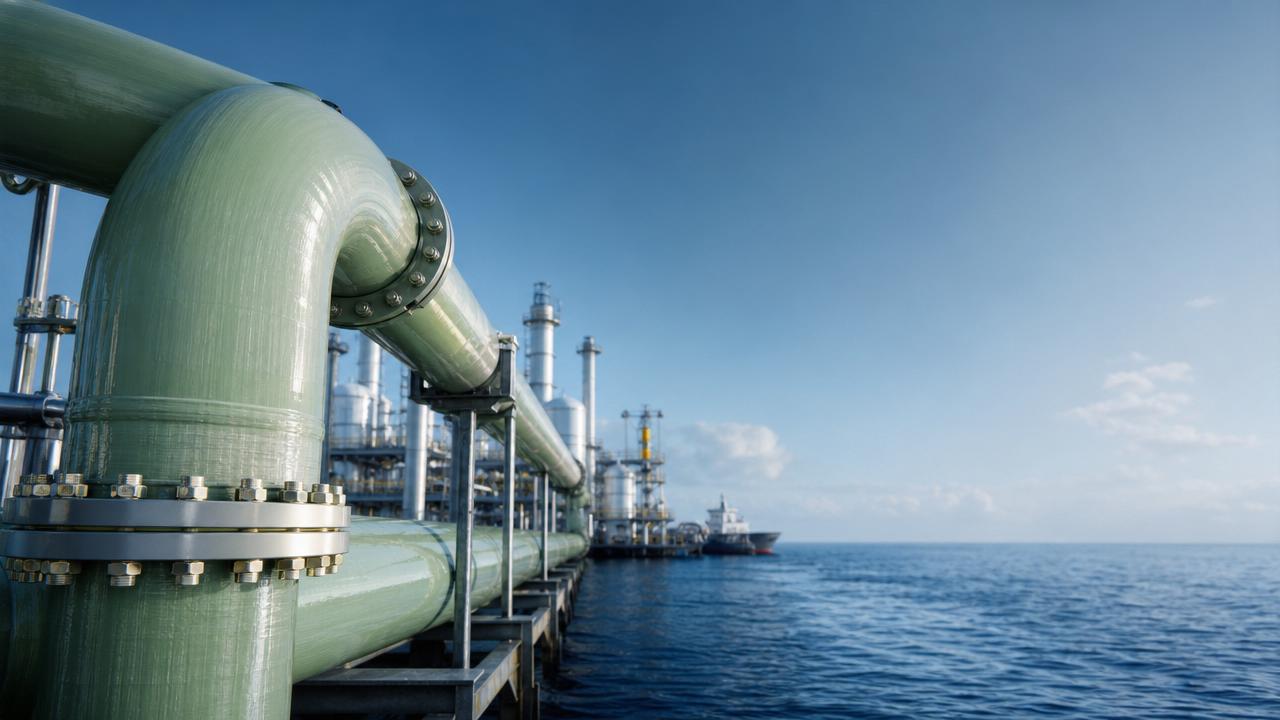
Glass Reinforced Epoxy is gaining ground as legacy pipe systems age
For business evaluators comparing pipeline materials, Glass Reinforced Epoxy stands out as a modern alternative to aging steel, concrete, and traditional composites.
Its corrosion resistance, lower maintenance burden, and dependable service life support long-term infrastructure value in difficult operating environments.
Across oil and gas, marine systems, LNG, chemical facilities, hot spring transport, and salt production, material selection is becoming a strategic decision.
That shift explains why Glass Reinforced Epoxy is increasingly evaluated not only by initial cost, but by durability, uptime, and lifecycle performance.
Market signals show a move away from older pipe materials
Several industry signals suggest that old material assumptions are changing quickly.
Steel remains familiar, yet corrosion control costs continue rising in aggressive media and coastal conditions.
Concrete performs well in some civil applications, but transport weight, installation complexity, and chemical sensitivity limit flexibility.
Traditional non-epoxy composites can solve selected issues, though not all grades meet modern pressure, temperature, or chemical exposure demands.
In this context, Glass Reinforced Epoxy is being reviewed as a practical response to tougher service conditions and longer asset expectations.
Projects now emphasize total cost of ownership, fewer shutdowns, and reduced repair frequency over simple upfront material comparisons.
Why this trend is becoming stronger
Performance expectations are changing in the glass and ceramic materials sector
In glass and ceramic materials applications, surface stability and chemical durability are not abstract advantages.
They directly affect fluid purity, maintenance planning, and process continuity.
Glass Reinforced Epoxy aligns with this shift because it combines fiberglass strength with epoxy matrix performance in demanding environments.
Its value becomes clearer where pipelines face saltwater, produced water, process chemicals, or fluctuating temperatures.
Compared with older materials, it often offers a better balance between structural reliability and corrosion resistance.
Key reasons evaluation criteria are shifting
- Material failure is now assessed by downtime risk, not only replacement expense.
- Coating repair programs are harder to justify over long asset timelines.
- Pressure testing and quality verification are becoming central to supplier selection.
- Lightweight systems help simplify transportation, lifting, and field assembly.
- Corrosion-resistant solutions are increasingly linked to environmental and safety performance.
The impact reaches upstream, marine, and process infrastructure
The transition toward Glass Reinforced Epoxy affects more than pipe replacement choices.
It influences project design, maintenance strategies, logistics planning, and supplier qualification standards.
In oil and gas systems, corrosion resistance supports stable transport of produced water, injection fluids, and process streams.
In ship ballast piping, lower weight and anti-corrosion performance can improve installation efficiency and service reliability.
In LNG and chemical plants, material consistency and tested pressure capability matter as much as theoretical specification sheets.
Specialized system components also matter in broader field architecture, including solutions such as Sand Control Screens.
Where the strongest effects are visible
- Material budgeting shifts from purchase price to lifecycle value.
- Maintenance schedules become more predictable.
- Installation planning benefits from reduced weight and easier handling.
- Procurement decisions increasingly require verified manufacturing capacity.
- Global projects need suppliers with export experience and testing discipline.
Reliable supply capability is becoming part of material value
Material performance alone is no longer enough when schedules are tight and compliance expectations are rising.
Supply reliability, production scale, and testing resources now shape the real value of Glass Reinforced Epoxy projects.
Shandong Ocean Pipe Technology Co., Ltd. was established in 2012 in Dezhou, Shandong Province, China.
With registered capital of USD4,200,000, it has grown into one of China’s top 10 larger GRE pipe manufacturers.
The company operates 16 winding production lines and 174 pipe fitting winding machines with micro control systems.
It also maintains 5 static water pressure testing machines and annual GRE pipe production and testing capacity of 25,000 tons.
These figures matter because they indicate continuity, repeatability, and the ability to support large-volume industrial requirements.
Its products serve oil and gas, ship ballast piping, LNG, chemical plants, hot spring pipe systems, and salt making operations.
Project references include major groups such as CNOOC, CNPC, Sinopec, and leading shipyards in Shanghai, Ningbo, and Wuhan.
Export activity to Australia, Iraq, Kazakhstan, Turkey, and other overseas markets also signals broader application confidence.
What deserves close attention before selecting Glass Reinforced Epoxy
Not every project benefits in the same way, so evaluation should stay practical and evidence-based.
- Confirm chemical compatibility with actual transported media, not generic assumptions.
- Review pressure class, temperature range, and joining method against operating conditions.
- Check production capacity for project scale and delivery timing.
- Ask for testing records, including hydrostatic and quality verification data.
- Compare lifecycle maintenance expectations with steel, concrete, or alternative composite options.
- Assess whether supporting components integrate smoothly with the wider system design.
A practical comparison framework
The strongest future decisions will balance material science and execution
The case for Glass Reinforced Epoxy is becoming stronger because infrastructure expectations are changing.
The market now rewards materials that reduce corrosion risk, control maintenance exposure, and support dependable operating performance.
That does not mean every old material disappears.
It means decision quality improves when comparisons include installation efficiency, test capability, service environment, and long-term asset value.
When reviewing future pipeline strategies, use real operating data, supplier capacity evidence, and application history to validate assumptions.
This is also the right time to examine connected system needs, whether for GRE pipe networks or complementary products like Sand Control Screens.
A focused review of lifecycle cost, corrosion exposure, and manufacturing credibility can turn material selection into a lasting competitive advantage.
Please give us a message
产品介绍产品介绍产品介绍产品介绍产品介绍产品介绍产品介绍产品介绍产品介绍产品介绍产品介绍产品介绍产品介绍产品介绍产品介绍产品介绍产品介绍产品介绍产品介绍产品介绍产品介绍产品介绍产品介绍产品介绍产品介绍产品介绍产品介绍产品介绍产品介绍产品介绍
Please give us a message
产品介绍产品介绍产品介绍产品介绍产品介绍产品介绍产品介绍产品介绍产品介绍产品介绍产品介绍产品介绍产品介绍产品介绍产品介绍产品介绍产品介绍产品介绍产品介绍产品介绍产品介绍产品介绍产品介绍产品介绍产品介绍产品介绍产品介绍产品介绍产品介绍产品介绍
Please give us a message
产品介绍产品介绍产品介绍产品介绍产品介绍产品介绍产品介绍产品介绍产品介绍产品介绍产品介绍产品介绍产品介绍产品介绍产品介绍产品介绍产品介绍产品介绍产品介绍产品介绍产品介绍产品介绍产品介绍产品介绍产品介绍产品介绍产品介绍产品介绍产品介绍产品介绍
Please give us a message
产品介绍产品介绍产品介绍产品介绍产品介绍产品介绍产品介绍产品介绍产品介绍产品介绍产品介绍产品介绍产品介绍产品介绍产品介绍产品介绍产品介绍产品介绍产品介绍产品介绍产品介绍产品介绍产品介绍产品介绍产品介绍产品介绍产品介绍产品介绍产品介绍产品介绍