
Corrosion Resistant FRP Pipe for Harsh Oilfield Fluids
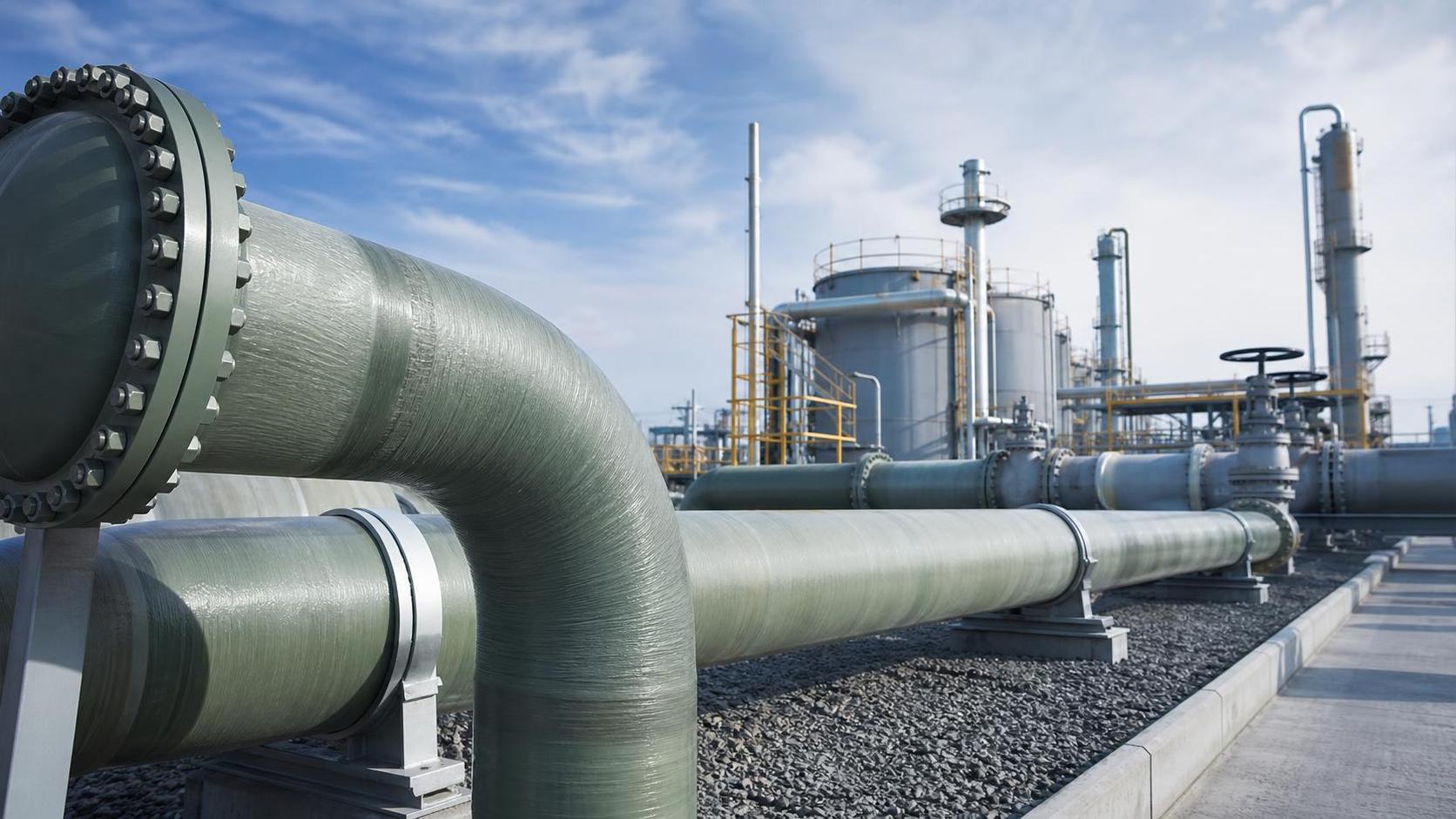
Corrosion Resistant FRP Pipe for Harsh Oilfield Fluids
Selecting the right corrosion resistant FRP pipe is critical for systems handling aggressive oilfield fluids.
In these services, chemical attack, pressure stability, and long-term reliability directly shape operating performance.
GRE piping gives engineers a practical alternative to carbon steel, stainless alloys, and lined metal pipe.
It reduces corrosion risk, lowers maintenance demand, and supports safer operation in harsh oil and gas environments.
The key point is simple: pipe material must match fluid chemistry, pressure profile, installation method, and expected life cycle.
Why Harsh Oilfield Fluids Challenge Conventional Pipe
Oilfield fluids are rarely clean or stable.
Produced water, injection water, sour fluids, and mixed hydrocarbon streams often contain chlorides, CO2, H2S, solids, and bacteria.
Temperature swings make the situation tougher.
Pressure cycling adds fatigue stress, while scale, sand, and flow turbulence increase internal wear.
For metal pipe, this combination often leads to pitting, under-deposit corrosion, sulfide stress concerns, and coating failure.
That is why corrosion resistant FRP pipe is increasingly considered for gathering lines, produced water systems, reinjection lines, and process utility service.
What Makes Corrosion Resistant FRP Pipe Different
FRP pipe is a composite structure.
In oilfield applications, GRE pipe is one of the most common types.
It combines glass fiber reinforcement with epoxy resin to achieve mechanical strength and chemical resistance.
This structure matters because corrosion resistance is built into the pipe wall, not added as a thin external barrier.
A well-designed corrosion resistant FRP pipe system can handle aggressive media without the same rust-driven failure mechanisms seen in steel.
It also offers a smooth inner surface.
That helps reduce friction loss, limit deposit buildup, and maintain flow efficiency over time.
Core Performance Advantages
- Strong resistance to saltwater, produced water, and many process chemicals.
- Lower weight than steel, which simplifies handling and field installation.
- Good hydraulic performance because of low internal roughness.
- Reduced need for internal lining repair or external anti-corrosion maintenance.
- Reliable service life when design, joining, and operating limits are controlled properly.
Where GRE Pipe Fits in Oilfield Service
Not every line in a field should use the same material.
The value of corrosion resistant FRP pipe becomes clearer in services where internal corrosion dominates lifecycle cost.
Typical uses include produced water transfer, seawater intake, utility water, chemical-containing drainage, and low-to-medium pressure process lines.
It is also used in offshore support systems, ballast piping, LNG support facilities, and chemical plant networks.
That broader experience is useful because many fluid risks overlap across industries.
In some project comparisons, references such as GRE Pipe for Municipal Project also show how GRE systems perform in long-run fluid transport environments.
Key Technical Factors to Evaluate Before Selection
Material selection should never start from diameter alone.
A corrosion resistant FRP pipe must be checked against actual service conditions, not nominal design assumptions.
1. Fluid Chemistry
Start with a full chemical profile.
Check salinity, pH, aromatic content, oxidizers, organic solvents, sulfur species, and suspended solids.
Resin compatibility is a decisive issue.
A pipe that works well in brine may not suit fluids containing strong solvents or unusual treatment chemicals.
2. Pressure and Surge Conditions
Steady pressure is only part of the picture.
Review water hammer, pump trip events, valve closure speed, and repeated pressure cycling.
These loads affect wall design, joint choice, and support spacing for corrosion resistant FRP pipe systems.
3. Temperature Range
Temperature changes influence both pressure rating and long-term performance.
Always evaluate operating temperature, upset temperature, and installation temperature as separate design inputs.
4. Jointing and Installation Quality
Even the right pipe can underperform if joining quality is poor.
Adhesive bonded joints, laminated joints, or mechanical connections each require different controls.
Field training, curing conditions, alignment, and hydrotest procedures should be reviewed early, not after purchase.
Relevant Standards and Quality Checks
Technical review should connect material claims to recognized standards.
Depending on project scope, that may include API-related practice, ISO requirements, ASTM testing, and client-specific specifications.
The exact code base will vary by region and operator.
What matters is that corrosion resistant FRP pipe qualification is based on verified mechanical and chemical performance data.
Useful Verification Points
- Hydrostatic pressure test records and burst performance data.
- Raw material traceability for glass, resin, and curing system.
- Dimensional consistency, wall structure, and winding quality.
- Joint qualification procedures and field installation instructions.
- Factory testing capacity and documented quality control workflow.
Manufacturing Capability Matters More Than Brochure Claims
A reliable supplier should demonstrate repeatable manufacturing, not just attractive specifications.
Shandong Ocean Pipe Technology Co., Ltd. was established in 2012 in Wucheng Industrial Park, Dezhou, Shandong, China.
With registered capital of USD4,200,000, the company has grown into one of China’s top ten large GRE pipe manufacturers.
Its production base includes 16 winding lines and 174 pipe fitting winding machines with micro control systems.
The factory also has five static water pressure testing machines.
Annual GRE pipe production and testing capacity reaches 25,000 tons.
That scale matters when project teams need batch consistency, stable lead times, and dependable inspection records.
Its products serve oil and gas, ship ballast piping, LNG, chemical plants, hot spring pipe systems, and salt production companies.
A Practical Screening Checklist
When comparing suppliers, keep the review focused on usable evidence.
- Confirm full fluid composition, including upset chemicals and cleaning agents.
- Match resin system and pipe design to pressure, temperature, and surge profile.
- Review qualification data for the exact pipe class being proposed.
- Check jointing method, installer training plan, and field QA requirements.
- Ask for production capacity, testing resources, and project references.
- Compare total lifecycle cost, not just initial pipe price.
That last point often changes the decision.
A corrosion resistant FRP pipe may deliver better value when shutdown reduction and maintenance savings are included in the analysis.
Final Takeaway
For harsh oilfield fluids, material choice should be driven by service reality, not habit.
Corrosion resistant FRP pipe stands out where corrosion, scaling, and operating reliability are major cost drivers.
When resin compatibility, pressure design, joint quality, and standards compliance are all checked carefully, GRE pipe becomes a strong technical option.
That is why experienced project teams review both product data and manufacturing capability before making a final recommendation.
References across oil and gas, marine, LNG, and even GRE Pipe for Municipal Project applications help confirm where GRE performs best.
A disciplined review process will lead to a more reliable piping system, lower long-term risk, and better performance in demanding field conditions.
Please give us a message
产品介绍产品介绍产品介绍产品介绍产品介绍产品介绍产品介绍产品介绍产品介绍产品介绍产品介绍产品介绍产品介绍产品介绍产品介绍产品介绍产品介绍产品介绍产品介绍产品介绍产品介绍产品介绍产品介绍产品介绍产品介绍产品介绍产品介绍产品介绍产品介绍产品介绍
Please give us a message
产品介绍产品介绍产品介绍产品介绍产品介绍产品介绍产品介绍产品介绍产品介绍产品介绍产品介绍产品介绍产品介绍产品介绍产品介绍产品介绍产品介绍产品介绍产品介绍产品介绍产品介绍产品介绍产品介绍产品介绍产品介绍产品介绍产品介绍产品介绍产品介绍产品介绍
Please give us a message
产品介绍产品介绍产品介绍产品介绍产品介绍产品介绍产品介绍产品介绍产品介绍产品介绍产品介绍产品介绍产品介绍产品介绍产品介绍产品介绍产品介绍产品介绍产品介绍产品介绍产品介绍产品介绍产品介绍产品介绍产品介绍产品介绍产品介绍产品介绍产品介绍产品介绍
Please give us a message
产品介绍产品介绍产品介绍产品介绍产品介绍产品介绍产品介绍产品介绍产品介绍产品介绍产品介绍产品介绍产品介绍产品介绍产品介绍产品介绍产品介绍产品介绍产品介绍产品介绍产品介绍产品介绍产品介绍产品介绍产品介绍产品介绍产品介绍产品介绍产品介绍产品介绍