
corrosion resistant FRP pipe helps solve hidden corrosion risks
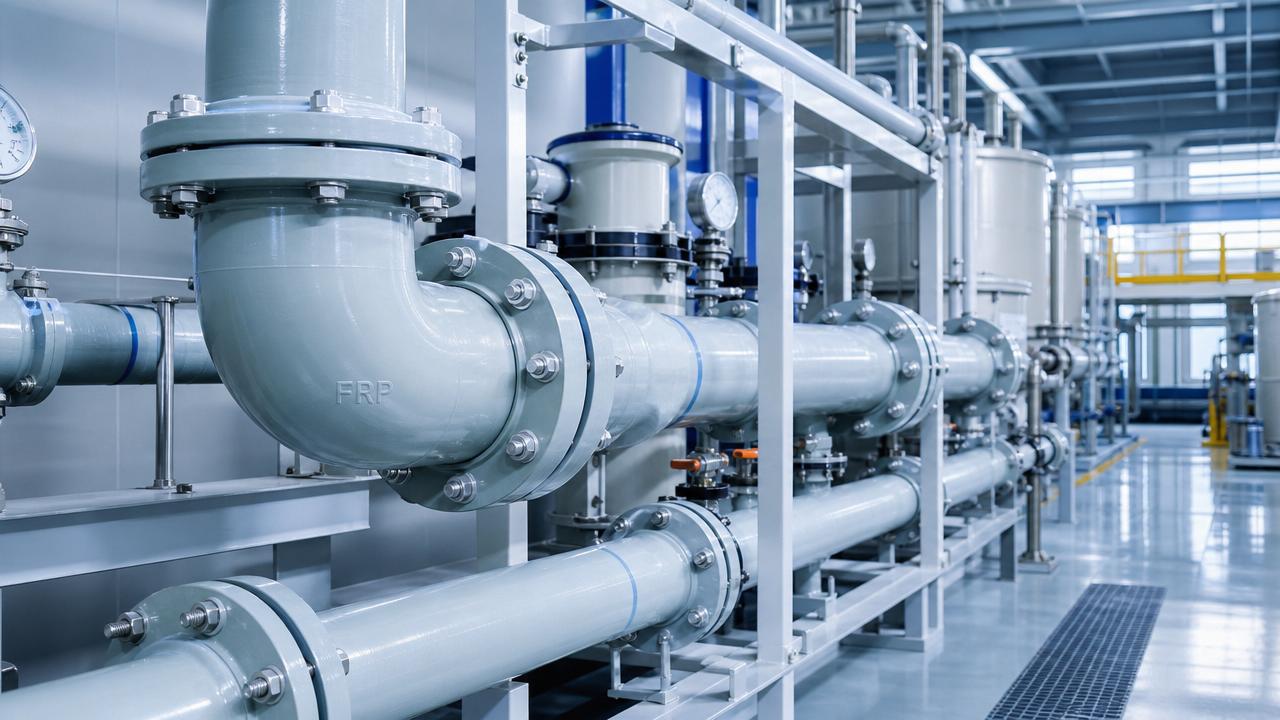
For industrial decision-makers facing costly downtime, leaks, and compliance pressure, choosing a corrosion resistant FRP pipe is a practical way to reduce hidden corrosion risks across harsh operating environments. With strong chemical resistance, long service life, and lower maintenance demands, this piping solution is increasingly favored in oil and gas, marine, LNG, and chemical applications.
Why hidden corrosion risk becomes a board-level issue
In glass and ceramic material processing, corrosion is rarely just a maintenance problem. It affects safety, environmental compliance, unplanned shutdowns, product purity, and total asset life. For decision-makers, the real cost often comes from what is not visible during early operation.
Metal piping may appear robust during procurement, yet internal scaling, chemical attack, chloride exposure, and wet-dry cycling can create hidden weak points. In plants handling saline media, hot water, acidic liquids, cleaning chemicals, or ballast systems, failure tends to emerge after capital decisions are already locked in.
A corrosion resistant FRP pipe changes the risk profile because the material system is engineered for corrosive service rather than merely protected against it. For operators balancing uptime and lifecycle cost, that difference matters more than headline purchase price.
- Lower probability of internal corrosion that remains undetected until leakage or pressure loss occurs.
- Reduced maintenance demand in difficult installations such as buried lines, marine spaces, and process pipe racks.
- More predictable operating performance where chemical exposure and temperature fluctuations are frequent.
What makes a corrosion resistant FRP pipe different from conventional pipe materials?
FRP piping in industrial service typically combines fiberglass reinforcement with a resin system selected for the intended chemical and thermal conditions. In GRE applications, epoxy resin contributes to structural stability, corrosion resistance, and durability under pressure service.
For buyers in the glass and ceramic materials sector, this matters because many process environments involve aggressive fluids, dissolved salts, slurry-related wear, condensate, or utility lines exposed to humid and corrosive surroundings. Material selection must fit the process, not just the budget cycle.
Core performance characteristics to evaluate
- Chemical resistance against acids, alkalis, saline solutions, and industrial cleaning agents within defined operating limits.
- Low thermal conductivity, which helps reduce heat loss and condensation concerns in selected services.
- Light weight compared with many metal alternatives, improving handling, transportation, and installation efficiency.
- Smooth inner surface that can support hydraulic efficiency and reduce deposit build-up in many fluid systems.
Not all FRP pipes are equal. Resin selection, winding quality, curing control, dimensional consistency, and hydrostatic testing all influence long-term reliability. This is why production capability and quality discipline should be reviewed alongside catalog specifications.
Where does corrosion resistant FRP pipe deliver the strongest value?
Decision-makers usually benefit most when the piping system operates in a corrosive and maintenance-sensitive environment. The following table summarizes common scenarios where a corrosion resistant FRP pipe can create a stronger lifecycle case than conventional materials.
These scenarios align with sectors already served by Shandong Ocean Pipe Technology Co., Ltd., including oil and gas, ship ballast piping, LNG, chemical plants, hot spring pipe systems, and salt-making companies. That operating exposure is relevant because material recommendations must reflect real service conditions rather than generic brochure claims.
How should buyers compare FRP, GRE, and metal pipe options?
A procurement decision should not focus only on the initial unit price. Executives need a side-by-side view of corrosion behavior, installation burden, maintenance expectations, and service suitability. The next table provides a practical comparison framework.
The comparison shows why a corrosion resistant FRP pipe often wins in environments where corrosion is the main driver of downtime. However, correct specification remains essential. Temperature, pressure, joint method, support spacing, and transported medium all influence the final choice.
What should enterprise buyers verify before placing an order?
A practical procurement checklist
- Confirm the process medium, concentration, temperature range, operating pressure, surge conditions, and cleaning procedure. A corrosion resistant FRP pipe must be selected against actual service data, not a simplified fluid name.
- Review pipe diameter, fitting configuration, and installation environment. Underground routing, marine compartments, exposed racks, and confined process areas each create different support and joining requirements.
- Ask about production consistency. Manufacturers with multiple winding lines and fitting machines are generally better positioned to support large or mixed orders without sacrificing dimensional control.
- Check test capability. Hydrostatic pressure testing, visual quality control, and process traceability matter because they validate manufacturing reliability before shipment.
- Evaluate supply capacity and project response. For large industrial programs, stable output and fitting availability are often as important as the pipe itself.
Shandong Ocean Pipe Technology Co., Ltd. offers a manufacturing base that supports these priorities. Established in 2012 in Wucheng Industrial Park, Dezhou City, Shandong Province, the company has a registered capital of USD4,200,000 and has become one of the top 10 largest manufacturers in China for Fiberglass Reinforced Epoxy pipe.
Its production platform includes 16 winding production lines, 174 sets of pipe fitting winding machines and winding micro control systems, plus 5 static water pressure testing machines. With annual GRE pipe production and testing capacity of 25,000 tons, the company is suited to support projects that require both volume and product consistency.
How do technical capability and field experience reduce project risk?
For corporate buyers, manufacturing scale only matters when it translates into lower delivery risk and better application support. Ocean Pipe’s field exposure across oil and gas, ship ballast piping, LNG, chemical plants, hot spring systems, and salt-making operations provides useful reference points for corrosive service design.
The company’s customer base includes large industrial groups and shipyards such as CNOOC, CNPC, Sinopec, Shanghai Waigaoqiao Shipyard, Ningbo Xinle Shipyard, and Wuhan Qingshan Shipyard. It has also expanded into markets including Australia, Iraq, Kazakhstan, and Turkey. For buyers, this indicates experience with differing project expectations and export coordination needs.
Why this matters in real procurement
- Projects with multiple pipe sizes and fittings require production coordination, not just raw capacity.
- Marine, LNG, and chemical applications demand practical understanding of corrosion pathways and site constraints.
- Export projects often need stronger communication on documentation, packaging, and delivery scheduling.
In refinery-related service, some buyers specifically review GRE solutions designed for corrosive media transfer and utility systems. Depending on system requirements, GRE Pipe for Refinery can be assessed as part of a broader corrosion control strategy for process infrastructure.
What are the hidden cost drivers behind pipe material selection?
Many capital projects underestimate corrosion cost because the purchase order captures only initial procurement. The larger financial impact often appears later through shutdowns, labor, spare inventory, insulation removal, recoating work, or contamination incidents affecting product quality.
This is particularly relevant in glass and ceramic material plants, where utility reliability and fluid cleanliness can influence kiln support systems, chemical dosing, surface treatment lines, wastewater handling, and plant-wide maintenance planning.
Common cost elements executives should include
- Inspection and corrosion monitoring frequency over the operating life.
- Planned and unplanned outage cost linked to pipe replacement or leak response.
- Surface treatment, coating repair, and corrosion allowance penalties in metal systems.
- Installation productivity, lifting logistics, and support structure cost.
- Long-term reliability in environments with saline spray, chemicals, or warm mineralized water.
When these factors are included, a corrosion resistant FRP pipe is often evaluated as a lifecycle decision rather than a commodity purchase. That is the right lens for plants seeking fewer corrosion surprises over a multi-year operating horizon.
Which standards and compliance points should be discussed early?
No buyer should assume that one specification fits every project. Industrial pipe selection usually needs alignment on design code references, pressure testing expectations, chemical compatibility review, and installation procedures. Early clarification avoids rework after technical approval.
For a corrosion resistant FRP pipe, discussions commonly involve general industry standards for fiberglass piping, hydrostatic testing, dimensional tolerance, jointing methods, and project-specific engineering requirements. The exact framework depends on country, sector, and owner standards.
This structured review is especially important for buyers who need internal sign-off from engineering, procurement, operations, and compliance teams at the same time.
FAQ: what do decision-makers ask before choosing a corrosion resistant FRP pipe?
Is a corrosion resistant FRP pipe suitable for all chemical services?
No. Suitability depends on the fluid type, concentration, operating temperature, pressure, and cleaning regime. FRP and GRE perform well in many corrosive environments, but the resin system and design conditions must be matched carefully. Always provide full process data during technical review.
What is the most common procurement mistake?
The most common mistake is comparing only initial price per meter. This ignores fittings, installation method, maintenance cost, downtime exposure, and service life. A low-cost metal option can become expensive when corrosion monitoring and replacement frequency are considered.
How important are fittings and production capacity?
They are critical. A piping system depends on elbows, tees, reducers, flanges, and joining quality, not just straight pipe. Manufacturers with established fitting production and pressure testing capability are better prepared for complex projects and staged delivery schedules.
Can this material help in refinery-related corrosive applications?
In suitable services, yes. Buyers evaluating refinery or utility systems can review solutions such as GRE Pipe for Refinery when corrosion resistance, lower maintenance demand, and project-specific chemical compatibility are key concerns.
Why choose us for corrosion control focused pipe projects?
Shandong Ocean Pipe Technology Co., Ltd. combines production scale, industry application exposure, and testing capability that matter to enterprise buyers. With 16 winding production lines, 174 fitting winding machines and micro control systems, 5 static water pressure testing machines, and annual production and testing capacity of 25,000 tons, the company is prepared for technically demanding GRE pipe supply.
For decision-makers, the practical advantage is not just manufacturing output. It is the ability to discuss media conditions, fitting combinations, project quantities, export delivery, and corrosive service expectations with a supplier familiar with oil and gas, marine, LNG, chemical plant, hot spring, and salt-making applications.
If you are evaluating a corrosion resistant FRP pipe for a new project or replacement program, you can consult on pipe parameters, chemical service matching, fitting configuration, delivery schedule, hydrostatic testing expectations, customized solutions, documentation needs, sample support, and quotation planning. A clearer technical discussion at the beginning usually prevents costly corrosion problems later.
Please give us a message
产品介绍产品介绍产品介绍产品介绍产品介绍产品介绍产品介绍产品介绍产品介绍产品介绍产品介绍产品介绍产品介绍产品介绍产品介绍产品介绍产品介绍产品介绍产品介绍产品介绍产品介绍产品介绍产品介绍产品介绍产品介绍产品介绍产品介绍产品介绍产品介绍产品介绍
Please give us a message
产品介绍产品介绍产品介绍产品介绍产品介绍产品介绍产品介绍产品介绍产品介绍产品介绍产品介绍产品介绍产品介绍产品介绍产品介绍产品介绍产品介绍产品介绍产品介绍产品介绍产品介绍产品介绍产品介绍产品介绍产品介绍产品介绍产品介绍产品介绍产品介绍产品介绍
Please give us a message
产品介绍产品介绍产品介绍产品介绍产品介绍产品介绍产品介绍产品介绍产品介绍产品介绍产品介绍产品介绍产品介绍产品介绍产品介绍产品介绍产品介绍产品介绍产品介绍产品介绍产品介绍产品介绍产品介绍产品介绍产品介绍产品介绍产品介绍产品介绍产品介绍产品介绍
Please give us a message
产品介绍产品介绍产品介绍产品介绍产品介绍产品介绍产品介绍产品介绍产品介绍产品介绍产品介绍产品介绍产品介绍产品介绍产品介绍产品介绍产品介绍产品介绍产品介绍产品介绍产品介绍产品介绍产品介绍产品介绍产品介绍产品介绍产品介绍产品介绍产品介绍产品介绍