
Advantages of GRE Piping in Ship Ballast Systems
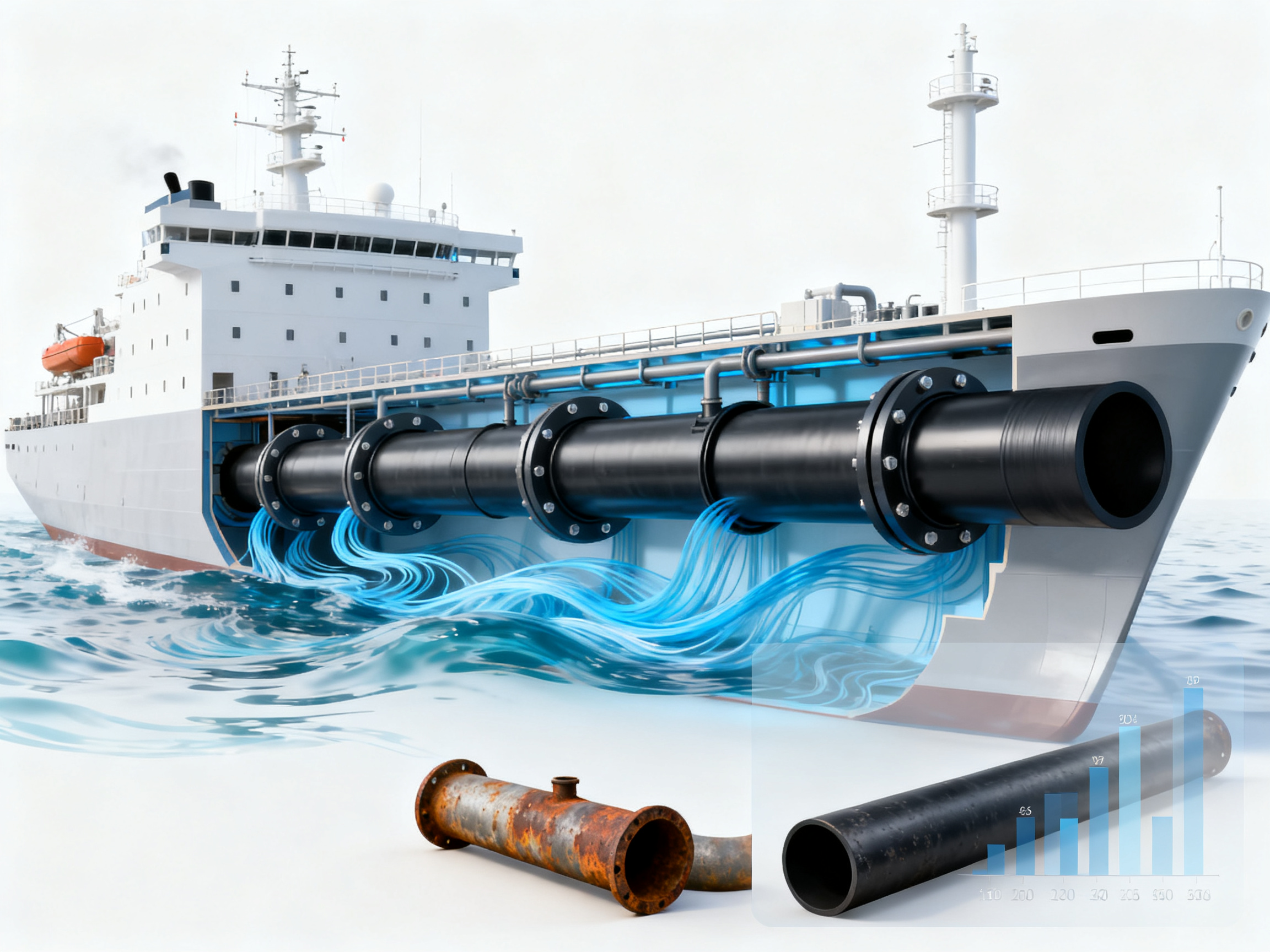
1. Excellent Corrosion Resistance
Core Advantage: GRE piping is highly resistant to corrosion from seawater, salt in ballast water, microorganisms, and possible oil content. It does not suffer from electrochemical corrosion, pitting, or rusting like steel pipes.
Direct Benefits:
Zero Maintenance Cost: Virtually no need for anti-corrosion coating repairs, cathodic protection, or regular derusting/painting, resulting in very low lifecycle maintenance costs.
High System Reliability: Eliminates the risk of leaks, ballast tank contamination, and structural damage caused by internal corrosion and perforation.
Guaranteed Water Quality: Does not contaminate ballast water with iron rust, helping to meet discharge requirements in some regions.
2. Extremely Light Weight
Specific Data: The density of GRE material is approximately 1.8-2.1 g/cm³, compared to 7.85 g/cm³ for steel. GRE piping typically weighs only 1/4 to 1/5 of comparable carbon steel piping.
Direct Benefits:
Reduces Ship Lightweight: Effectively lowers the ship's lightweight, thereby increasing cargo capacity or improving speed.
Saves Fuel: The lightweight design reduces propulsion resistance, significantly improving fuel economy and lowering operational costs and carbon emissions.
Optimizes Center of Gravity: Facilitates piping arrangement and helps improve the ship's overall stability and center of gravity distribution.
3. Superior Fluid Flow Characteristics
Smooth Interior Wall: The absolute roughness of the GRE pipe's inner wall is much lower than that of steel, resulting in a low hydraulic friction coefficient (typically between 0.008-0.009).
Direct Benefits:
Reduces Pumping Resistance: Lowers the power demand and energy consumption of ballast pumps.
Increases Flow Rate & Efficiency: Achieves a higher flow rate under the same pump pressure, shortening ballasting/deballasting operation time.
Anti-fouling & Anti-scaling: The smooth surface is less prone to marine growth or scale deposition, maintaining a high internal diameter over time.
4. Easy Installation & Low Lifecycle Cost
Connection Methods: Primarily uses socket-and-spigot bonding, flanged connections, or threaded connections. Installation is simple, fast, and requires no hot work (welding).
Direct Benefits:
High Installation Efficiency: Fast construction speed, relatively lower skill requirements for workers, shortening shipyard build cycles.
Improved Safety: Eliminates fire hazards associated with onboard welding.
Easy Modification: More flexible for system modifications and repairs regarding pipe cutting and joining.
Total Cost Advantage: While the initial material cost may be comparable to or slightly higher than steel, the very low maintenance costs, saved fuel expenses, and installation savings result in a clear advantage in total Life Cycle Cost (LCC).
5. Good Insulation Properties & Safety
Electrical & Thermal Insulation: GRE material does not conduct electricity or heat well.
Direct Benefits:
Prevents Galvanic Corrosion: Does not form a galvanic corrosion cell when in contact with the ship's structure.
Prevents Condensation: The outer wall is less prone to condensation when conveying cold media, protecting surrounding structures.
Enhanced Safety: Reduces the risk of accidents caused by pipe conductivity or heat transfer.
6. Long Service Life & Reliability
With proper design and installation, GRE piping systems have a design service life of over 25 years with very slow performance degradation.
High fatigue strength allows it to better withstand vibrations and minor impacts during ship operation.
Limitations (Challenges) to Consider
Despite its prominent advantages, the following aspects require careful handling during application:
Mechanical Strength & Stiffness: Impact resistance and rigidity are inferior to steel. Additional protective measures (e.g., protective covers) are needed in areas prone to severe mechanical damage (e.g., cargo hold bottoms).
Fire Resistance: While flame retardants can be added to meet shipboard "fire-retardant" or "low flame-spread" regulations, GRE is inherently combustible. It requires fireproof insulation or installation in specific areas to comply with SOLAS fire division requirements.
UV & High Temperature: Prolonged exposure to strong sunlight may cause aging, requiring protection. Operating temperatures are usually limited (typically -40°C to +120°C, depending on the resin type).
Design, Manufacturing & Installation Expertise: Strict quality control of connection processes (especially bonding) is required, necessitating trained installers.
Please give us a message
产品介绍产品介绍产品介绍产品介绍产品介绍产品介绍产品介绍产品介绍产品介绍产品介绍产品介绍产品介绍产品介绍产品介绍产品介绍产品介绍产品介绍产品介绍产品介绍产品介绍产品介绍产品介绍产品介绍产品介绍产品介绍产品介绍产品介绍产品介绍产品介绍产品介绍
Please give us a message
产品介绍产品介绍产品介绍产品介绍产品介绍产品介绍产品介绍产品介绍产品介绍产品介绍产品介绍产品介绍产品介绍产品介绍产品介绍产品介绍产品介绍产品介绍产品介绍产品介绍产品介绍产品介绍产品介绍产品介绍产品介绍产品介绍产品介绍产品介绍产品介绍产品介绍
Please give us a message
产品介绍产品介绍产品介绍产品介绍产品介绍产品介绍产品介绍产品介绍产品介绍产品介绍产品介绍产品介绍产品介绍产品介绍产品介绍产品介绍产品介绍产品介绍产品介绍产品介绍产品介绍产品介绍产品介绍产品介绍产品介绍产品介绍产品介绍产品介绍产品介绍产品介绍
Please give us a message
产品介绍产品介绍产品介绍产品介绍产品介绍产品介绍产品介绍产品介绍产品介绍产品介绍产品介绍产品介绍产品介绍产品介绍产品介绍产品介绍产品介绍产品介绍产品介绍产品介绍产品介绍产品介绍产品介绍产品介绍产品介绍产品介绍产品介绍产品介绍产品介绍产品介绍