
Cutting and Beveling Durable GRE Pipe on Site: Recommended Tooling to Prevent Edge Delamination
Time : Nov 26, 2026
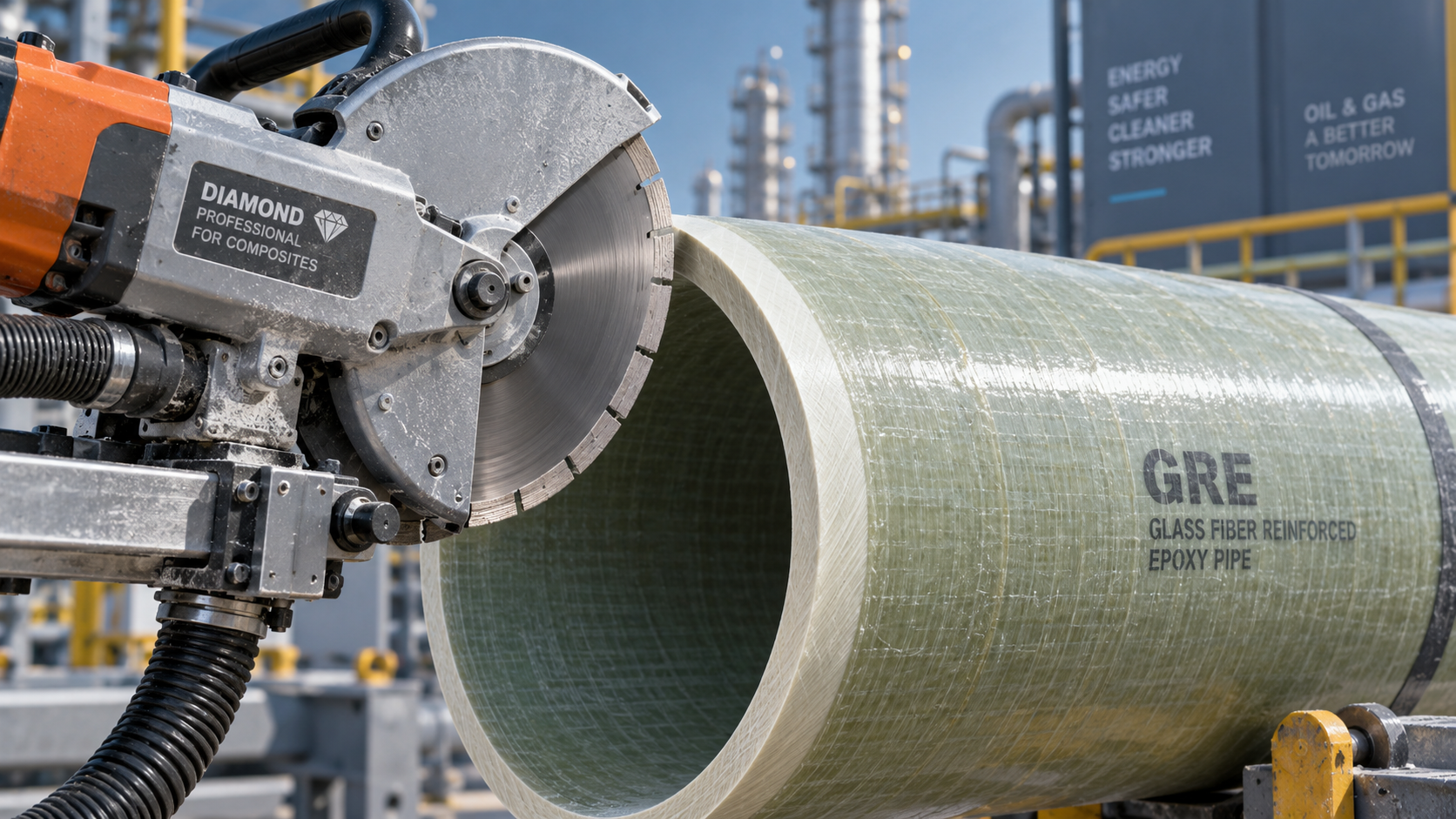
Cutting GRE pipe on site is a routine job, but the margin for error is anything but routine. Operators working with glass-fiber reinforced epoxy (GRE) pipe in oil and gas applications know that the interface between the pipe wall and the joint is where failures are born. The most common culprit isn't the pipe itself—it's the cut. When edge delamination occurs, the joint loses its sealing integrity, and the entire pipeline is compromised.
The problem is not about cutting speed or operator strength. It's about tooling choice and technique. A standard steel pipe cutter, regardless of how sharp or expensive, is the wrong instrument for this job. Delamination happens when the cutting edge tears the fibers rather than shearing them cleanly. The result is a rough, frayed edge that creates a path for fluids to migrate into the pipe wall structure, which can eventually lead to weeping, blistering, or catastrophic joint failure under pressure.
The first decision to make on site is between an abrasive wheel and a diamond-tipped blade. For GRE pipe, the latter is the safer choice. Abrasive wheels generate two problems: heat and vibration. The heat softens the epoxy matrix, allowing the glass fibers to pull out instead of cutting cleanly. The vibration transfers through the pipe wall and can micro-crack the resin, which may not be visible immediately but will become a weak point once the line is pressurized. Diamond-tipped blades, by contrast, produce a finer cut with less heat generation and leave a more uniform edge profile. If you're working with a hand-held grinder, the disc type matters more than the grinder's power rating. A 230mm diamond blade at standard rotational speed will outperform a heavier abrasive setup in terms of edge quality.
Beveling presents a separate set of challenges. For GRE pipe, the bevel angle and the land length must be machined together in a single pass or two carefully coordinated passes. A common mistake is to attempt the bevel as a freehand operation. Freehand beveling introduces angular inconsistency that makes the subsequent adhesive bond uneven. The recommended tooling here is a beveling tool with an adjustable angle guide that rides along the outer diameter of the pipe. Manual beveling tools with built-in angle stops are adequate for pipe up to 12 inches in diameter. Beyond that, a powered beveling head—often mounted on a small hydraulic or electric drive unit—provides the consistency needed to prevent delamination at the bevel transition zone.
One aspect operators frequently overlook is tool speed. GRE pipe is not steel. The optimal cutting speed for GRE is slower than intuition suggests. At high rotational speeds, the blade can overheat the epoxy before it even reaches the fibers. A rule of thumb that holds up in field conditions: if the pipe edge is turning brown or darkening at the cut line, you're generating too much heat, and you're already on the trajectory toward delamination. Cutting should be done at moderate blade speed with steady, light pressure. Let the blade do the work; don't force the cut.
Condition of the pipe itself also plays a role. GRE pipe that has been exposed to UV light on site for extended periods will have a degraded outer resin layer. This layer is more prone to chipping and cracking during cutting. If the pipe has a weathered surface, it's worth removing the outer resin layer two to three millimeters beyond the intended cut line before beveling, or at least reducing the cutting pressure at the point of entry to avoid fracturing that brittle surface.
For field repairs or retrofits where the pipe is already installed with existing joint welds, the constraints are tighter. The cutting tool must have a low-profile head to reach into confined spaces. Right-angle cutters with mounted diamond blades are the standard choice here. The primary risk in confined cut situations is ovality—the pipe can deform under cutting pressure, which throws off the bevel alignment. Using a split-frame cutting machine that clamps around the pipe's outer circumference is the safest approach for installed pipe, as it distributes clamping force evenly and maintains roundness during the cut.
Regardless of the tooling selected, a final check on edge quality is non-negotiable. Visually inspect the cut and bevel surfaces with a hand magnifier. You're looking for fiber protrusion, chip-out on the outer edge, and any burnishing marks on the bevel surface. The acceptable standard is a uniform land with no visible fiber pullout. If you see any of these defects, the cut must be redone—not "touched up" with sandpaper or a file. Sanding a delaminated edge does not repair it; it just hides the damage. The cut must be remade at a slightly further position, which requires accounting for the length loss in your layout marking.
On-site cutting and beveling of GRE pipe should not be an afterthought. The pipe's performance in service is directly tied to the quality of its end preparation. In the oil and gas sector, where uptime and leak prevention are non-negotiable, investing in the right cutting equipment and training operators in proper technique is far less expensive than the cost of field joint failure. A clean, properly beveled GRE pipe end—with no delamination, no heat damage, and no fiber lift-out—is the foundation on which a reliable, long-life piping system rests. Anything less is a risk you don't want to carry.
Next page:Already the last
Related Posts
Please give us a message
Oil & Gas
产品介绍产品介绍产品介绍产品介绍产品介绍产品介绍产品介绍产品介绍产品介绍产品介绍产品介绍产品介绍产品介绍产品介绍产品介绍产品介绍产品介绍产品介绍产品介绍产品介绍产品介绍产品介绍产品介绍产品介绍产品介绍产品介绍产品介绍产品介绍产品介绍产品介绍
Please give us a message
Marine & Shipbuilding
产品介绍产品介绍产品介绍产品介绍产品介绍产品介绍产品介绍产品介绍产品介绍产品介绍产品介绍产品介绍产品介绍产品介绍产品介绍产品介绍产品介绍产品介绍产品介绍产品介绍产品介绍产品介绍产品介绍产品介绍产品介绍产品介绍产品介绍产品介绍产品介绍产品介绍
Please give us a message
Industry
产品介绍产品介绍产品介绍产品介绍产品介绍产品介绍产品介绍产品介绍产品介绍产品介绍产品介绍产品介绍产品介绍产品介绍产品介绍产品介绍产品介绍产品介绍产品介绍产品介绍产品介绍产品介绍产品介绍产品介绍产品介绍产品介绍产品介绍产品介绍产品介绍产品介绍
Please give us a message
Pipe Fittings
产品介绍产品介绍产品介绍产品介绍产品介绍产品介绍产品介绍产品介绍产品介绍产品介绍产品介绍产品介绍产品介绍产品介绍产品介绍产品介绍产品介绍产品介绍产品介绍产品介绍产品介绍产品介绍产品介绍产品介绍产品介绍产品介绍产品介绍产品介绍产品介绍产品介绍